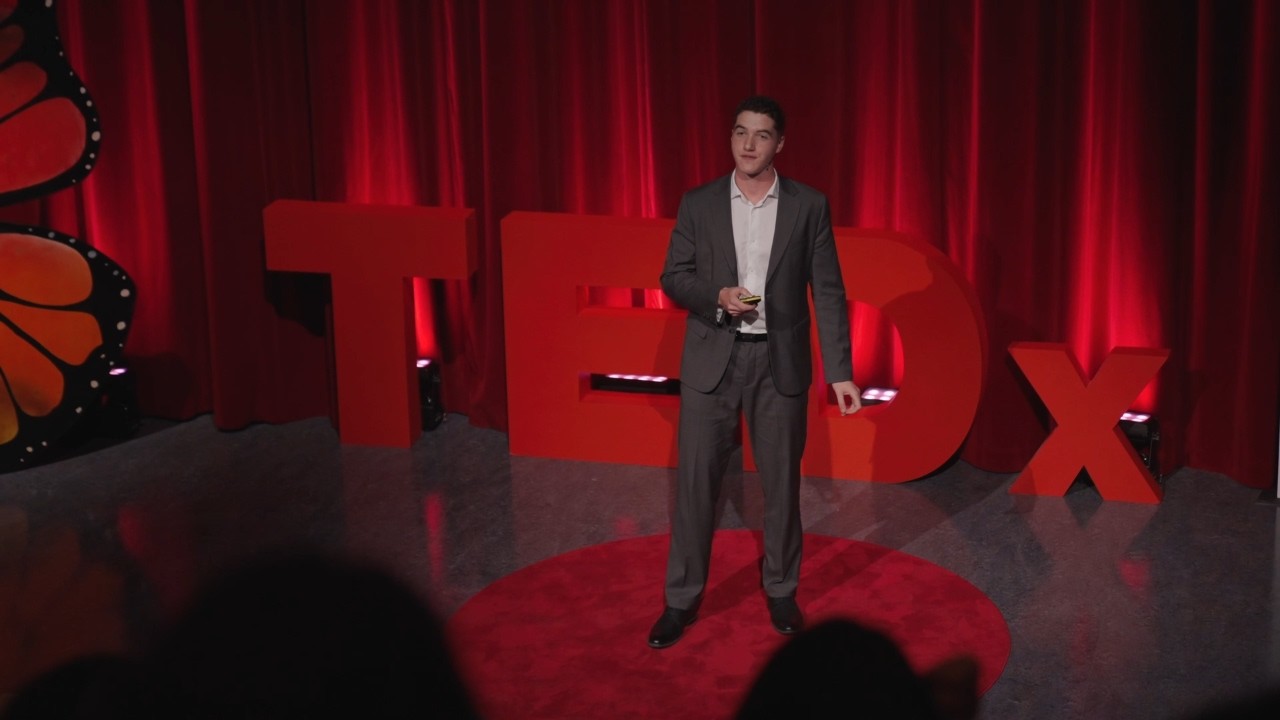
Build Systems, Not Willpower | James Alkema | TEDxISH Youth
Title history
- Build Systems, Not Willpower | James Alkema | TEDxISH Youth — observed on 20261029-0034 UTC (YouTube)
Keywords
Summary
176 words
Critical Evaluation
Value of the Information & Strength of the Argument
The talk delivers valuable, actionable insights on habit formation and system design. It effectively argues that willpower is overrated and that environmental design and small consistent changes are more sustainable. The argumentation is coherent: it starts with a personal anecdote, moves to a compelling real-world example (British Cycling), introduces scientific backing (brain mechanics, habit loop), and then provides concrete strategies. The use of relatable stories and clear analogies strengthens persuasion. However, the talk leans heavily on existing popular literature (James Clear, etc.) without adding original research or deeper analysis. The claims are plausible and well-illustrated, but the underlying evidence is presented superficially.
Scientific Rigor, Source Quality, Title Accuracy
The talk demonstrates moderate scientific rigor. It accurately references well-known authors and concepts (James Clear, William James, basal ganglia), but the 2016 study on willpower is mentioned without details, and no specific citations are given. The title accurately matches the content: ‘Build Systems, Not Willpower’ is a central thesis. The structure is logical and the arguments are presented clearly. However, the reliance on anecdotal evidence and the lack of counterarguments or alternative perspectives reduce scientific depth. Overall, it is a credible introduction to habit systems for a general audience, but not a rigorous academic review.
212 words
Title / Content Match
The title accurately reflects the core message: the talk argues that systems, not willpower, drive lasting behavior change.
Quality & Reliability
6/10
The talk presents well-known concepts from habit formation literature (e.g., James Clear, William James) with correct but simplified references. The scientific claims about the basal ganglia are accurate but oversimplified. The study referenced in 2016 is not named, reducing verifiability. Overall, it offers a reliable but high-level overview.
Key Moments
Markers derived by PSI from the transcript: the creator did not define chapters.
- Introduction: 'Who are you becoming?' and the personal struggle with motivation.
- British Cycling example: Dave Brailsford and the aggregation of marginal gains.
- Explanation of 1% improvement leading to 37% annual increase.
- Neuroscience of habits: prefrontal cortex, basal ganglia, and William James's 99% automatic behavior.
- The habit loop: cue, craving, response, reward, illustrated with a personal anecdote.
- Strategy 1: Optimize your environment; 2016 study on willpower.
- Strategy 2: Habit pairing with the Ronan Byrne Netflix-stationary bike example.
- Strategy 3: The two-minute rule to reduce inertia.
- Conclusion: every action is a vote for who you are becoming.
Cited Sources
- TEDx Talks — Official TEDx platform where the talk is hosted and general event information.
Concurring Sources
- Atomic Habits — James Clear's book, which the talk heavily draws on for systems over goals and habit formation.
- Habit (psychology) — Corroborates the habit loop (cue, craving, response, reward) and automatic behavior.
- Basal ganglia — Supports the neurological claim about habit storage in the brain.
Contribution & Novelties
The talk provides a concise synthesis of well-known habit-building principles, making them accessible to a teen and student audience. Its original contribution lies in the practical, relatable illustrations (e.g., phone placement, Netflix bike hack) and the personal framing as a student leader. However, it introduces no new theories or data; its value is in the effective communication of existing ideas.
Pour aller plus loin :
- Atomic Habits by James Clear — The primary source for many concepts discussed, offerring deeper strategies on habit formation.
- Habit – Wikipedia — Overview of the psychology and neuroscience of habits.
- Basal ganglia – Wikipedia — Neuroanatomical basis of habitual behavior, referenced in the talk.
- Marginal Gains – Wikipedia — Explanation of the strategy used by British Cycling.
123 words
Radar Profile
The radar profile is balanced with moderate scores across all dimensions. Information quantity and technicality are relatively low, reflecting the talk's broad, introductory nature, while information quality and reliability are slightly higher, indicating coherent and fairly accurate content. This suggests a useful, non-technical overview suitable for beginners.