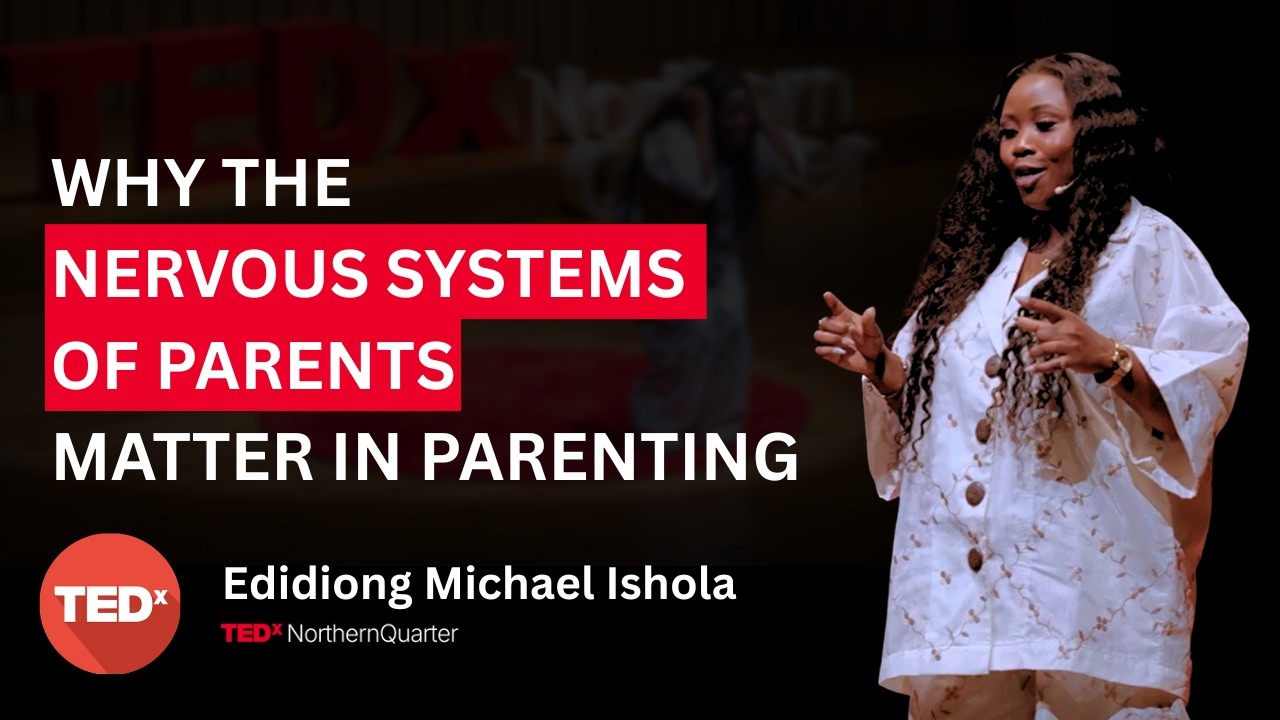
We need to prioritize emotional well-being in parenting | Edidiong Ishola | TEDxNorthern Quarter
Keywords
Summary
177 words
Critical Evaluation
Value of the Information & Strength of the Argument
The talk offers valuable reframing of parenting struggles by focusing on the physiological state of the caregiver rather than behavioral management. The argument is well-structured: it moves from a relatable anecdote to biological explanations (amygdala, prefrontal cortex), then to social and systemic factors, and finally to a vision for change. The speaker uses clear examples and avoids blaming parents, which strengthens the ethical appeal. However, the argument relies heavily on personal conviction and broad generalizations; specific studies or data are not cited, and the scientific depth is limited. The proposal to treat parental nervous system health as ’essential infrastructure’ is inspiring but lacks concrete implementation details. Overall, the value lies in its perspective shift, though the argumentation could be strengthened with more empirical evidence.
Scientific Rigor, Source Quality, Title Accuracy
The scientific rigor is moderate. The talk references established concepts like attachment theory (Bowlby, Ainsworth) and the role of the amygdala and prefrontal cortex in stress, but without specific citations or experimental data. The speaker’s credentials (biomedical scientist, perinatal mental health expert) lend some authority, but the TEDx disclaimer explicitly states the views are personal. The description provides links to TEDx guidelines and the TEDx main page, which are not direct sources of the content. The title accurately captures the central thesis, and there is a clear connection between the title and the delivered message. No contradictory information is presented, but the lack of direct references reduces the overall reliability.
249 words
Title / Content Match
The title accurately reflects the talk's core message: prioritizing parental emotional well-being as a foundation for parenting.
Quality & Reliability
7/10
The talk presents a coherent argument grounded in established concepts of neuroscience and attachment theory, but lacks specific citations and includes personal opinion; the TEDx disclaimer notes it represents the speaker's personal views.
Key Moments
Markers derived by PSI from the transcript: the creator did not define chapters.
- Speaker confesses to being a 'snapper' and sets the stage.
- Introduction of a stressful household scenario leading to a snap.
- Explanation of nervous system biology: amygdala and prefrontal cortex under stress.
- Discussion of modern parenting challenges and the 'stay calm' paradox.
- Introduction of co-regulation and attachment theory; story of a tired mother.
- Vision for systemic change: screening, rest, community, and workplace support.
- Conclusion: regulated parents raise safer children; call to action.
Cited Sources
- TEDx Content Guidelines — Referenced in the video description as a note regarding the talk's personal views.
- TEDx official page — Provided in the description for more information about TEDx events.
Contribution & Novelties
The talk’s original contribution lies in reframing parenting support from behavior modification to prioritizing the caregiver’s physiological regulation. It emphasizes that parental stress is not a personal failure but a survival state, and advocates for systemic interventions. This perspective integrates neuroscience, attachment research, and social policy in an accessible manner.
Pour aller plus loin :
- Attachment theory — Foundational framework for understanding caregiver-child bonds and emotional safety.
- Polyvagal theory — Explains how the nervous system mediates safety and social engagement, directly relevant to co-regulation.
- Window of Tolerance — A concept describing optimal arousal zones for regulation, useful for understanding stress responses.
101 words
Radar Profile
The profile shows balanced but moderate scores across all dimensions. Quality of information and quantitative volume are slightly above average, while technical level and reliability are moderate. This indicates an accessible, engaging talk with sound general principles but limited depth and citation rigor.