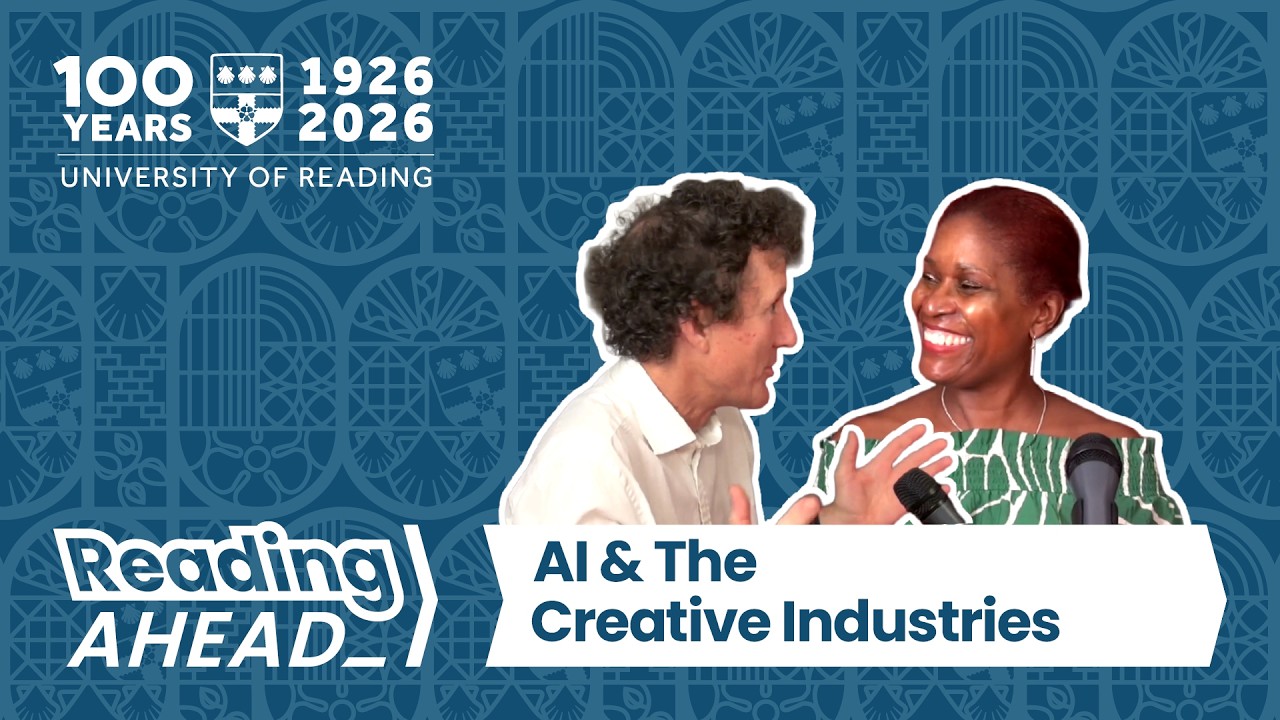
Reading Ahead S1E5 | AI & the Creative Industries
Title history
- Reading Ahead S1E5 | AI & the Creative Industries — observed on 20261109-1007 UTC (YouTube)
Keywords
Summary
203 words
Critical Evaluation
Value of the Information & Strength of the Argument
The episode provides valuable insights into the current state of AI in creative industries, drawing on the guests’ professional experiences. Dominic’s research background and policy work lend authority to discussions on copyright, consent, and regulation. The argumentation is coherent, with clear positions on AI’s limitations (no lived experience, retrospection) and the need for regulatory reform. Concrete examples (Wes Streeting deepfake, child actor, supermarket Meta glasses) make the issues relatable. However, the discussion is largely qualitative without empirical data or statistics, and the ethical arguments, while sound, are presented as opinions rather than backed by formal studies. The value lies in raising awareness and offering practical perspectives from the creative and academic sectors.
Scientific Rigor, Source Quality, Title Accuracy
The title accurately reflects the content. The rigorousness is moderate: both guests are credible, but sources are not formally cited within the podcast. The episode mentions the Synthetic Media Research Network and reports to the Department of Science, Innovation, and Technology, but no direct URLs or documents are referenced in the transcript. The discussion draws on legal and policy contexts but lacks detailed citations. The title is appropriate, and the content aligns with the episode’s stated purpose. The description provides a link to the Synthetic Media Research Network, which is a legitimate source.
220 words
Title / Content Match
The title accurately reflects the episode's focus on AI and creative industries, matching the content closely.
Quality & Reliability
7/10
The discussion features two expert guests (a children's author and a filmmaking academic) and covers copyright, consent, and policy issues with concrete examples. However, no formal citations or data are provided, and the conversation is largely opinion-based, though informed by research and policy engagement.
Key Moments
Markers derived by PSI from the transcript: the creator did not define chapters.
- Host Paul Lindley introduces the episode and guests Laura Henry-Allain and Dominic Lees.
- Laura discusses her career and the origin of JoJo & Gran Gran.
- Dominic introduces his research on AI and creative industries, and the Synthetic Media Research Network.
- Discussion on whether AI can be creative; Dominic argues it cannot be autonomously creative due to lack of lived experience.
- Dominic explains limitations of AI being trained only on digitized data.
- Examples of what AI can do now (voices, sound, music) and student attitudes.
- Dominic defines synthetic media.
- Laura and Dominic discuss risks to publishing and creative jobs.
- Dominic talks about copyright scraping and the possibility of models being broken if authors remove content.
- Policy discussion on regulation and the need for good regulation to foster innovation.
- Dominic mentions voice actor job losses and the Wes Streeting deepfake example.
- Laura shares her supermarket incident with Meta glasses and consent issues.
- Dominic talks about AI human avatars in business and education.
- Proposed reform of copyright law to extend performer protections to all individuals.
- Discussion on what schools and universities should teach about AI ethics and literacy.
Cited Sources
- Synthetic Media Research Network — Mentioned by Dominic Lees as his network; link provided in video description.
Concurring Sources
- Synthetic Media Research Network — Aligns with Dominic's description of the network's interdisciplinary approach to AI and media.
Contribution & Novelties
This episode brings a grounded, practitioner-led perspective on AI in creative industries, highlighting real-world impacts on authors, actors, and consumers. It uniquely combines literary and filmmaking expertise with policy-oriented research from the University of Reading. The discussion on extending performer rights to the general public is a notable proposal.
Pour aller plus loin :
- Generative artificial intelligence — Background on the technology behind the discussed tools.
- Deepfake — Relevant to the Wes Streeting example and likeness misuse.
- Copyright law of the United Kingdom — Context for the legal proposals discussed.
- Synthetic media — Directly related to Dominic’s research network.
- Consent — Central ethical concept emphasized by both guests.
108 words
Radar Profile
The radar profile shows high scores in quantity, quality, and reliability, with a slightly lower score in technical depth. This reflects a well-rounded, expert-led discussion that is accessible but not heavily technical, focusing on practical and policy aspects rather than algorithmic details.