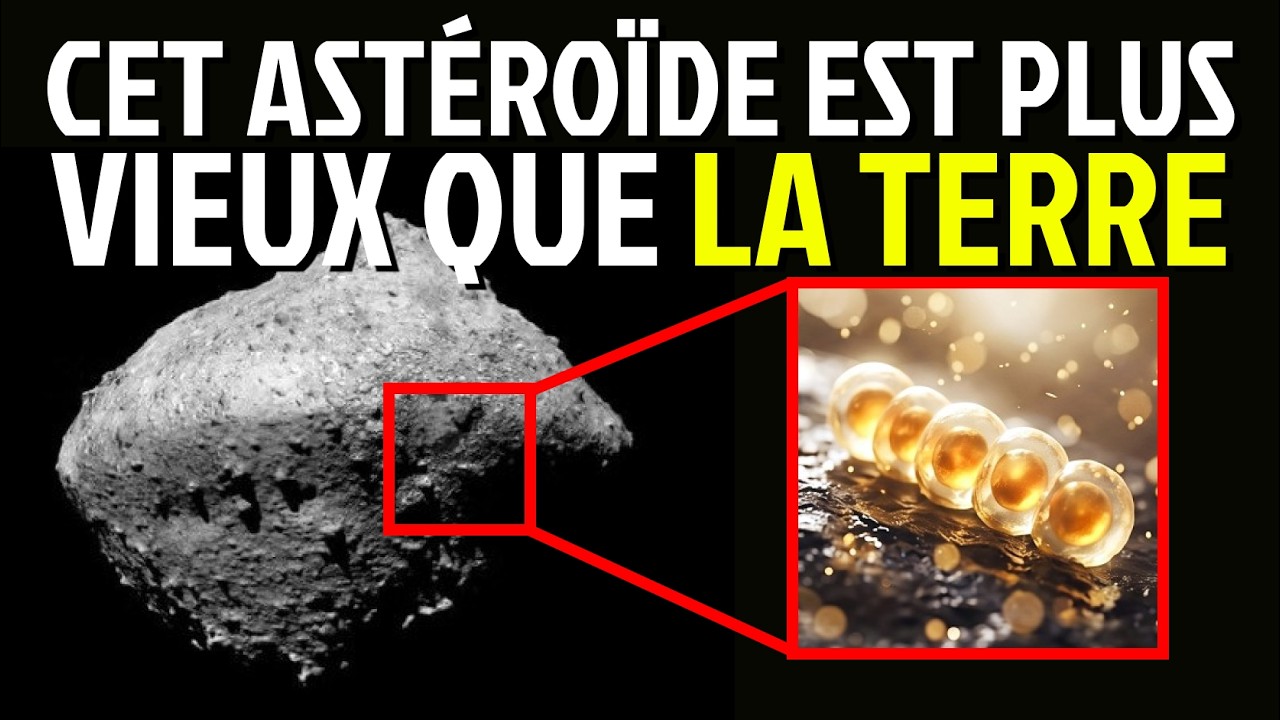
La NASA A Passé 7 Ans À Rapporter 121 Grammes D’un Astéroïde. Ça En Valait La Peine
NASA Spent 7 Years Bringing Back 121 Grams of an Asteroid. It Was Worth It
Keywords
Summary
164 words
Critical Evaluation
Value of the Information & Strength of the Argument
The video provides substantial scientific value by synthesizing original research findings and placing them in a broader astrobiological context. It explains complex chemical and mineralogical evidence (e.g., evaporite sequence, enantiomeric balance) in an accessible manner without oversimplifying the uncertainties. The argumentation is solid: it distinguishes between established results (e.g., detection of amino acids and salts) and open questions (e.g., origins of homochirality), and it uses a narrative that logically builds from mission description to implications. The inclusion of multiple expert teams and peer-reviewed sources strengthens its credibility. However, some statements are presented with a degree of narrative dramatization (e.g., “bouleversé notre compréhension”), though the core content remains factual.
Scientific Rigor, Source Quality, Title Accuracy
The video is rigorous in its scientific sourcing: it explicitly references peer-reviewed articles in Nature and Nature Astronomy, as well as NASA press releases and institutional news. The description provides direct links to these sources, and throughout the narration scientists are named (e.g., Dante Lauretta, Kevin Walsh, Tim McCoy). The title accurately matches the content, though it slightly overstates the temporal aspect (7 years) but this is a minor editorial choice. The video correctly highlights how the meticulous contamination control (nitrogen gloveboxes) was essential to preserve volatile salts, demonstrating an understanding of analytical methodology. No major inconsistencies were found, and the video appropriately labels speculative elements (e.g., origins of homochirality) as non-definitive.
235 words
Title / Content Match
The title accurately reflects the content: a detailed narrative of the 7-year mission to collect and return 121 grams of asteroid Bennu material, emphasizing the scientific value of the endeavor.
Quality & Reliability
8/10
The video presents accurate, up-to-date scientific findings from NASA's OSIRIS-REx mission, citing peer-reviewed publications in Nature and Nature Astronomy. It clearly distinguishes between established facts and ongoing hypotheses, and clearly labels the inference levels. The overall information is reliable and well-contextualized, though it remains a vulgarisation with simplified explanations and no independent verification of the sources.
Chapters
- Le mystère de nos origines
- Le contact avec l'astéroïde Bennu à 320 millions de km
- Pourquoi la NASA a choisi l'astéroïde Bennu ?
- La grande surprise à la surface de l'astéroïde
- Le moment critique de la collecte (qui a failli mal tourner)
- L'ouverture de la capsule d'échantillons sur Terre
- Les ingrédients de la vie : qu'a trouvé la NASA ?
- La découverte d'un ancien océan salé
- L'incroyable mission du Japon sur l'astéroïde Ryugu
- 1 milliard de dollars pour 121 grammes : ça valait le coup ?
Cited Sources
- NASA's Asteroid Bennu Sample Reveals Mix of Life's Ingredients (NASA press release) — Announcement of the Bennu sample analysis findings.
- Abundant Ammonia and Nitrogen-Rich Soluble Organic Matter in Samples From Asteroid (101955) Bennu (Nature Astronomy) — Peer-reviewed study on nitrogen-rich organic compounds in Bennu.
- An Evaporite Sequence From Ancient Brine Recorded in Bennu Samples (Nature) — Peer-reviewed study on evaporite minerals indicating ancient brine.
- Abstract of the Nature Astronomy article on ADS — Bibliographic reference for the ammonia-rich organic matter study.
- Asteroid Bennu Comes From a Long-Lost Salty World With Ingredients for Life (LPL Arizona) — Institutional news about the implications of Bennu findings.
- Material Necessary for Life on Earth May Have Been Delivered by Asteroids Like Bennu (Natural History Museum) — Museum article connecting the Bennu findings to life's origins.
- Compounds Critical to Life Found on Ancient Asteroid (C&EN) — Chemical & Engineering News article highlighting the significance.
- Asteroid Bennu Sample Reveals a Mix of Life's Ingredients (Astrobiology Magazine) — Astrobiology magazine report on the same discovery.
Concurring Sources
- Nature Astronomy article — The article supports the detection of ammonia and organic nitrogen in Bennu, aligning with the video's explanation.
- Nature article on evaporites — This study confirms the presence of evaporite salts, consistent with the video's claims.
Contribution & Novelties
The video synthesizes recent (2025) scientific results from the OSIRIS-REx mission that are of significant public interest. It brings the novelty of explaining not only the detection of amino acids and nucleobases but also the discovery of evaporite minerals that directly indicate the past presence of liquid brine on Bennu. The video contributes to public understanding by clarifying the distinct questions surrounding the origin of life’s building blocks versus the homochirality problem, showing that Bennu shows no enantiomeric excess, which complicates previous assumptions. It also highlights the technical achievement of contamination-free sample return, which is crucial for such delicate findings.
Pour aller plus loin :
- Mission OSIRIS-REx (NASA) — Official mission page with detailed information.
- Homochirality (Wikipedia) — Overview of the concept and its relevance to life.
- Circularly polarized light and chirality — Background on the hypothesis involving UV circular polarization in star-forming regions.
- Soai reaction (Wikipedia) — The autocatalytic reaction demonstrating amplification of small enantiomeric imbalances.
157 words
Radar Profile
The radar profile shows high scores in quantity and quality of information, reflecting the video's detailed and well-sourced content. The technical level is slightly lower, indicating an accessible but still rigorous approach. The global reliability is strong, supported by consistent referencing and careful handling of claims, though not all statements are independently verified.