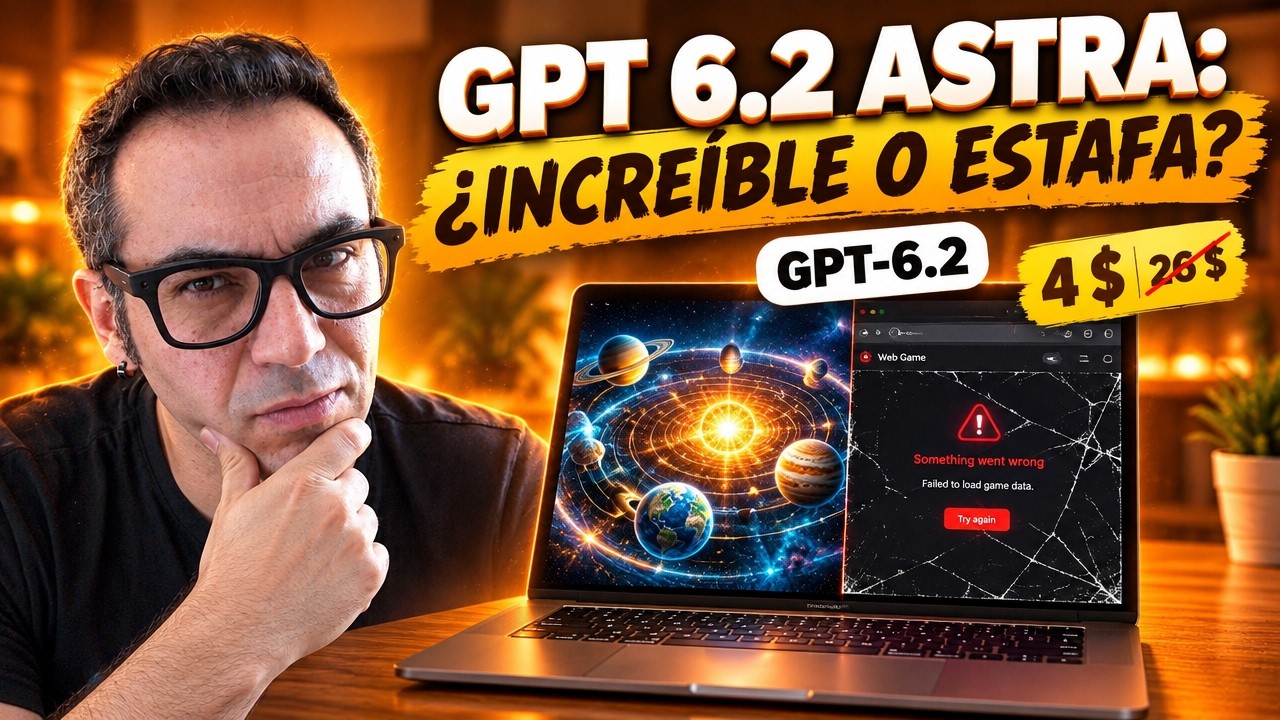
GPT 6.2 Astra: la prueba más bonita que hemos visto, pero falla en lo básico (Ep. 180)
GPT 6.2 Astra: the most beautiful test we have seen, but it fails at the basics (Ep. 180)
Title history
- GPT 6.2 Astra: la prueba más bonita que hemos visto, pero falla en lo básico (Ep. 180) — observed on 20261119-2233 UTC (YouTube)
Keywords
Summary
158 words
Critical Evaluation
Value of the Information & Strength of the Argument
The value of information lies in its timeliness and the practical tests performed on the models, offering firsthand insights. The argumentation is largely based on personal experience and subjective judgment, but the hosts engage in a thoughtful debate, considering multiple perspectives. For instance, the discussion on pension systems links AI’s productivity gains with fiscal sustainability, a nuanced view not always present in mainstream coverage. However, the arguments are sometimes speculative and lack quantitative rigor, relying on anecdotal evidence.
Scientific Rigor, Source Quality, Title Accuracy
The podcast makes good use of source references, providing links to articles from Tagesspiegel, Airbnb Tech, CNBC, and official model announcements. However, the hosts do not always critically evaluate these sources, and some claims are made without clear citations. The title accurately reflects the central theme, with no significant mismatch. The hosts openly acknowledge uncertainties, which adds to the credibility, though the informal tone limits the scientific rigor.
161 words
Title / Content Match
The title accurately highlights the focus on GPT 6.2 Astra and the paradoxical result of the tests (impressive but flawed on basics). It captures the episode's core theme.
Quality & Reliability
7/10
The podcast provides a balanced mix of news commentary, practical tests, and socio-economic analysis. Although many claims are opinion-based, the hosts reference several credible sources and openly discuss uncertainties. A moderate score reflects the informal format and absence of rigorous methodology.
Chapters
- Introducción
- La IA se llevará 800.000 empleos en Alemania: ¿quién pagará las pensiones?
- Airbnb afina Gemma 4: calidad frontera al 1 % del coste
- ¿La IA hará mejor nuestro trabajo? Debate
- ChatGPT Wallet: los agentes ya compran por ti
- ¿Afectan los sesgos cognitivos a los agentes que compran?
- Claude Meetings: Claude entra en tus videollamadas
- Google lanza Gemini 4 Hydrogen y Neon
- Las pruebas de El Test de Turing con Hydrogen y Neon
- Microsoft Ignite: MAI-Image 2.7, primero en edición de imagen
- Building in public: de Mencoro a Growwer, influye en las fuentes que leen las IA
- Tema de la semana: GPT 6.2 Astra y Sol
- Astra cuesta seis veces menos por tarea que Fable 5.2
- ¿Nos quedamos con Claude por el modelo o por la interfaz?
- Las pruebas de El Test de Turing con GPT 6.2 Astra
- Despedida
Cited Sources
- Tagesspiegel article on AI job losses — Discussed when talking about the German labor agency president's prediction.
- Airbnb Tech - Frontier quality at 1% of the cost — Referenced when explaining how Airbnb fine-tuned Gemma 4 for real-time classification.
- CNBC - OpenAI ChatGPT Wallet — Mentioned regarding AI agents making purchases on behalf of users.
- Claude Meetings – official support article — Covered when discussing Anthropic's Claude Meetings feature.
- 9to5Google - Gemini 4 Neon announcement — Referenced for the release of Gemini 4 variants Hydrogen and Neon.
- Microsoft AI - MAI-Image 2.7 — Mentioned during the discussion of Microsoft's new image model.
- OpenAI - Introducing GPT 6.2 Astra and Sol — Primary source for the main topic of the episode.
Concurring Sources
- OpenAI - GPT 6.2 Astra announcement — Supports the claims about Astra's capabilities and pricing.
- Tagesspiegel employment report — Provides data backing the job loss prediction discussed.
- Airbnb Tech blog on fine-tuning — Offers technical evidence for the cost efficiency claims.
External References
Contribution & Novelties
The episode provides an original contribution by combining hands-on testing of advanced AI models with a macroeconomic perspective, particularly the pension sustainability issue. The hosts’ candid assessments of GPT 6.2’s flaws and strengths offer practical value. The discussion on Airbnb’s fine-tuning approach is insightful, highlighting cost-efficient alternatives.
Pour aller plus loin :
- Pay-as-you-go pension system — Relevant to the pension funding discussion.
- Impact of artificial intelligence on the workforce — Provides a broader academic perspective on job displacement.
- Fine-tuning (deep learning) — Explains a key technique behind Airbnb’s approach.
89 words
Radar Profile
The radar profile shows a balanced episode with high quantity of information and moderate technical depth, but reliability is lower due to the conversational and speculative nature. The strength lies in coverage and practical insights, while weaknesses are in source verification and rigorous argumentation.