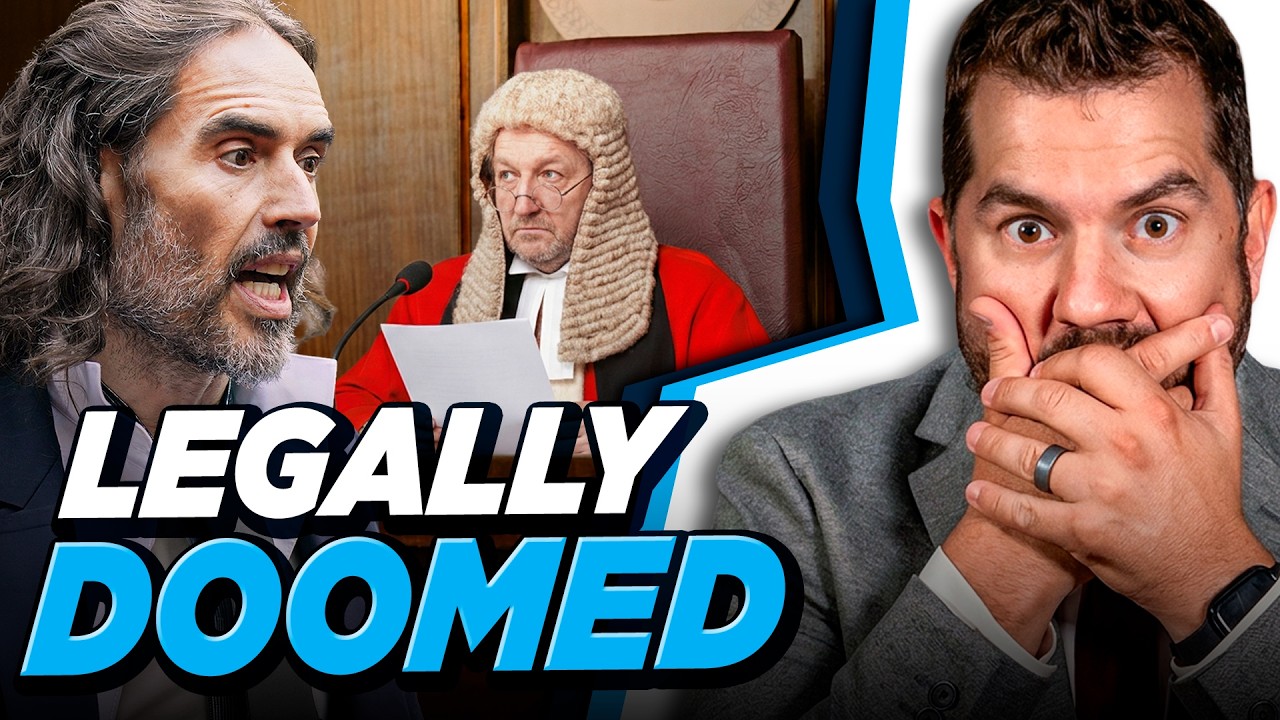
Russell Brand Took The Stand
Title history
- Russell Brand Took The Stand — observed on 20261113-2201 UTC (YouTube)
Keywords
Summary
155 words
Critical Evaluation
Value of the Information & Strength of the Argument
The video provides substantive legal analysis, clearly explaining the differences between US and UK law with reference to specific statutes and case law. The argumentation is solid, as the presenter uses concrete examples and explains the rationale behind each rule. He also discusses practical considerations for defense attorneys, such as the risk of cross-examination. The discussion of prepared statements and adverse inferences is handled with precision, and the video does not oversimplify complex legal concepts.
Scientific Rigor, Source Quality, Title Accuracy
The presenter cites specific legal authorities including Griffin v. California, Brooks v. Tennessee, and sections 34 and 35 of the Criminal Justice and Public Order Act 1994. He also references case law like Williams v. Florida and Portuondo v. Agard. The title accurately reflects the content, focusing on Brand’s decision to testify and its implications. The video maintains a clear structure, and the legal analysis is grounded in accurate citations. No unnecessary speculation is presented.
165 words
Title / Content Match
The title accurately reflects the video's focus on Russell Brand's decision to testify and its legal implications. The content thoroughly examines this decision in the context of UK and US law.
Quality & Reliability
8/10
The presenter is a licensed attorney and the video provides accurate legal comparisons citing specific statutes and case law. The analysis is well-structured and avoids speculation.
Key Moments
Markers derived by PSI from the transcript: the creator did not define chapters.
- Overview of the allegations against Russell Brand, including the number of charges and timeline.
- Discussion on whether to testify, with mentor's rule and strategic considerations in US law.
- Explanation of the Fifth Amendment and Griffin v. California, which forbids comment on silence.
- Introduction to UK law: Section 35 of the Criminal Justice and Public Order Act 1994 allowing adverse inferences.
- Police caution and Section 34 rules regarding failure to mention facts later relied on in court.
- Defense statement requirements and Williams v. Florida on alibi notice in the US.
- Brooks v. Tennessee and the order of witnesses: US allows defendant to testify later, unlike England.
- Brand's testimony and character witnesses, including his wife's statements and the prosecutor's rebuttal.
Cited Sources
- LegalEagle Law Guide — Resource for aspiring law students, referenced in the video description.
- LegalEagle Copyright Course — Educational course on copyright law, an additional resource from the creator.
- LegalEagle Team — Service to connect viewers with attorneys, mentioned as a way to get legal help.
- LegalEagle Podcast — Audio version of legal analysis, offered as a supplementary medium.
External References
Contribution & Novelties
The video innovatively contrasts the legal frameworks of the US and England regarding a defendant’s right to remain silent, using the Russell Brand case as a lens. It highlights how the UK’s system of adverse inferences and pre-trial disclosure shifts the strategic calculus for defendants. The presenter offers an insider perspective from an American lawyer, illuminating differences that are rarely explained so clearly for a general audience.
Pour aller plus loin :
- Fifth Amendment to the United States Constitution — Primary constitutional protection against self-incrimination.
- Criminal Justice and Public Order Act 1994 — UK statute that introduced adverse inferences for silence in sections 34 and 35.
- Griffin v. California — Supreme Court case prohibiting comment on a defendant’s silence in US courts.
- Brooks v. Tennessee — Supreme Court case striking down a rule requiring defendants to testify before other witnesses.
140 words
Radar Profile
The profile shows high scores in information quantity and quality with moderate technical level and reliability, suggesting a well-researched educational video that balances depth with accessibility.
💬 On the 30 comments analyzed, the orientation is positive, with viewers appreciating the legal comparison while also expressing varied opinions on the trial. Many commenters engaged with the differences between US and UK procedures, and some shared personal views on the defendant.