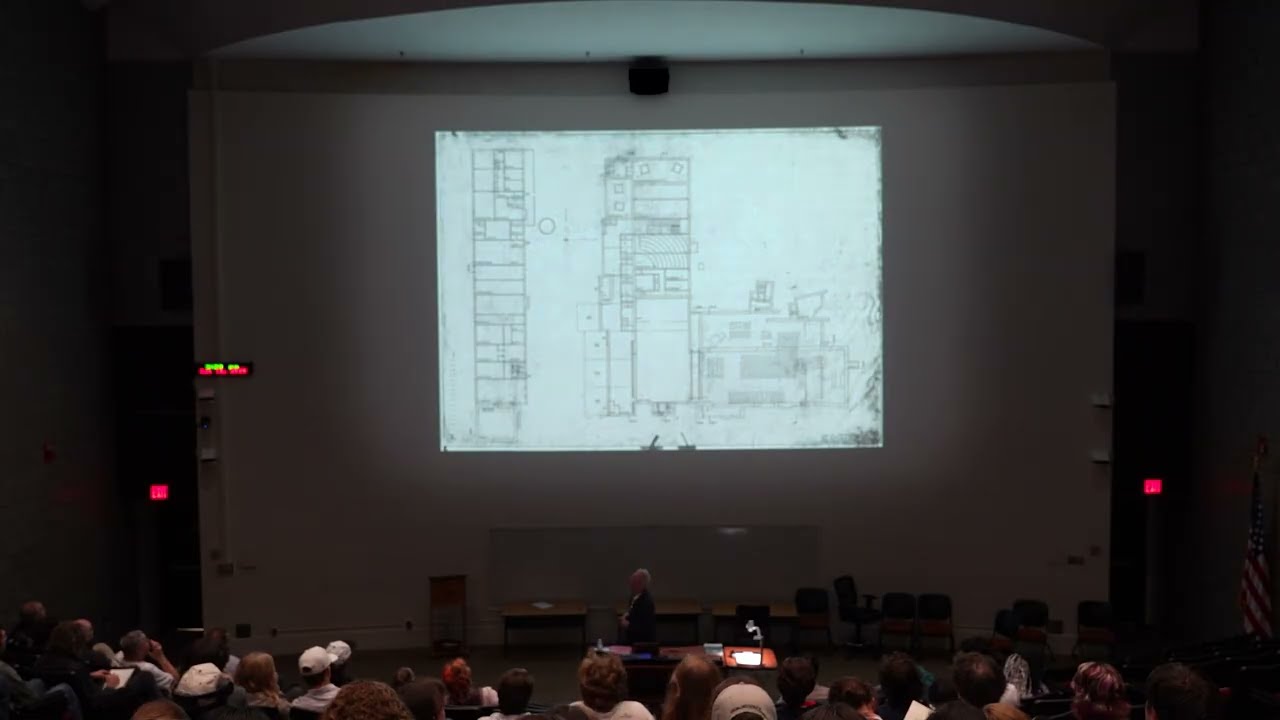
Chalk Talk | Johan Celsing: "The Architect Sigurd Lewerentz in Perspective"
Title history
- Chalk Talk | Johan Celsing: "The Architect Sigurd Lewerentz in Perspective" — observed on 20261110-1822 UTC (YouTube)
Keywords
Summary
156 words
Critical Evaluation
Value of the Information & Strength of the Argument
The lecture’s value lies in its rare practitioner perspective, as Celsing shares not only historical knowledge but also direct experience in restoring Lewerentz’s works. The argumentation is solid, grounded in concrete examples, architectural analysis, and personal anecdotes. Celsing justifies his interpretations with references to original drawings and his own hands-on work, making the narrative compelling and credible. He effectively demonstrates how Lewerentz’s designs evolved and how practical considerations influenced his decisions, providing a nuanced understanding of the architect’s oeuvre.
Scientific Rigor, Source Quality, Title Accuracy
Celsing bases his talk on archival materials at the Stockholm Museum of Architecture, which he accessed during his reconstruction work, and on his own professional experience. The title accurately reflects the content, though the focus is on Lewerentz’s architectural practice rather than a comprehensive biography. The lecture maintains a rigorous tone, with careful attention to historical context and technical detail. No external sources are explicitly cited in the video, but the talk references primary materials and personal interactions that lend authority to the presentation.
178 words
Title / Content Match
The title accurately indicates that the talk offers a perspective on Sigurd Lewerentz, covering his life, works, and a practitioner's view on his architecture.
Quality & Reliability
8/10
The lecture is delivered by a practicing architect with direct experience of Lewerentz's work, including reconstruction projects, and draws on archival research. The content is detailed and plausible, though personal perspective and some estimates are included.
Key Moments
Markers derived by PSI from the transcript: the creator did not define chapters.
- Introduction to Lewerentz's life and career, including his birth and longevity.
- Context of Stockholm architecture, including the City Hall and early inspirations.
- Discussion of early works, worker housing, and the influence of national romanticism.
- Presentation of St. Mark's Church, a pivotal brick church designed by Lewerentz.
- Examination of St. Peter's Church and its use of light, patterns, and low profile.
- Focus on the Eastern Cemetery in Malmö, including the chapels and Celsing's reconstruction work.
Contribution & Novelties
This lecture provides a unique insider’s view of Sigurd Lewerentz’s architecture, enriched by Johan Celsing’s direct involvement in restoration projects and access to original archival drawings. It offers a comprehensive overview of Lewerentz’s evolution from national romanticism to modernism, with detailed analysis of key works. The talk also highlights Lewerentz’s often-overlooked decorative elements and his subtle use of traditional motifs.
Pour aller plus loin :
- Sigurd Lewerentz — Overview of the architect’s life and principal works.
- Woodland Cemetery — UNESCO World Heritage site co-designed by Lewerentz and Asplund, a central reference in the talk.
- Architecture of Sweden — Contextual background for understanding the architectural movements discussed.
- Malmö Eastern Cemetery — Specific site of the chapels and reconstruction work described by Celsing.
121 words
Radar Profile
The radar profile shows very high scores in information quantity and quality, with somewhat lower but still substantial technical depth and reliability. This suggests a content-rich lecture that is technically detailed but relies on personal expertise rather than formal citations, making it highly informative yet somewhat subjective.