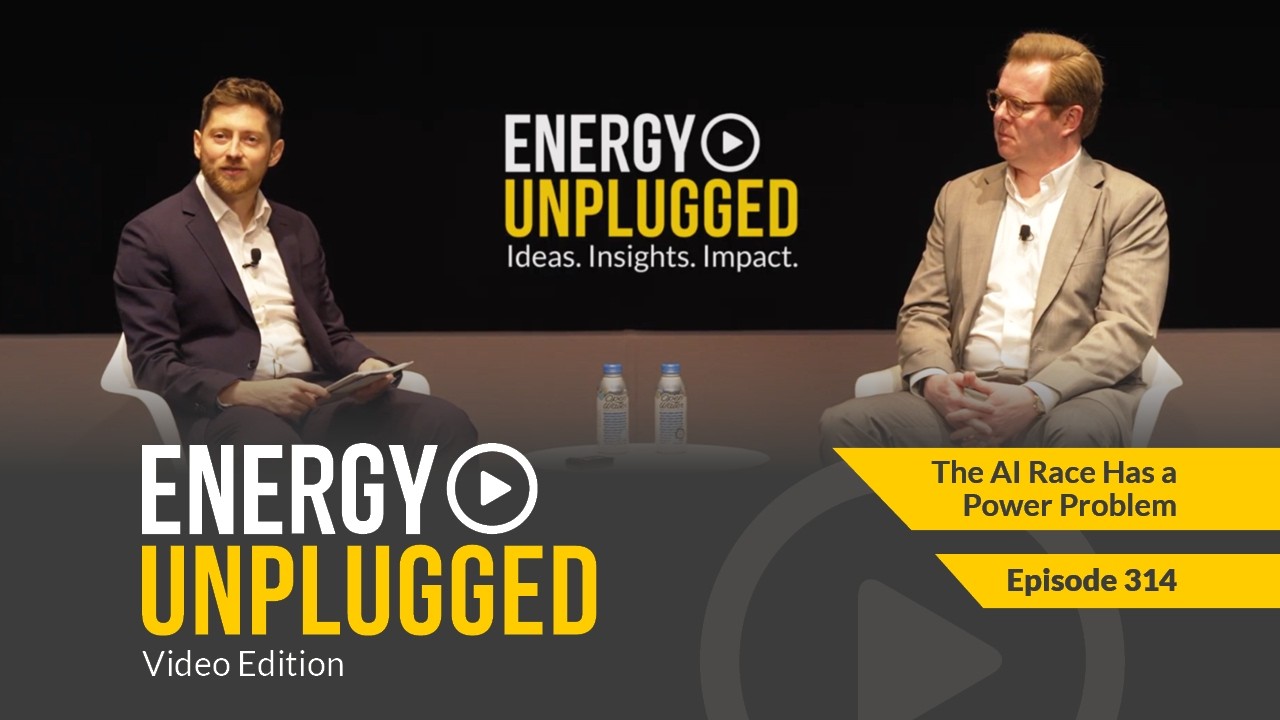
The AI Race Has a Power Problem EP. 314
Title history
- The AI Race Has a Power Problem EP. 314 — observed on 20261110-0823 UTC (YouTube)
Keywords
Summary
160 words
Critical Evaluation
Value of the Information & Strength of the Argument
The value of the information lies in Lake’s first-hand perspective on both state and federal energy policy, particularly his insights into the ‘inflection point’ of AI-driven demand. He provides concrete examples of innovative utility and tech partnerships, such as the Southern Company-Google arrangement and Meta’s Louisiana data center, which illustrate how ratepayer protection and industrial growth can coexist. His argumentation is coherent, structured around the dichotomy between innovators and incumbents, and uses the metaphor of the oak and the reed to advocate for adaptability. While not data-heavy, the reasoning is logically consistent and grounded in real-world cases, making the claims credible within the policy and market context.
Scientific Rigor, Source Quality, Title Accuracy
The discussion is largely a personal narrative from a high-level official; no external sources or publications are cited. This limits academic rigor, but Lake does reference specific policy instruments (e.g., the ratepayer protection pledge) and regulatory actions (e.g., FERC show-cause orders) that enhance practical credibility. The title ‘The AI Race Has a Power Problem’ accurately encapsulates the core issue, though the content extends beyond the race to include broader market and reliability concerns. The episode’s live format and lack of systematic evidence place it more in the realm of informed commentary than strict scientific analysis.
217 words
Title / Content Match
The title accurately reflects the central theme: the challenge posed by AI's growing electricity demand.
Quality & Reliability
7/10
Peter Lake's direct experience as former chairman of the Public Utilities Commission of Texas and Senior Director of the National Energy Dominance Council provides unique insider perspectives. However, the discussion relies heavily on anecdotal examples and personal judgment rather than systematic data or peer-reviewed evidence, which limits its scientific rigor.
Key Moments
Markers derived by PSI from the transcript: the creator did not define chapters.
- Introduction of Peter Lake and his background in Texas and the White House.
- Discussion of the inflection point: AI as existential technology dependent on solving power challenges.
- Lake explains the differences between post-Storm Uri recovery and the White House's upside-focused agenda.
- Examples of innovative utilities: Southern Company-Google deal and Meta's Louisiana data center benefits.
- Lake defines 'energy dominance' as abundant, affordable, reliable power and discusses the ratepayer protection pledge.
- Closing thoughts on advanced transmission technologies and the need for flexibility and innovation.
Contribution & Novelties
This episode provides a rare insider look at how the U.S. government is approaching the AI-power challenge, with specific policy examples and behind-the-scenes context on the National Energy Dominance Council. Lake’s personal philosophy on leadership and flexibility adds an original qualitative dimension.
Pour aller plus loin :
- Data center energy consumption — Wikipedia overview of data center electricity use and efficiency.
- Electricity market — Wikipedia entry on electricity markets and their regulatory frameworks.
- Energy policy of the United States — Wikipedia article covering U.S. energy policy, including recent trends in electricity demand.
92 words
Radar Profile
The profile shows moderate quantity of information (7) and high quality (8), but lower technical depth (5) reflecting a non-technical, policy-oriented discussion. Reliability is solid (7) due to the speaker's authoritative experience.