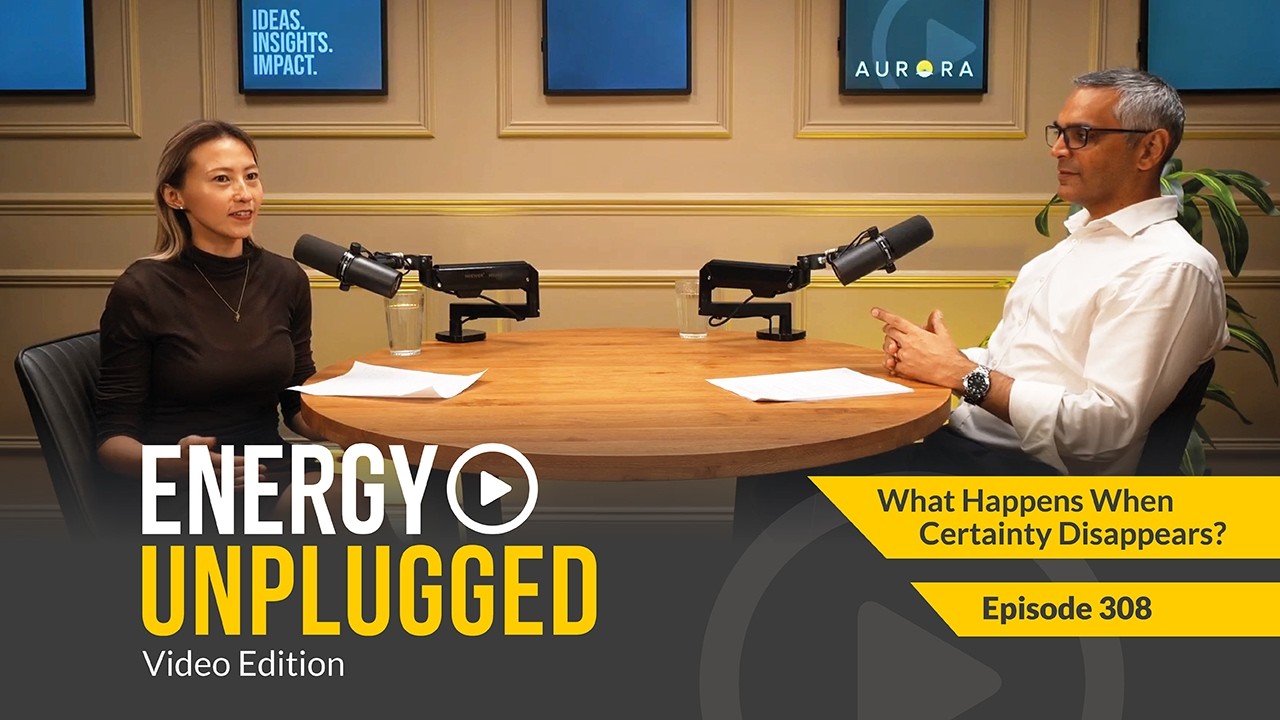
What Happens When Certainty Disappears? EP 308
Keywords
Summary
190 words
Critical Evaluation
Value of the Information & Strength of the Argument
The interview provides valuable insights into the practical functioning of long-term energy contracts, particularly the often-overlooked importance of risk allocation over price. Philip Norman’s arguments are well-structured, drawing on real-world examples such as the Qatar blockade, the Ukraine war, and the pandemic. He effectively explains complex legal concepts like force majeure and frustration in an accessible manner, while highlighting cultural differences in contractual interpretation. The argumentation is solid, rooted in professional experience, and clearly explains why contract terms matter more than price when disputes arise. The value lies in bridging legal theory and commercial reality, offering listeners a nuanced understanding of how energy projects are safeguarded against uncertainty.
Scientific Rigor, Source Quality, Title Accuracy
The content is rigorous from an experiential standpoint, as Philip Norman has decades of international arbitration expertise. However, the discussion does not cite specific sources, studies, or legal cases, which limits its scientific verifiability. The title accurately represents the content, but the episode is more of an expert commentary than a reviewed literature synthesis. The legal concepts are accurately described, but the lack of external references reduces the overall scientific rigor. The title is well-matched, and no misleading elements are present.
204 words
Title / Content Match
The title accurately reflects the content, which explores how long-term energy contracts cope with disruptions and uncertainty. The rhetorical question aligns well with the interview's focus on risk allocation and contractual resilience.
Quality & Reliability
8/10
The interview is based on the expert's extensive experience in international arbitration and energy disputes, providing credible, practical insights. However, no external sources or data are cited, and the discussion remains at an accessible level without deep technical legal detail.
Key Moments
Markers derived by PSI from the transcript: the creator did not define chapters.
- Definition of long-term contracts as rulebooks for partnerships
- Explanation of take-or-pay clauses and their role in financing infrastructure
- Discussion on why risk allocation matters more than price
- Introduction of force majeure and its contractual nature
- Comparison between common law and civil law approaches to unforeseen events
- Impact of state ownership and political considerations on arbitration
- Whether price caps or windfall taxes can be considered force majeure
Contribution & Novelties
The episode offers original perspectives on how long-term energy contracts are stress-tested by modern disruptions, emphasizing that contractual risk allocation is often more decisive than price. It clarifies the distinction between force majeure as a contractual device and legal doctrines like frustration, highlighting cultural variations in contract interpretation. The discussion provides practical insights into state-owned entities’ behavior and enforcement challenges, which is valuable for industry stakeholders.
Pour aller plus loin :
- Force majeure - Wikipedia — A comprehensive overview of the concept in various legal systems.
- Take-or-pay - Wikipedia — Explains the take-or-pay clause used in energy supply agreements.
- Arbitration - Wikipedia — Details the process of resolving disputes outside courts, relevant to international energy contracts.
116 words
Radar Profile
The radar profile is balanced, with high scores in information quantity and quality, reflecting the interview's substantive content. Technical level is moderate, suitable for a broad audience. Fiabilité is high due to the expert's experience, though the lack of external citations slightly lowers the overall scientific rigor.