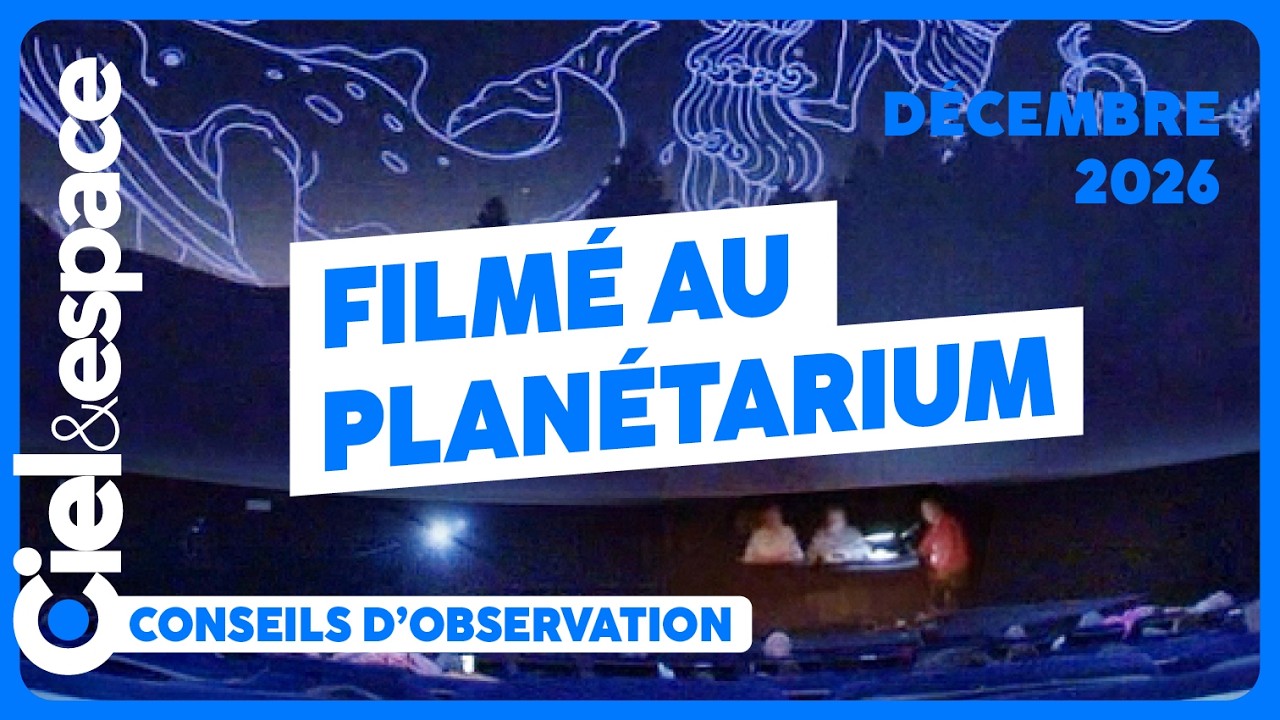
Quoi observer dans le ciel en décembre 2026 : ENREGISTREMENT PUBLIC
What to observe in the sky in December 2026: PUBLIC RECORDING
Keywords
Summary
175 words
Critical Evaluation
Value of the Information & Strength of the Argument
The video offers valuable, actionable information for amateur astronomers: specific dates, observing conditions, and practical photography advice. The argumentation is grounded in well-established astronomical knowledge, and the planetarium visuals effectively illustrate concepts like planetary phases, meteor shower radiant points, and retrograde motion. The hosts engage with the live audience, making the content lively, but maintain a clear explanatory thread throughout.
Scientific Rigor, Source Quality, Title Accuracy
The scientific rigor is high: the presenters are knowledgeable and cite current data (e.g., Cassini mission data for Saturn). The show’s tone is educational and reliable, though it is not a peer-reviewed source. The title accurately conveys the content, and the description lists the main events. No external sources are cited beyond the magazine’s website, but the information aligns with standard astronomical references. The absence of explicit citations in the video is balanced by the reputability of the hosts and the live format.
158 words
Title / Content Match
The title accurately reflects the content: a guide to what to observe in the December 2026 sky. The mention of 'public recording' is appropriate as the episode was filmed live in a planetarium.
Quality & Reliability
8/10
The hosts are experienced astronomy communicators from a reputable French magazine. They explain phenomena accurately and use the planetarium for clear visual demonstrations. The live setting adds informal commentary but does not compromise scientific correctness.
Key Moments
Markers derived by PSI from the transcript: the creator did not define chapters.
- Introduction to the planetarium and its capabilities; guests explain how it simulates the celestial vault.
- Close-up of Saturn with rings; mention of upcoming incorporation of Cassini data into the simulator.
- Explanation of the Moon-Venus conjunction on December 5, including phases and observing tips.
- Geminid meteor shower peak on December 13; discussion of radiant point and photography advice.
- Jupiter's stationary point and retrograde motion; historical context and planetarium simulation.
- Overview of remaining December events: Moon near Saturn on 18, perigee full Moon on 24, and Moon between Jupiter and Mars on 28.
Cited Sources
- Ciel & Espace — Official website of the magazine, referenced in the video description for further information.
Contribution & Novelties
This episode provides a unique live demonstration of celestial events using a state-of-the-art digital planetarium, making abstract concepts like retrograde motion and meteor shower radiant points visually accessible. The informal public setting adds a welcoming dimension to astronomy outreach, offering beginners a clear, practical guide to skywatching in December 2026.
Pour aller plus loin :
- Geminids - Wikipedia — Covers the meteor shower’s origin, activity, and observing tips.
- Apparent retrograde motion - Wikipedia — Explains the optical illusion behind planets moving backward, central to the Jupiter explanation.
- Planetarium - Wikipedia — Describes the history and technology of planetariums, as showcased in the video.
- Cassini–Huygens - Wikipedia — Provides details on the Saturn mission whose data will enhance the planetarium’s simulations.
120 words
Radar Profile
The radar profile shows a balanced performance across all dimensions, with high scores in quantity and quality of information. The technical level is moderate, reflecting an accessible yet informed approach. The overall reliability is strong, making the video a dependable resource for amateur astronomers.