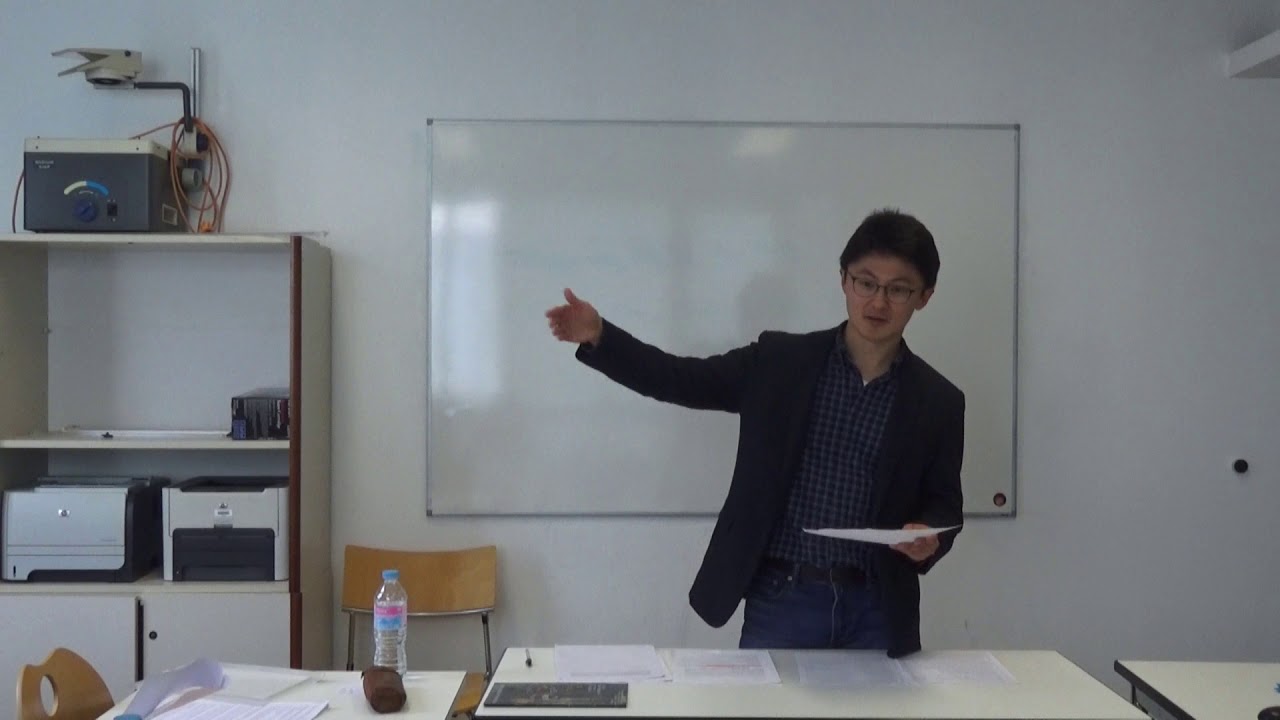
Séminaire "Modernités allemandes" : Dong Hun KIM - partie 1
Seminar "German Modernities": Dong Hun KIM - part 1
Keywords
Summary
135 words
Critical Evaluation
Value of the Information & Strength of the Argument
The information value is primarily testimonial: the speaker shares his personal experiences and insights from his studies and research. The argumentation is structured around his career path, which demonstrates the practical application of German studies in Korea. The speaker successfully argues for the importance of integrating theatre practice with literary analysis, using his own dissertation as an example. He provides concrete examples of theatrical projects and the intellectual debates they raised. However, the argumentation is based on anecdotal evidence rather than systematic analysis, which limits its scientific breadth but makes it a valuable case study for academic practices.
Scientific Rigor, Source Quality, Title Accuracy
The presentation does not cite specific sources but references established scholars like Schiller, Brecht, and Jelinek. The title accurately reflects the seminar content as a personal account and research presentation. The speaker’s credibility is supported by his academic positions (PhD, fellowship). The discussion with professors adds academic rigor and contextualizes the topic in a broader Franco-German perspective. However, the lack of formal citations and the personal nature of the talk reduce its rigorous scientific character.
188 words
Title / Content Match
The title accurately reflects the seminar: a presentation by Dong Hun KIM as part of the "German Modernities" seminar series. The content matches the title.
Quality & Reliability
6/10
The presentation is a personal narrative supported by the speaker's academic career and research. It is not peer-reviewed but demonstrates expertise in German studies and theatre practice. The discussion with professors adds complementary perspectives, though the content remains largely anecdotal.
Key Moments
Markers derived by PSI from the transcript: the creator did not define chapters.
- Introduction and presentation of Professor Dong Hun KIM
- Start of personal background: studies in Korea and Germany
- Theater festival at Seoul National University and its significance
- Experience in Germany and Weimar, encounter with Schiller's works
- Dissertation on Schiller's Maria Stuart and the distinction between Aufführung and Inszenierung
Cited Sources
- Séminaire Modernités allemandes - event page — Announcement and program of the seminar where this talk was given
Contribution & Novelties
The original contribution is a first-person account of the practice and challenges of German studies in Korea, highlighting the pedagogical role of theater. The speaker’s research on Schiller’s theatre practice offers a nuanced perspective on the relationship between literary text and stage performance. His conceptual distinction between Aufführung and Inszenierung is an important contribution to theatre studies.
Pour aller plus loin :
- Friedrich Schiller — Provides context on Schiller’s life and works, relevant to the dissertation discussed.
- Theatre studies — Overview of the field and its historical separation from literary studies.
- Mise-en-scène — Clarifies the concept of staging, related to Inszenierung.
101 words
Radar Profile
The radar profile shows moderate scores across all dimensions, reflecting a balanced but not highly technical presentation. The quality of information is slightly higher than quantity, indicating a focused narrative. Reliability is moderate, typical of a personal academic account.