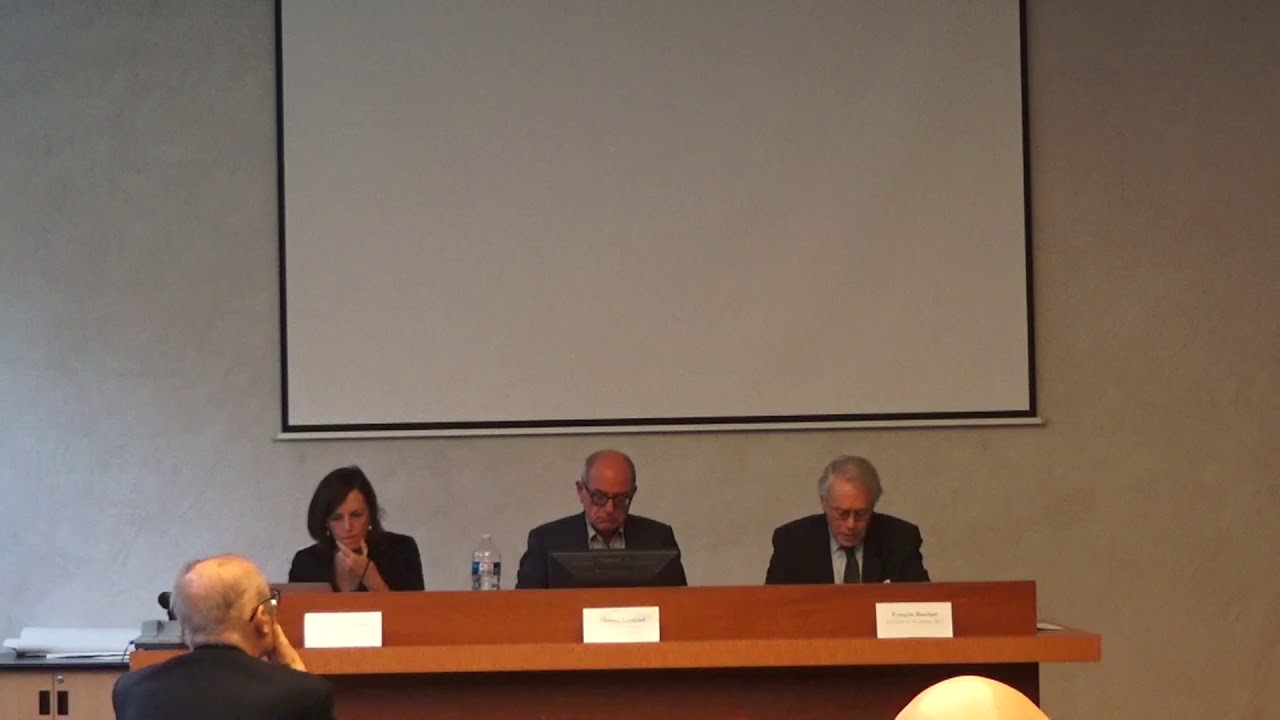
"Philon d'Alexandrie dans l'Europe moderne" - Conférences de François Roudaut et de Thomas Leinkauf
Philo of Alexandria in Modern Europe - Lectures by François Roudaut and Thomas Leinkauf
Keywords
Summary
146 words
Critical Evaluation
Value of the Information & Strength of the Argument
The value of this presentation lies in its detailed textual analysis, showing how Tyard selectively used Philo’s works, sometimes aligning with Philo’s allegorical interpretation and sometimes diverging to suit his own Christian framework. The argumentation is solid, grounded in primary sources such as Tyard’s treatises and Philo’s original texts. Roudaut carefully distinguishes between direct influence and parallel traditions, avoiding over-attribution. He also highlights the role of intermediary sources like Clement of Alexandria, enriching our understanding of textual transmission in the Renaissance. The lecture is well-structured, moving from biographical and library evidence to specific examples of borrowing and transformation.
Scientific Rigor, Source Quality, Title Accuracy
The presentation demonstrates high scholarly rigor. Roudaut cites specific editions of Philo consulted by Tyard, including Latin and French translations, and acknowledges when Tyard’s library inventory does not match extant copies. He critically evaluates whether apparent parallels are due to Philo or to common sources such as Aristotle, Augustine, or Clement. The title accurately reflects the content, as both lectures address the broader theme of Philo’s reception in early modern Europe. No comments were provided for analysis, so no public reception trends can be assessed.
198 words
Title / Content Match
The title accurately reflects the content: two lectures on the reception of Philo of Alexandria in early modern Europe, specifically focusing on Pontus de Tyard and non-scholastic texts of the 16th century.
Quality & Reliability
8/10
Academic conference talk by established scholars, based on primary sources and historical research. The arguments are well-supported and the presentation is rigorous.
Key Moments
Markers derived by PSI from the transcript: the creator did not define chapters.
- Introduction of François Roudaut and topic of Philo's influence on Pontus de Tyard.
- Discussion of Tyard's library and his three editions of Philo's works.
- Tyard's engagement with Philo from 1557, coinciding with his theological writings.
- Analysis of Tyard's use of Philo in 'Premier Curieux' and 'Second Curieux', including the concept of microcosm.
- Example of Tyard's critical approach, interpreting 'Israel' as 'seeing God' and comparing Philo with Christian tradition.
- Conclusion and question period, addressing how Tyard's perception of Philo relates to Plato.
Cited Sources
- Colloque Philon d'Alexandrie dans l'Europe moderne — Official conference program and description, providing context for the lectures.
Contribution & Novelties
The lecture offers a nuanced view of Tyard’s engagement with Philo, emphasizing that Tyard often accessed Philo indirectly through Christian sources like Clement of Alexandria. It challenges the notion of direct influence and highlights the multiplicity of textual pathways. This contributes to a more accurate understanding of Renaissance reception of ancient Jewish philosophical texts.
Pour aller plus loin :
- Philo of Alexandria — Provides a comprehensive overview of Philo’s life and works, essential for understanding his impact.
- Pontus de Tyard — Biographical and bibliographic context for the main subject of the first lecture.
- Clement of Alexandria — Key intermediary cited by Tyard, illustrating the importance of early Christian authors in transmitting Philo’s ideas.
113 words
Radar Profile
The profile shows high scores in quality, technical level, and reliability, indicating a rigorously academic and specific presentation. The quantity of information is slightly lower, reflecting a focused case study rather than a broad survey. Overall, a robust scholarly contribution.