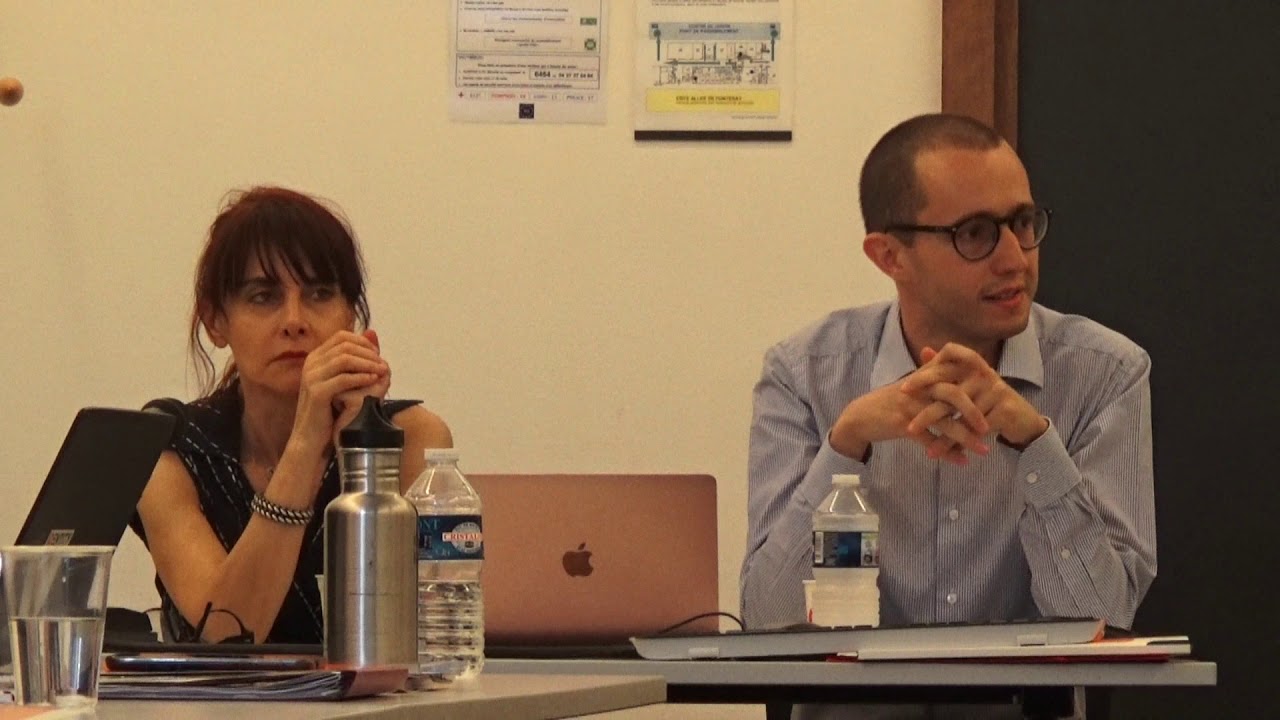
NéolatinLyon 2019 : Alex Pépino
NeolatinLyon 2019: Alex Pépino
Keywords
Summary
125 words
Critical Evaluation
Value of the Information & Strength of the Argument
The talk provides a detailed account of the transmission of a classical text, emphasizing the roles of manuscript discovery and the printing press. The argumentation is logical, moving from the historical background of Lucretius’s survival to the specifics of Lambin’s editorial work. Pépino builds a convincing case for the importance of Lambin’s edition in the broader context of Renaissance humanism and the reception of Epicurean philosophy. The discussion of Lambin’s preface is enriched by the lecturer’s ability to connect textual criticism with political and religious circumstances, offering a nuanced interpretation of the sources. The content is well supported by references to primary sources, though the spoken format limits the depth of verification.
Scientific Rigor, Source Quality, Title Accuracy
The speaker demonstrates a strong command of the subject, referencing well-known historical figures and works. The sources mentioned are relevant and credible, including the 1563 edition itself and the earlier edition by Giovanni Battista Pio. The description of the text’s transmission aligns with established scholarship, and the speaker does not introduce speculative claims. The title of the video is minimal, only naming the speaker and event, which is typical for conference recordings—it does not mislead but also does not advertise the content. No external links are provided in the description to further verify sources, but the scholarly context suggests high reliability.
228 words
Title / Content Match
The title simply gives the speaker's name and event, not indicating the content. It is adequate for a conference talk but not descriptive.
Quality & Reliability
8/10
The speaker is a scholar presenting historical research on a Renaissance edition. The talk is well-structured, cites primary sources, and situates the topic within its historical context. The reliability is high, though some claims are not directly verifiable from the video alone.
Key Moments
Markers derived by PSI from the transcript: the creator did not define chapters.
- Introduction to Denis Lambin's 1563 edition of Lucretius and its historical significance.
- Background on the decline of Lucretius's text in the Middle Ages due to lack of manuscripts.
- Poggio Bracciolini's discovery of a complete manuscript in 1417 and its impact.
- The role of the printing press in spreading Lucretius across Europe, with key editions.
- Analysis of Lambin's preface, its dedication to the king, and the religious-political context.
Cited Sources
- Denis Lambin's 1563 edition of De rerum natura — The main subject of the talk, particularly its preface and editorial choices.
- Poggio Bracciolini's discovery of Lucretius manuscript — Mentioned as the rediscovery event that revived the text in the Renaissance.
- Giovanni Battista Pio's 1515 edition of Lucretius — Cited as an earlier edition with a commentary that influenced the French reception.
Contribution & Novelties
The presentation offers a focused analysis of Lambin’s preface, shedding light on the interplay between textual scholarship and cultural context. It underscores the importance of print in the transmission of classical texts and provides a nuanced account of how Renaissance scholars dealt with controversial philosophical content. The talk adds depth to understanding the humanist practices of editing and commenting on ancient authors.
Pour aller plus loin :
- De rerum natura — Lucretius’s poem, essential to understanding the text discussed.
- Poggio Bracciolini — The humanist who rediscovered the manuscript.
- Renaissance humanism — The intellectual movement context.
- Denis Lambin — The subject of the talk.
103 words
Radar Profile
The profile shows strong reliability and information quality, with moderate technical level, indicating a solid scholarly presentation. The quantity of information is adequate for the short duration, and the overall fiability is high.