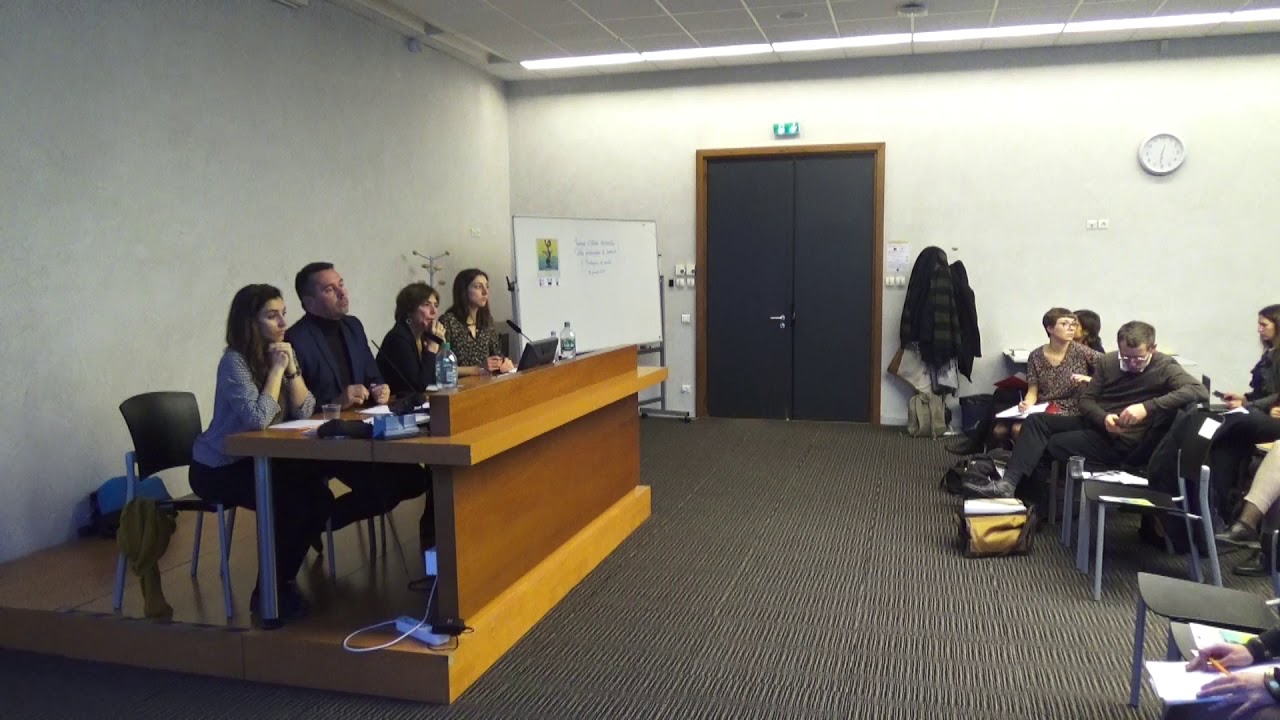
Journée d'études doctorales "Une philosophie de terrain?" - Intervention de Fabrice Gzil (partie 2)
Doctoral study day "A field philosophy?" - Intervention by Fabrice Gzil (part 2)
Keywords
Summary
159 words
Critical Evaluation
Value of the Information & Strength of the Argument
The value lies in the speaker’s candid reflection on the practical and ethical challenges of doing philosophy ‘on the ground.’ He articulates a clear position: philosophy can and should engage with concrete experiences, but without losing its critical distance. His argumentation is coherent and grounded in personal experience, though it remains discursive and exploratory rather than systematic. He addresses counterarguments, such as the risk of being a ‘voyeur’ or the instrumentalization of research, and responds with thoughtful considerations. The discussion also clarifies that methodological creativity is essential and that philosophy does not need to imitate sociology or anthropology.
Scientific Rigor, Source Quality, Title Accuracy
The talk is rigorous in its conceptual clarity, but it does not cite specific sources systematically. References are made to thinkers like Gilles Deleuze, Michel Foucault, Catherine Malabou, and Terry Fox, but always in passing. The title is fully appropriate: it is part 2 of a doctoral study day on field philosophy, and the content matches the announced theme. No comments on the video were analyzed for this review, as none were provided.
186 words
Title / Content Match
The title accurately reflects the content: a doctoral study day on field philosophy, with this second part focused on questions and answers.
Quality & Reliability
7/10
The speaker is a trained philosopher with hands-on experience in Alzheimer's care settings. His reflections are nuanced and grounded, though the format is a Q&A session without systematically cited sources. The credibility rests primarily on his professional standing and the coherence of his arguments.
Key Moments
Markers derived by PSI from the transcript: the creator did not define chapters.
- Opening of Q&A; Gzil addresses the legitimizing power of referencing authorities.
- Gzil discusses his initial fear and hesitation before entering a geriatrics unit.
- Explanation of how he presented himself as a philosopher and the positive reception from families.
- Discussion on the need for methodological creativity and adaptation to the research question.
- Gzil talks about the importance of participatory research and groups for patient expression.
- Mention of Catherine Malabou's work on plasticity and her path from aesthetics to neurobiology.
- Reflection on the intellectual's role in society and the risk of instrumentalization.
- Gzil urges philosophers to be present and critical in public debates, especially on Alzheimer's.
Contribution & Novelties
This talk provides a firsthand account of what it means to practice ‘field philosophy’ in a medical context, offering concrete reflections on legitimacy, methodology, and the philosophical value of engaging with patients. Gzil’s emphasis on methodological creativity and his distinction between training and disposition is a valuable contribution to the ongoing debate on public philosophy.
Pour aller plus loin :
- Gilles Deleuze — relevant to the discussion of philosophy as a creative practice.
- Michel Foucault — his concept of the ‘specific intellectual’ is directly addressed in the talk.
- Catherine Malabou — her work on plasticity and the brain is explicitly mentioned and connects to the theme of identity transformation.
109 words
Radar Profile
The profile shows high qualitative and technical scores, with slightly lower ratings for quantity and global reliability, reflecting the intimate, Q&A format and the subjective nature of the expert testimony.