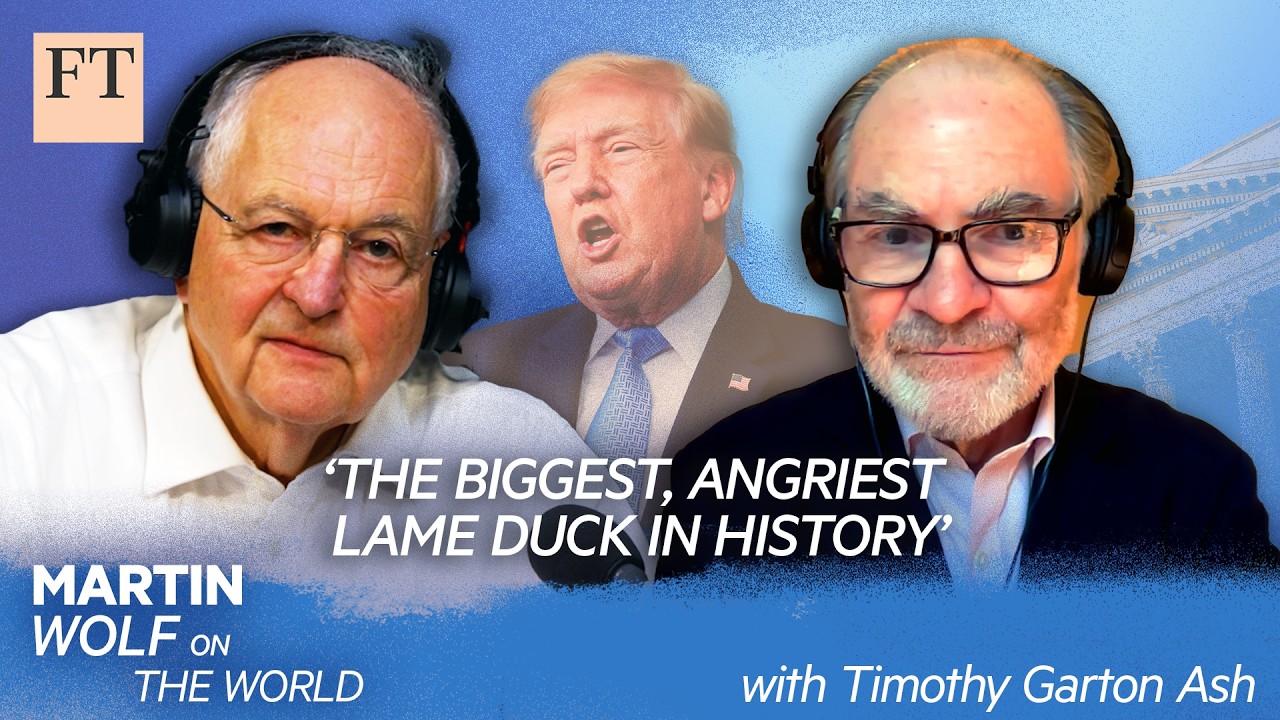
Trump loses. European populism lives on | Martin Wolf on the US midterms | FT
Title history
- Trump loses. European populism lives on | Martin Wolf on the US midterms | FT — observed on 20261114-0842 UTC (YouTube)
Keywords
Summary
189 words
Critical Evaluation
Value of the Information & Strength of the Argument
The video offers substantial value through the insights of two highly experienced commentators. Garton Ash’s historical perspective, drawing on his work on Eastern Europe and his book ‘Europe in 7½ Chapters’, grounds the analysis in long-term trends. The argument is well-structured, distinguishing between short-term electoral results and deeper structural forces. The discussion is nuanced, acknowledging counterarguments and avoiding simplistic narratives. The value lies in the depth of the expert analysis, the breadth of topics covered, and the balanced approach to assessing the prospects for liberal democracy.
Scientific Rigor, Source Quality, Title Accuracy
The discussion demonstrates high scholarly rigor, with both participants referencing historical events, recent elections, and policy recommendations. Garton Ash explicitly mentions his book and the concept of ‘Operation Save US Democracy’ from a prior article. The title is precise and encapsulates the central theme of the conversation. While the video is an opinion-led debate rather than a systematic review of literature, the expertise of the speakers and the quality of the reasoning make it a reliable source for understanding political dynamics. The FT’s reputation adds credibility to the content.
190 words
Title / Content Match
The title accurately reflects the content: the Democrats' victory is discussed, and the persistence of European populism is a central theme.
Quality & Reliability
8/10
The video features two prominent experts (Martin Wolf, chief economics commentator at the FT, and Timothy Garton Ash, historian and Oxford professor emeritus) discussing the US midterms and European populism. The discussion is well-informed and balanced, drawing on historical analysis and current events. However, it is primarily an opinion-based conversation rather than original research, so the score is slightly reduced.
Key Moments
Markers derived by PSI from the transcript: the creator did not define chapters.
- Introduction of the topic and guests.
- Discussion of post-1989 liberal triumphalism and the illusion of a new normal.
- Comparison of American and European populism, and the role of Trump's support.
- Analysis of European nationalist parties and the EU as a target.
- Advice for Democrats: focus on cost of living, avoid culture wars, expose corruption.
- European defense integration and the need for independent capabilities.
- Discussion of a potential role reversal between the US and Europe, and Brexit.
Cited Sources
- Europe in 7½ Chapters — Timothy Garton Ash's book, referenced as the basis for his arguments about the post-1989 order.
External References
Contribution & Novelties
The conversation provides an original synthesis of US and European populist dynamics, linking the midterm results to broader historical cycles. Garton Ash’s concept of a ‘post-western world’ and the need for European strategic autonomy are particularly insightful. The discussion offers a nuanced view of how democratic backsliding can be reversed, using examples from Hungary and Poland, and suggests concrete steps for both US Democrats and European leaders.
Pour aller plus loin :
- Populism (Wikipedia) — Overview of populism as a political phenomenon, useful for understanding the common factors discussed.
- Liberal democracy (Wikipedia) — Background on the political system that the conversation addresses.
- Operation Save US Democracy — While this specific article may not exist on Wikipedia, the general concept of defending democratic institutions is covered under the topic of democratic backsliding: https://en.wikipedia.org/wiki/Democratic_backsliding .
133 words
Radar Profile
The radar profile is balanced, with high scores in information quantity and quality, reflecting the depth of the discussion. The moderate technical level indicates the content is accessible but intellectually sophisticated. The high reliability score reflects the credibility of the FT and the expertise of the speakers.