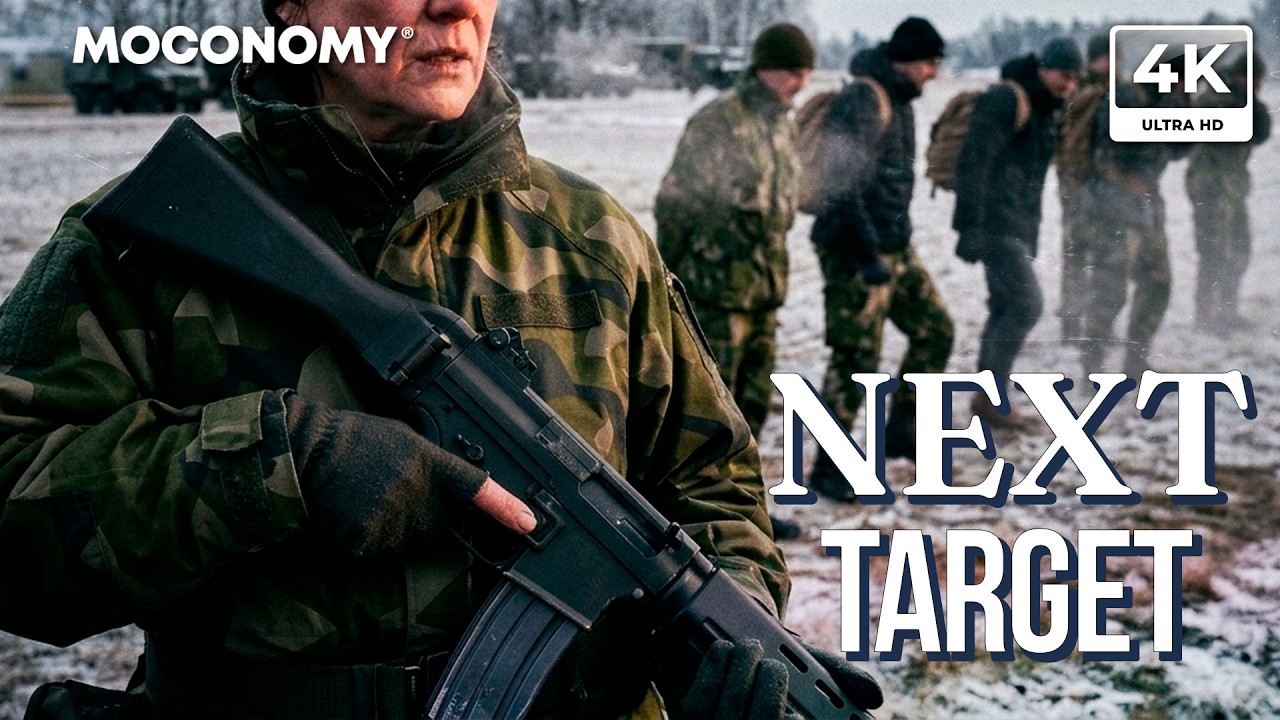
Kaliningrad: A Russian Fortress in the Heart of Europe | Nuclear missiles 500 km from Berlin | 4K
Keywords
Summary
330 words
Critical Evaluation
Value of the Information & Strength of the Argument
The informational value is high and noticeably concrete: almost every section is anchored in a measurable fact or a first-hand scene rather than in commentary. Viewers learn the physical and demographic scale of the exclave (15,000 km², close to a million inhabitants), the order of magnitude of the Russian garrison and fleet, the nominal range of the Iskander systems, the size of the Lithuanian militia relative to the regular army, the number of monuments slated for demolition in Latvia, the number of non-citizens and their legal disabilities, and the lived cost of sanctions through specific prices — a packet of detergent at 258 rubles, a pension of 12,000 rubles, coal consuming two-thirds of a monthly pension. The film also names and shows its sources of testimony rather than hiding behind anonymous vox pops: a psychologist and her children, a pensioner dependent on state television, a tour operator who invested half a million euros in a campsite, a Communist candidate, a deputy mayor, a militia commander and a new recruit. The argumentative architecture is comparative and mirrored: each Russian or Russian-speaking sequence is answered by a Baltic sequence, producing the implicit thesis that both sides are being pushed by fear into increasingly hard postures. This symmetry is rhetorically effective but also a weakness, since it treats school patriotism rituals in Kaliningrad, Allied monument demolition in Latvia and militia training in Lithuania as equivalent expressions of the same dynamic, when their legal and institutional contexts differ sharply. Causality is sometimes asserted rather than demonstrated: sanctions are presented as the direct cause of regional economic contraction without isolating other factors, and the claim that Kaliningrad has been ’transformed into a military outpost’ in recent years glosses over a much longer continuity of militarisation dating back to the Soviet period. Emotional levers — family deportations to Siberia, a pupil told to stop speaking Russian at school, a mother’s rejection of her daughter’s Latvian identity — carry a large part of the persuasive load and are used empathetically, but they are individual testimonies generalised into social diagnosis without an explicit methodological caveat. The strongest argumentative element is the film’s access: showing the police stopping the crew, the border checks on the train, and the emptied tourist infrastructure gives the viewer evidence that would be hard to obtain otherwise, and the closing electoral result, contrasted with the earlier depiction of a campaign without real competition, lands as a factual rather than editorial conclusion.
Scientific Rigor, Source Quality, Title Accuracy
Sourcing is journalistic rather than scholarly: there is no bibliography, no cited study, no named academic specialist and no on-screen reference to institutional reports. Authority rests on presence in the field and on named witnesses, which is legitimate for the genre but limits verifiability. Where a claim originates outside the reporting, the film generally says so — the Sarmat missile discussion is explicitly attributed to a broadcast on Russian public television, and the status of the Baltic Fleet and Iskander basing is presented as observable fact rather than as sourced estimate. Other numbers, notably the comparative size of the Baltic Fleet, the exact scale of price increases, and the assertion that Iskander strikes could reach Berlin ‘within minutes’, are delivered without attribution and should be treated as approximate. The film does give voice to the Russian-speaking side within Latvia and to a Kaliningrad electorate whose alternatives are shown to be nominal, but it offers no Russian official, military or independent-expert counterpoint, so the Kremlin’s positions are represented only through the behaviour of its citizens, its broadcasters and its governor. The treatment of the Communist candidate is notably careful: he is presented as an opponent whose discourse converges with the official line, and the film shows the moment when his own office undercuts his fraud campaign, which is an honest rather than a caricatural portrait. On title-to-content fit, the promise of a fortress narrative with nuclear missiles within reach of Berlin is delivered in full and without inflation; the ‘4K’ element is a format descriptor rather than a substantive claim. No viewer comments were available for this note, so no audience-trend analysis is offered.
695 words
Title / Content Match
The title's core claims — a militarised Russian exclave, nuclear-capable Iskander missiles roughly 500 km from Berlin — are explicitly covered and substantiated within the film, and the 'fortress' framing matches the content. The only mild gap is the '4K' technical label, which is a format claim rather than a content claim.
Quality & Reliability
6/10
On-the-ground documentary journalism with named interviewees on both sides of the border, filmed inside a territory that has been largely closed to Western media since 2022. Figures are concrete and mostly attributable (30,000 troops, 130 warships, Iskander missiles, 200,000 Latvian non-citizens, 13,000 Riflemen), and rhetoric attributed to Russian state television is explicitly flagged as such. However, no documentary or academic sources are cited on screen, several quantitative claims (Sarmat deployment plans, price comparisons, the 'bigger than any other navy in Europe' assertion) are stated without sourcing, and the narrative is structured around a pre-established escalation thesis with limited space given to Russian official or independent-expert counter-argument. Reliability is therefore that of serious broadcast journalism rather than of peer-reviewed or source-referenced analysis.
Key Moments
Markers derived by PSI from the transcript: the creator did not define chapters.
- Staged riot in Kaišiadorys: Lithuanian Riflemen's Union volunteers defend a town hall against actors playing pro-Russian demonstrators, introducing the militia's mission.
- Border guards board the Moscow–Kaliningrad train at Kybartai/Kena, check every passenger, and attach a GPS beacon to detect undeclared stops inside Lithuania.
- Start of the school year in Kaliningrad: flag-raising ceremony, weekly anthem, and the Kremlin-approved history and current-affairs curriculum personally inaugurated by Putin in September 2022.
- Military build-up quantified: Baltic Fleet headquarters, 130 warships, Iskander ballistic missiles presented as reaching Berlin in roughly 500 km, and state-television talk of Sarmat deployment.
- Gubernatorial election: Communist candidate Maxim Bulanov's campaign, police stopping the crew's car outside a polling station, and the later result giving him about 5% against Alikhanov's 80%-plus.
- Sanctions and the collapse of tourism: empty luxury campsite, closed Baltic and Polish borders to Russian tourists, and the exclusion of Kaliningrad residents from neighbouring countries.
- Urban-combat exercise with the Riflemen: blanks, confusion, ammunition wasted, and the commander's estimate that a third of the trainees would be dead on a real battlefield.
- Latvia's law ordering the removal of 69 Soviet-era monuments, the fall of the Riga obelisk, and the resistance of Daugavpils, where 80% of residents are Russian-speaking.
- The legal status of 200,000 non-citizens and the restriction of Russian in public spaces and schools, illustrated by one family's generational conflict and a pupil's discrimination complaint.
- Cultural casualties and closing synthesis: Slavic folk celebration in Daugavpils, poverty affecting mostly Russian speakers, and final election result confirming the Kremlin's hold on the enclave.
Cited Sources
- Moconomy — World Economy playlist — Channel playlist linked in the description; situates this documentary within the publisher's economics and geopolitics catalogue. It is a distribution link, not a reference supporting any factual claim in the film.
- Moconomy — Originals playlist — Playlist of the publisher's own productions, linked in the description; relevant only to establish that this film is presented as an original Moconomy documentary.
- Moconomy — related documentary (video link) — Additional documentary offered in the description as related viewing; no substantive citation role for the claims made in this film.
- Moconomy — related documentary (video link) — Related documentary listed in the description; distribution link only.
- Moconomy — related documentary (video link) — Related documentary listed in the description; distribution link only.
Concurring Sources
- Kaliningrad Oblast (encyclopaedic overview) — Corroborates the territorial, demographic and historical framing: Prussian/German past, 1945 annexation under the Potsdam agreement, isolation after the fall of the USSR, and the exclave's current population scale.
- 9K720 Iskander (weapons reference) — Supports the film's statement that Iskander systems are conventionally described as dual-capable and deployed in the Kaliningrad region with ranges consistent with reaching Central European capitals.
- Lithuanian Riflemen's Union (organisational reference) — Confirms the nature, history and civilian-volunteer composition of the paramilitary organisation the film follows, including the urban-combat training programme presented as a lesson drawn from the war in Ukraine.
- Curonian Spit (UNESCO World Heritage reference) — Corroborates the description of the 100 km sand strip shared with Lithuania as a UNESCO World Heritage site, used in the tourism-collapse sequence.
External References
Contribution & Novelties
The film’s distinctive contribution is access combined with a two-sided structure. Western reporting on Kaliningrad is usually written from outside a territory that has become difficult to enter since 2022; here the crew films inside schools, polling stations, a naval museum, a pensioner’s coal store and a shuttered campsite, and records its own brief detention by police near a polling station. Rather than treating the exclave as an abstract missile base, it shows the everyday machinery that sustains the militarised narrative — anthem ceremonies, a submarine turned into a family attraction, a portrait of Putin in a ward room, a single television set as the sole news source in a household. The second contribution is the mirrored editing: Lithuanian militia recruitment, Latvian monument demolition and language legislation are placed in the same frame as Russian school reform and propaganda, which makes visible how security fears and memory politics reinforce each other across a single border. The main limit to novelty is interpretive rather than factual: the escalation thesis it illustrates is well established in the strategic literature, and the film adds texture and testimony more than new evidence or new causal analysis.
Pour aller plus loin :
- Kaliningrad Oblast — Overview of the exclave’s history from Königsberg to Soviet annexation and its post-1991 isolation; useful background for the demographic and territorial figures used in the film.
- 9K720 Iskander — Technical and deployment data on the ballistic missile system the film describes as based in the region and capable of reaching Berlin; allows the viewer to check the range and warhead claims.
- RS-28 Sarmat — Reference on the heavy intercontinental missile that Russian state television speculated about moving to Kaliningrad; helps separate announced intentions from confirmed deployments.
- Baltic Fleet — Institutional context for the 130-warship figure and for the fleet headquarters role the film attributes to the enclave.
- Curonian Spit — UNESCO-listed sand strip described in the tourism sequence; documents the cross-border Lithuanian/Russian character of the site.
- Suwałki Gap — The narrow Poland–Lithuania corridor between Belarus and Kaliningrad, the strategic concept implicitly underpinning the film’s ‘second front’ framing; cited by name only, as no single canonical reference is given.
- Latvian non-citizens — The legal category covering the 200,000 Russian speakers discussed in the film; cited by name only, since the applicable rules have changed over time and require consultation of current Latvian legislation.
392 words
Radar Profile
The profile is that of a well-produced investigative documentary: high marks on information quantity and quality, driven by field access and concrete figures, with technical depth kept at an accessible but not superficial level. Reliability sits in the middle of the scale because sourcing is testimonial and on-camera rather than bibliographic, and several quantitative and forecasting claims are voiced without attribution. The overall shape is dense and informative but methodologically journalistic rather than scholarly.