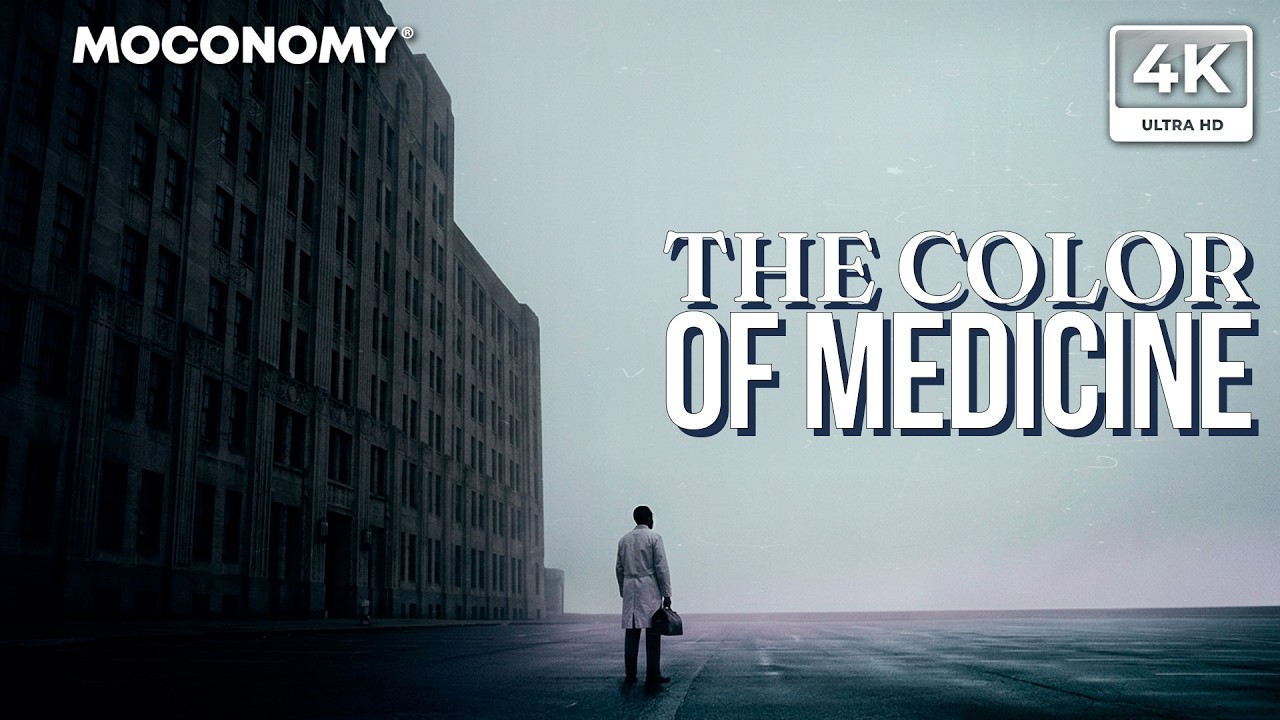
Racism In Medicine | One Third of Black Doctors in America Trained Here | 4K
Title history
- Racism In Medicine | One Third of Black Doctors in America Trained Here | 4K — observed on 20261117-1758 UTC (YouTube)
Keywords
Summary
157 words
Critical Evaluation
Value of the Information & Strength of the Argument
The documentary provides significant historical value by bringing attention to an under-recognized institution that played a crucial role in Black medical education. Its argumentation is strengthened through a combination of archival footage, photographs, and personal testimonies from multiple perspectives, including descendants of staff, historians, and former employees. The narrative presents a balanced view, acknowledging both the pride associated with the hospital and the systemic racism that necessitated its existence. The story is told with emotional depth and factual rigor, making it a compelling and informative piece.
Scientific Rigor, Source Quality, Title Accuracy
The documentary exhibits strong scientific rigor, relying on primary sources such as newspaper archives, legal documents, and first-hand accounts from survivors and descendants. The interviews are conducted with credible experts, including historians and medical professionals, who provide context and analysis. The title is appropriate and effectively conveys the central theme of racism in medicine while highlighting the hospital’s specific contribution. The chapters are well-structured, and the pacing allows for a thorough exploration of the subject. No overt bias is detected; the film acknowledges the complexities of segregation and the hospital’s dual legacy as both a symbol of pride and a product of racist policies.
205 words
Title / Content Match
The title accurately reflects the content, focusing on racism in medicine and the hospital's role in training Black doctors. The subtitle about one third of Black doctors trained there is a key statistic discussed extensively.
Quality & Reliability
8/10
The documentary is well-researched, featuring interviews with historians, medical professionals, and community members, and relies on historical records and personal testimonies. The narrative is coherent and provides a detailed account of the hospital's founding, its significance, and its closure.
Chapters
- The new hospital opens
- St. Louis segregation history
- The Ville neighborhood
- Attorney Homer G. Phillips
- The fight for a Black hospital
- An unsolved assassination
- The first 27 interns
- Dr. Helen Nash and pediatrics
- A generation of physicians
- The nurses of Homer Phillips
- The battle to save the hospital
- Closed under cover of darkness
Cited Sources
- Moconomy - World Economy Playlist — Playlist from the same channel containing documentaries on world economy, likely relevant for viewers interested in broader socio-economic contexts.
- Moconomy - Originals Playlist — Playlist of original documentaries produced by Moconomy, of which this film is a part.
- Related documentary video — Another documentary from the same channel, likely covering similar social or historical topics.
- Related documentary video — Another documentary from the same channel, possibly on related themes.
- Related documentary video — Another documentary from the same channel, likely featuring similar historical or social analysis.
Contribution & Novelties
This documentary contributes a detailed and humanizing account of Homer G. Phillips Hospital, a pivotal but often overlooked institution in African American medical history. It brings together rare archival footage and interviews with individuals who experienced the hospital first-hand, offering both emotional resonance and factual depth. The film underscores the systemic obstacles Black medical professionals faced and how the hospital served as a beacon of excellence despite segregation.
Pour aller plus loin :
- Homer G. Phillips Hospital — Provides a concise historical overview and references, serving as a factual complement to the documentary.
- Racism in medicine — Contextualizes the broader systemic issues of racism in healthcare, connecting the hospital’s history to ongoing debates.
- The Ville, St. Louis — Describes the neighborhood where the hospital was located, illustrating the community’s role in its success.
133 words
Radar Profile
The scores indicate a strong performance in information quantity and reliability, with moderate technical level. This suggests a documentary that prioritizes thorough historical coverage and credibility over theoretical or technical depth. The qualitative and quantitative assessments align, reflecting a well-researched and accessible presentation suitable for a general audience interested in social history.