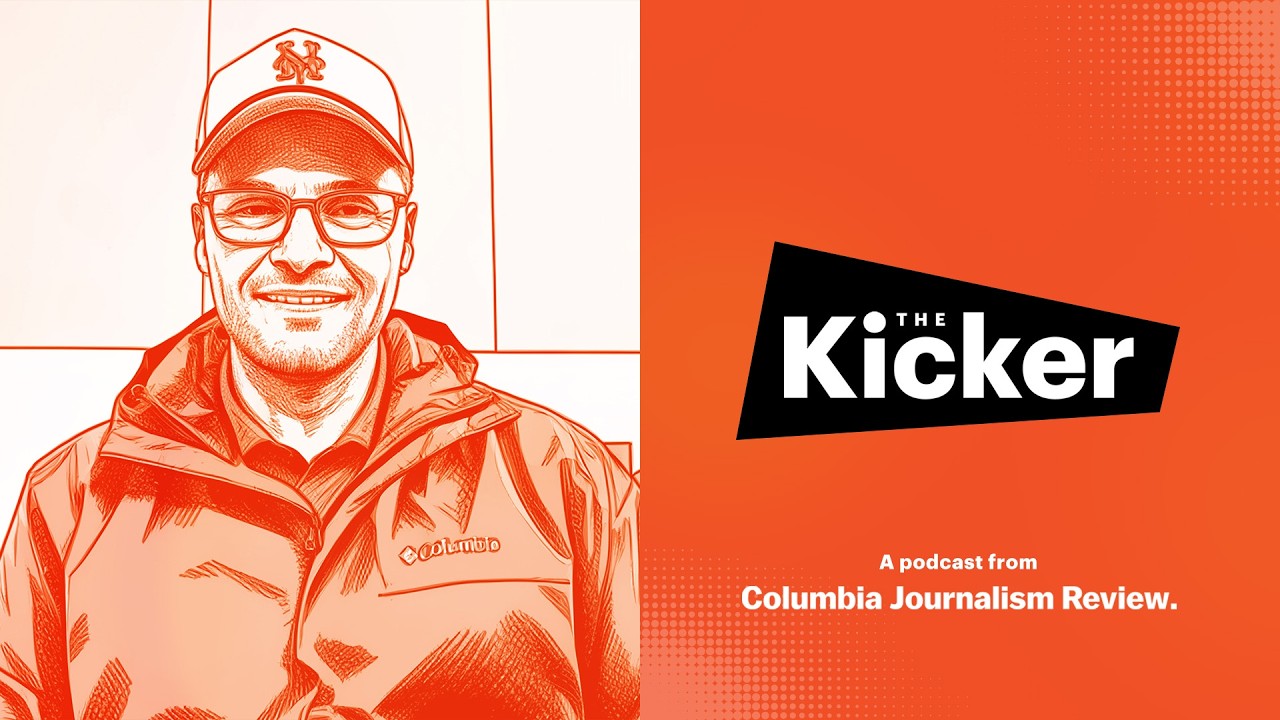
Is It Crazy to Go to Journalism School? | The Kicker
Title history
- Is It Crazy to Go to Journalism School? | The Kicker — observed on 20261112-0400 UTC (YouTube)
Keywords
Summary
152 words
Critical Evaluation
Value of the Information & Strength of the Argument
The value of this episode lies in its authentic first-hand account of the difficulties and rewards of transitioning to journalism. Peña’s arguments for making the change are personal and persuasive: he draws parallels between his past investigative work and journalistic reporting, and he emphasizes the need for diverse voices in newsrooms. The reasoning is coherent, and he openly acknowledges the challenges, such as learning to write clearly and the financial sacrifice. However, the argumentation is primarily anecdotal and does not address broader industry data on journalism school outcomes or job prospects. The conversational format allows for nuance, but the lack of external evidence weakens the overall argument for the necessity of journalism school.
Scientific Rigor, Source Quality, Title Accuracy
The scientific rigor is limited as this is an interview rather than a systematic study. The guest’s statements are based on personal experience, and while he references his own published pieces on Substack, no external scientific sources are cited. The title is appropriate, focusing on the core question without misleading. The Columbia Journalism Review is a credible institution, enhancing the trustworthiness of the platform. The absence of structured data or citations means the video is not a source of hard facts but rather a reflective commentary. The adequacy between title and content is strong, as the entire episode revolves around the decision to attend journalism school.
234 words
Title / Content Match
The title accurately reflects the central question of the episode: weighing the decision to attend journalism school as a career changer. The content directly addresses this through the guest's personal experience.
Quality & Reliability
7/10
The interview offers a personal narrative from a credible individual (former prosecutor, Marine) about transitioning to journalism. The source is the Columbia Journalism Review, a reputable institution, and the conversation provides genuine insight into the challenges of journalism education. However, it relies solely on anecdotal experience without systematic research or data.
Key Moments
Markers derived by PSI from the transcript: the creator did not define chapters.
- Peña discusses the difficulty of adjusting to journalistic writing, explaining how his legal background made it hard to write for a general audience.
- He describes his motivation to become a Marine and the initial obstacle due to his undocumented status.
- Details his eight years in the Marines, including his role as a criminal investigator and deployment to Afghanistan.
- Explains why he left the Marines and went to law school, driven by a desire to impact society.
- Recounts his experience as a Manhattan prosecutor and later at HSBC in Mexico City, working on financial crime investigations.
- Describes his growing dissatisfaction with certain investigations at the attorney general's office, leading him to consider journalism.
Cited Sources
- Jonny Peña's Substack — Show notes link to his Substack profile, where he publishes articles.
- What I Learned Reporting on New York City’s Immigration Courts (Part 2), Jonny Peña — Mentioned as one of his published pieces during his journalism studies.
- As DACA Renewals Stall, Dreamers Lose Work Permits—and Paychecks, Jonny Peña — Another article referenced in the show notes, relevant to his reporting on immigration.
Contribution & Novelties
The video provides a unique first-person perspective on the transition from a legal and military career to journalism, highlighting the transferable skills and the steep learning curve. It offers encouragement to professionals considering similar pivots and sheds light on the realities of investigative journalism education. This narrative adds to the discourse on journalism training, though it does not present original research or systematic findings.
Pour aller plus loin :
- Investigative journalism - Wikipedia — Overview of the field, its methods, and history, directly relevant to Peña’s goals.
- Journalism education - Wikipedia — Discussion of the different approaches to journalism training worldwide, contextualizing the debate.
- Columbia Journalism School — The institution where Peña studies; provides information on the curriculum and programs he references.
122 words
Radar Profile
The radar profile shows moderate scores in information quantity and quality, with a lower technical level, reflecting the accessible, anecdotal nature of the interview. The reliability is decent due to the credible host, but the lack of external data keeps it from being a rigorous scientific source.