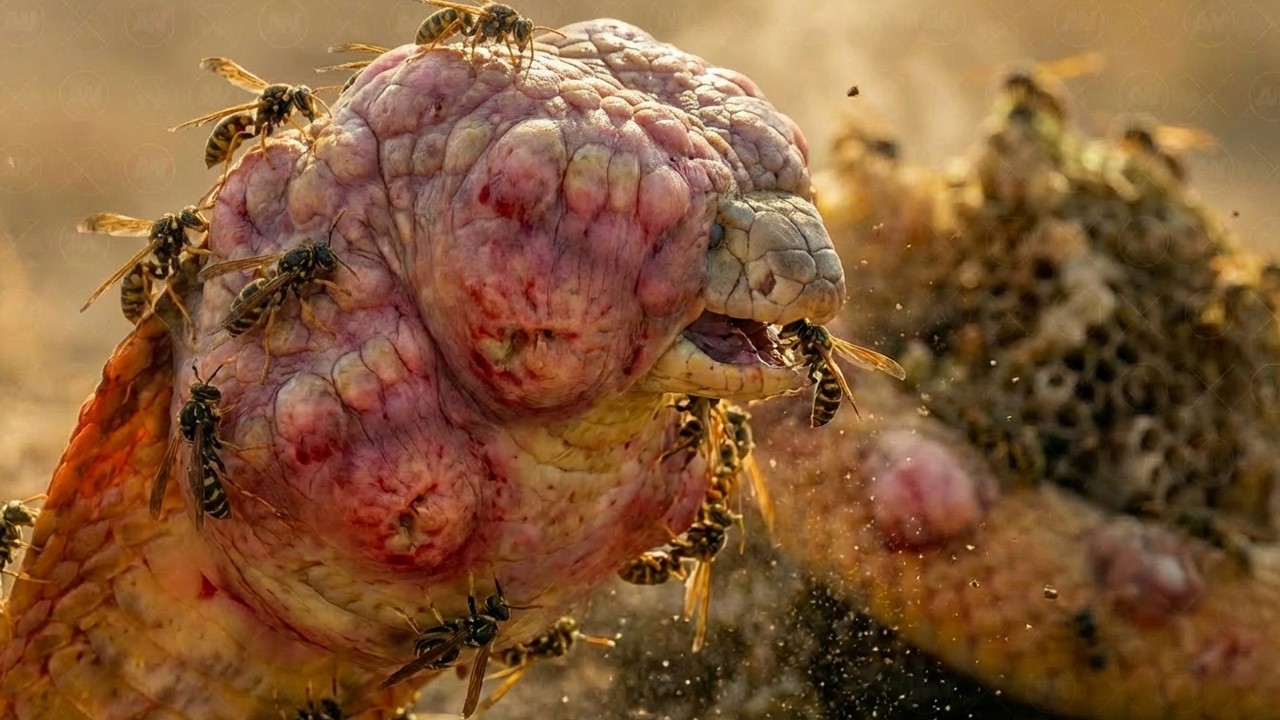
When Wasp Venom Gets into the King Cobra
Title history
- When Wasp Venom Gets into the King Cobra — observed on 20261101-0133 UTC (YouTube)
Keywords
Summary
175 words
Critical Evaluation
Value of the Information & Strength of the Argument
The value of the information lies in its comprehensive overview of a real ecological and public health issue in Nepal, supported by statistics and concrete examples. The video presents a balanced argument, weighing the potential of wasp-based biological control against its ecological risks and the difficulty of controlling wasp behavior. It effectively compares the theoretical model (wasps attacking snake eggs) with observed behavior in other contexts (e.g., tree frogs) while honestly admitting that direct attacks on snake clutches remain unconfirmed. The argumentation is structured, starting from the problem, exploring causes (habitat loss, climate), then proposing solutions and critically evaluating each. A notable strength is the caution against simplistic interventions, exemplified by the warning that removing snakes could lead to rodent outbreaks. However, the video occasionally over-relies on dramatization and humorous interludes, which may undermine its scientific seriousness. Overall, the core argument is sound and thought-provoking, though it lacks citations to peer-reviewed studies.
Scientific Rigor, Source Quality, Title Accuracy
Rigor in this video is mixed: it presents factual data (e.g., snake bite statistics, frequency of cobra sightings) and references to research on habitat fragmentation and climate change, but does not name specific studies or scientists. The mention of a WHO interactive platform is plausible but not accompanied by a URL. The use of illustrative examples (e.g., wasps attacking frog eggs) aligns with known biology, but the extrapolation to snake eggs is speculative, and the video clearly labels it as such. Sources are not cited within the video or description, so the viewer cannot verify claims independently. The title ‘When Wasp Venom Gets into the King Cobra’ is attention-grabbing and reflects the core suggestion, but it overshadows the broader content on human-snake conflict and mitigation strategies; this slight misalignment does not significantly detract from the overall relevance. Commentary analysis shows viewers generally find the content educational and engaging, with some correcting minor errors (e.g., a Burmese Python shown when discussing king cobras) and many voicing concerns about the ethical implications of introducing wasps.
340 words
Title / Content Match
The title is catchy and relates to the central idea of using wasps against cobras, though the video actually covers a broader range of causes and mitigation strategies for human–snake conflicts.
Quality & Reliability
6/10
The video provides accurate general information about king cobra ecology and human–snake conflicts, but lacks direct citations and includes speculative proposals about wasp control that are not backed by empirical evidence.
Key Moments
Markers derived by PSI from the transcript: the creator did not define chapters.
- Introduction to Nepal and the rising issue of king cobra encounters near Kathmandu.
- Discussion of habitat fragmentation and urban expansion pushing snakes into populated areas.
- Statistics on snake bites and the gradual increase in incidents, along with treatment center expansion.
- Introduction of the wasp control idea and examination of natural predation on young snakes and eggs.
- Limitations of wasp-based control and the ecological risks of introducing them.
- Alternative solutions: habitat management, buffer zones, snake relocators, and public awareness.
- Emphasis on combining measures and the danger of delaying medical treatment after a bite.
Contribution & Novelties
The video’s original contribution is its exploration of using wasps and hornets as potential biological control agents for king cobra populations, a concept that is plausible based on analogous predation on other vertebrate eggs but lacks direct scientific validation. It also synthesizes existing knowledge on snake ecology, urban encroachment, and climate-induced range shifts into a cohesive narrative, making it accessible to a broad audience. The video realistically assesses the feasibility and risks, contributing a balanced perspective to the debate on human–snake conflict management.
Pour aller plus loin :
- King cobra — Overview of the species’ biology and distribution.
- Habitat fragmentation — Explanation of how fragmentation affects biodiversity and wildlife behavior.
- Biological pest control — Discussion of using natural enemies to manage pest populations and its limitations.
- Climate change and species range shifts — Scientific context on how warming temperatures alter animal distributions.
- WHO’s interactive snakebite platform — Mentioned in the video, but no URL provided; relevant to public health response.
160 words
Radar Profile
The radar chart shows a moderately balanced profile with stronger scores in information quantity and content quality, but lower technical depth and reliability. This reflects the video's strength as an engaging educational overview rather than a rigorous scientific analysis, with a notable gap between its informative value and its grounding in verifiable sources.
💬 Orientation : positive. Sur les 30 commentaires analysés, la majorité exprime de l'intérêt et de l'appréciation, avec un mélange d'humour et de préoccupations sérieuses sur l'équilibre écologique et les solutions proposées.