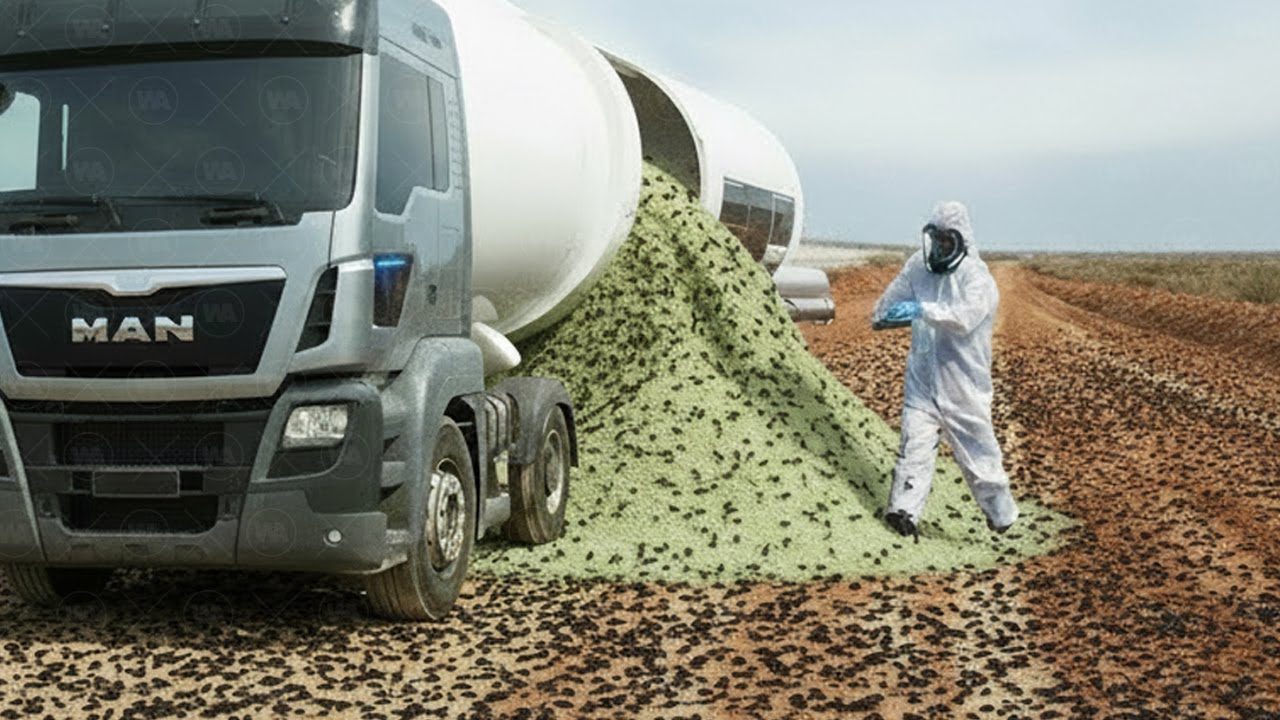
They Released Hundreds of Wasp Soldiers on an Island Overrun With Insects to See What Happens
Title history
- They Released Hundreds of Wasp Soldiers on an Island Overrun With Insects to See What Happens — observed on 20261101-0148 UTC (YouTube)
Keywords
Summary
204 words
Critical Evaluation
Value of the Information & Strength of the Argument
The video provides significant value by explaining the entire process of biological control from quarantine to release, including the challenges and decision-making involved. It effectively argues for the use of specialized parasitoids over broad-spectrum chemicals, using concrete data and a clear cause-and-effect narrative. The argumentation is solid, reinforced by expert testimony and comparisons to historical failures like the harlequin ladybird. However, it lacks critical discussion of potential long-term ecological impacts, and the tone is occasionally over-dramatized with metaphors (e.g., ‘soldiers’, ‘spawn point’), which might oversimplify the science.
Scientific Rigor, Source Quality, Title Accuracy
The video demonstrates scientific rigor by citing specific numbers (e.g., 10% survival, 20 breeding pairs, 60-90 pairs) and referencing organizations like the RSPB and Tristan da Cunha government. It also acknowledges the importance of quarantine and host-specificity testing. However, no direct sources are provided in the description, and the narrator does not give academic references. The title is appropriate, matching the content well. The video’s accuracy is high, but viewers should seek primary literature for full verification. The absence of explicit citations is a minor flaw, though the narrative is internally consistent and plausible.
196 words
Title / Content Match
The title accurately describes the video's focus on releasing wasps to combat an insect infestation and the resulting ecological impact.
Quality & Reliability
8/10
The video presents factual information about a real conservation project, including specific statistics and expert quotes, but does not cite direct primary sources or provide concrete data references.
Key Moments
Markers derived by PSI from the transcript: the creator did not define chapters.
- Introduction of the wasp soldiers and their mission
- The release of wasps on Nightingale Island and the bleak survival rate
- Impact of scale insects and storms on the forest and bird population
- Selection of Microterys nietneri and the biocontrol process
- Tree nursery and long-term restoration efforts
- Recovery of the forest and bunting population by 2024
Contribution & Novelties
The video offers a compelling, real-world example of successful biological control in a remote island ecosystem, illustrating the importance of careful species selection and quarantine. It uniquely combines the story of the wasps, the birds, and the human effort, providing a holistic view of conservation action. This adds to the public understanding of how such interventions can work when done correctly.
Pour aller plus loin :
- Biological pest control — Relevant to the method used, explaining principles and examples.
- Wilkins’s bunting — The bird species targeted by the conservation effort, with details on its status.
- Scale insect — The pest species that caused the outbreak, providing biological background.
- Parasitoid wasp — The type of wasp used, explaining their role in controlling insect populations.
123 words
Radar Profile
The radar profile shows high scores in information quantity and reliability, with slightly lower technical depth. This indicates the video is comprehensive and trustworthy for a general audience but may not satisfy specialists seeking in-depth scientific detail.
💬 Sur les 30 commentaires analysés, le climat est globalement positif : les spectateurs apprécient l'histoire de conservation et expriment de l'empathie envers les guêpes, tout en notant quelques critiques sur la méthode de biocontrôle et le montage allongé.