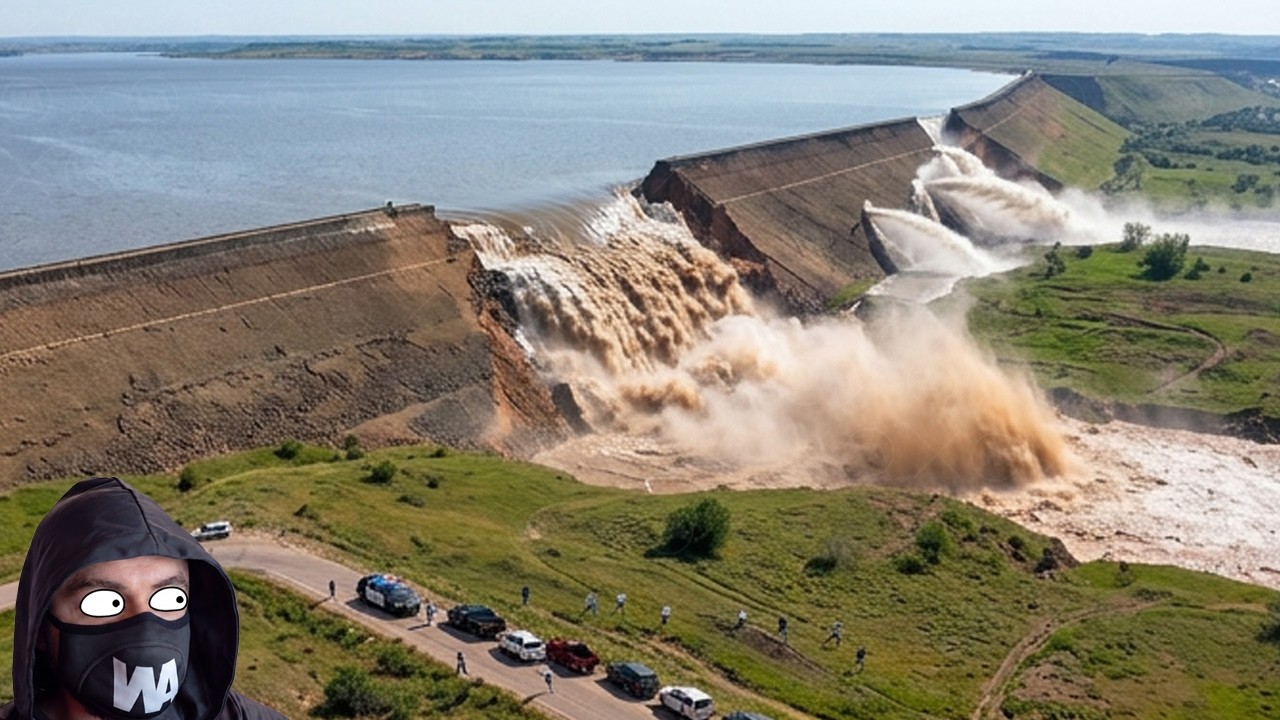
Why Hurricane Missed California But Its Waves Didn't
Title history
- Why Hurricane Missed California But Its Waves Didn't — observed on 20261031-2326 UTC (YouTube)
Keywords
Summary
161 words
Critical Evaluation
Value of the Information & Strength of the Argument
The video’s primary value lies in its clear, visual explanation of complex coastal processes, using Hurricane Marie as a concrete case study to illustrate how distant storms can generate damaging swell far from their path. It effectively demonstrates the interconnectedness of wave energy, sand transport, breakwaters, and coastal geology, making the concepts accessible to a broad audience. The argumentation is solid, logical, and well-structured, progressing from the specific event to broader systemic issues. However, it occasionally relies on dramatic imagery and simplifications (e.g., comparing sand loss to Burj Khalifa volumes) that may overstate precision, but overall the reasoning is sound and grounded in real-world examples and expert quotes.
Scientific Rigor, Source Quality, Title Accuracy
The video demonstrates moderate scientific rigor by referencing the National Weather Service, USGS, and climate scientist Daniel Swain, though it provides no direct citations or URLs. The source mentions are credible, but the lack of specific references weakens verifiability. The title-perfectly matches the content: it succinctly captures the core paradox that a hurricane can miss land but still unleash destructive waves. The title is not misleading and accurately sets expectations for the viewer.
196 words
Title / Content Match
The title accurately reflects the video's focus on Hurricane Marie missing California while its wave effects caused significant coastal damage.
Quality & Reliability
7/10
The video presents a detailed and visually supported explanation of coastal erosion and hurricane impacts, with references to specific events and scientific agencies. However, it lacks explicit citations and may simplify complex processes, justifying a moderate reliability score.
Key Moments
Markers derived by PSI from the transcript: the creator did not define chapters.
- Hurricane Marie forms in the Pacific, moving northwest away from California.
- Development of Peninsula Beach and property value increase.
- Description of the breakwater system and the exposed gap that allows waves to pass.
- Erosion problem and the need for constant sand replenishment.
- Impact of Hurricane Marie's swell on Peninsula Beach, showing berm loss and home damage.
- Examples of cliff erosion in California, including Big Sur and Highway 1 issues.
- House relocation and managed retreat strategies in Pacifica and Ventura.
- Future risks from El Niño and sea level rise, highlighting urgent adaptation needs.
Cited Sources
- National Weather Service — Recorded the south swell and sea level information during Hurricane Marie.
- USGS — Identified hotspots of cliff retreat in Big Sur and provided data on erosion rates.
- Daniel Swain (climate scientist) — Quoted on Hurricane Marie being a preview of future coastal threats.
Contribution & Novelties
The video provides a compelling case study of how a distant hurricane can cause significant coastal damage through long-period swell, highlighting the vulnerability of developed shorelines with engineered protections. Its original contribution is the clear demonstration of the paradox where breakwaters can inadvertently create gaps that amplify wave impact on specific areas. The narrative ties together local erosion issues with global climate factors like El Niño and sea level rise, offering a practical example for understanding coastal resilience.
Pour aller plus loin :
- Coastal erosion — Provides background on processes and mitigation strategies.
- Beach nourishment — Details the sand replenishment technique mentioned as a key response.
- El Niño — Explains the climate pattern that amplifies coastal hazards.
117 words
Radar Profile
The radar profile indicates strong scores in information quantity and overall reliability, with moderate technical depth. The video excels in providing extensive factual content while maintaining accessibility, but its lack of explicit citations pulls down the reliability score slightly.