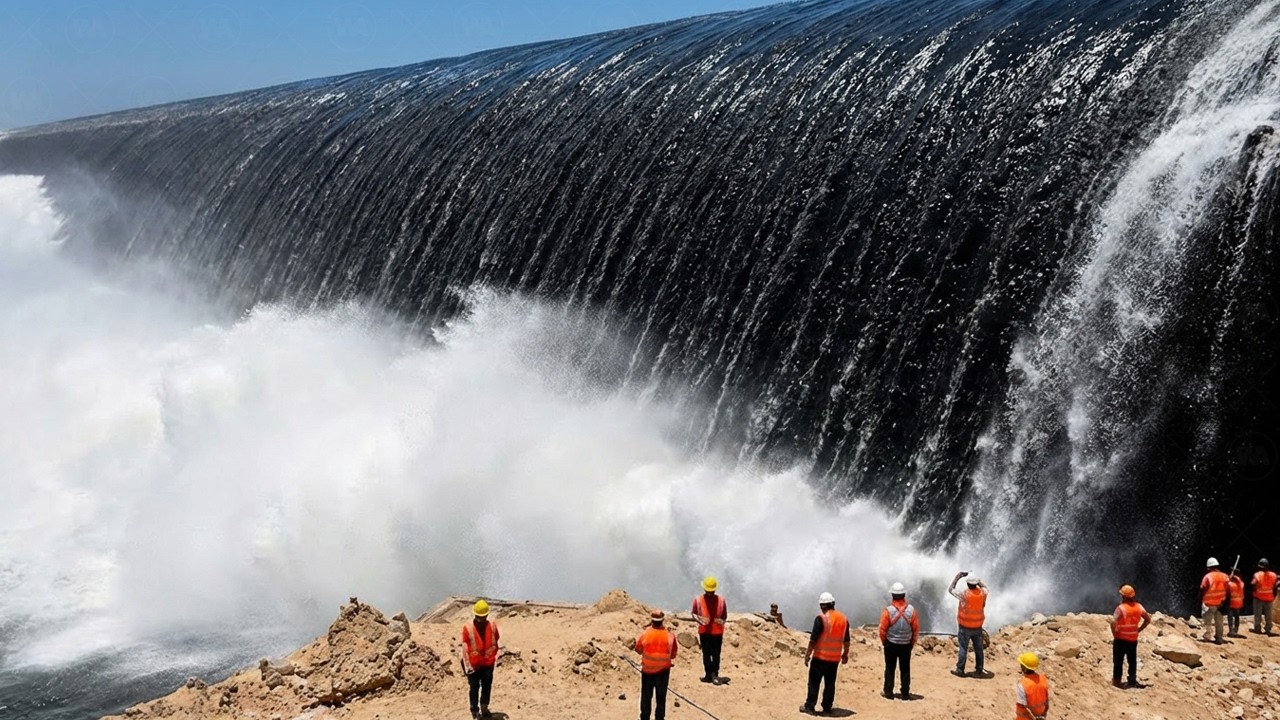
The Reason Why Ships Do Not Sail Between Australia and South America
Title history
- The Reason Why Ships Do Not Sail Between Australia and South America — observed on 20261101-0144 UTC (YouTube)
Keywords
Summary
194 words
Critical Evaluation
Value of the Information & Strength of the Argument
The video provides a compelling synthesis of multiple causes for the absence of shipping in the South Pacific, linking oceanography, economics, and logistics. It argues logically: the combination of constant wind-driven waves, lack of intermediate ports, and high operational costs makes the route unattractive. It supports this with specific incidents (2002 yacht sinking, 2001 Endeavor wave, 2025 cruise ship) and statistical comparisons. The argument is well-structured, progressing from natural conditions to human decision-making, though it occasionally oversimplifies (e.g., attributing all South Pacific emptiness to the factors listed) and uses analogies that may not fully capture maritime realities. The use of a live traffic map is effective visual evidence, and the discussion of alternative routes (Drake Passage, Panama Canal, Northwest Passage) adds depth. Overall, the argumentation is solid for a general audience, with clear causal chains and illustrative examples.
Scientific Rigor, Source Quality, Title Accuracy
The video references no explicit sources in the description, but cites specific events and data points (e.g., wave heights, ship counts) presumably drawn from maritime records. The tone is documentary-like, but without citations, claims such as ‘800 ships vanished’ or ‘15,000 ships pass through Drake Passage’ remain unverifiable. The title accurately sets expectations, and content matches. The scientific rigor is moderate: it presents accurate general principles (e.g., Roaring Forties, wave dynamics) but glosses over nuances (e.g., how modern ships cope). The editing includes some unrelated clips (e.g., Alaskan crab boats) which are acknowledged by commenters as errors. The video’s strength lies in synthesis rather than original data, making it a good overview but not a primary source.
270 words
Title / Content Match
The title accurately reflects the core question explored, although the video broadens to discuss the Drake Passage and Northwest Passage as alternative routes.
Quality & Reliability
7/10
The video presents a coherent and engaging explanation of why the South Pacific is avoided, drawing on oceanography, maritime economics, and historical events. It uses real-world examples and statistical data (e.g., wave heights, shipping counts) but lacks explicit citations and occasionally simplifies complex interactions. Overall, the information is reliable for a general audience, though not deeply sourced.
Key Moments
Markers derived by PSI from the transcript: the creator did not define chapters.
- Introduction: live map showing dense shipping in North Pacific vs empty South Pacific.
- Explanation of Roaring Forties and Furious Fifties: strong winds due to absence of land barriers.
- Wave heights and continuous pumping on ships; dangers of non-stop storms.
- Point Nemo as spacecraft graveyard and its extreme remoteness.
- 2002 yacht sinking and lack of rescue possibilities.
- Economic reasons: hub ports and lack of infrastructure in South Pacific.
- Drake Passage dangers and why ships still use it despite Panama Canal limitations.
- Northwest Passage as alternative, with historical disasters and current low usage.
- Climate change potentially opening Arctic routes for future shipping.
Contribution & Novelties
The video’s original contribution is its integrated explanation of why the South Pacific remains a shipping desert, combining natural hazards, economic logistics, and alternative routes in a single narrative. It effectively uses visual maps to illustrate the stark contrast in traffic density.
Pour aller plus loin :
- Roaring Forties — Peripheral but central to understanding wind belts.
- Point Nemo — The ocean pole of inaccessibility, discussed in the video.
- Drake Passage — Key corridor with extreme conditions.
- Northwest Passage — The Arctic route and its challenges.
86 words
Radar Profile
The radar profile shows balanced scores, with quantity of information leading, while technical level is moderate. The video excels in providing extensive content but is less rigorous on sourcing, aligning with its role as accessible science communication.
💬 Sur les 30 commentaires analysés, l'orientation est positive, avec des éloges pour la qualité éducative et la présentation, bien que quelques spectateurs aient signalé des incohérences visuelles et des erreurs factuelles concernant les voies de navigation.