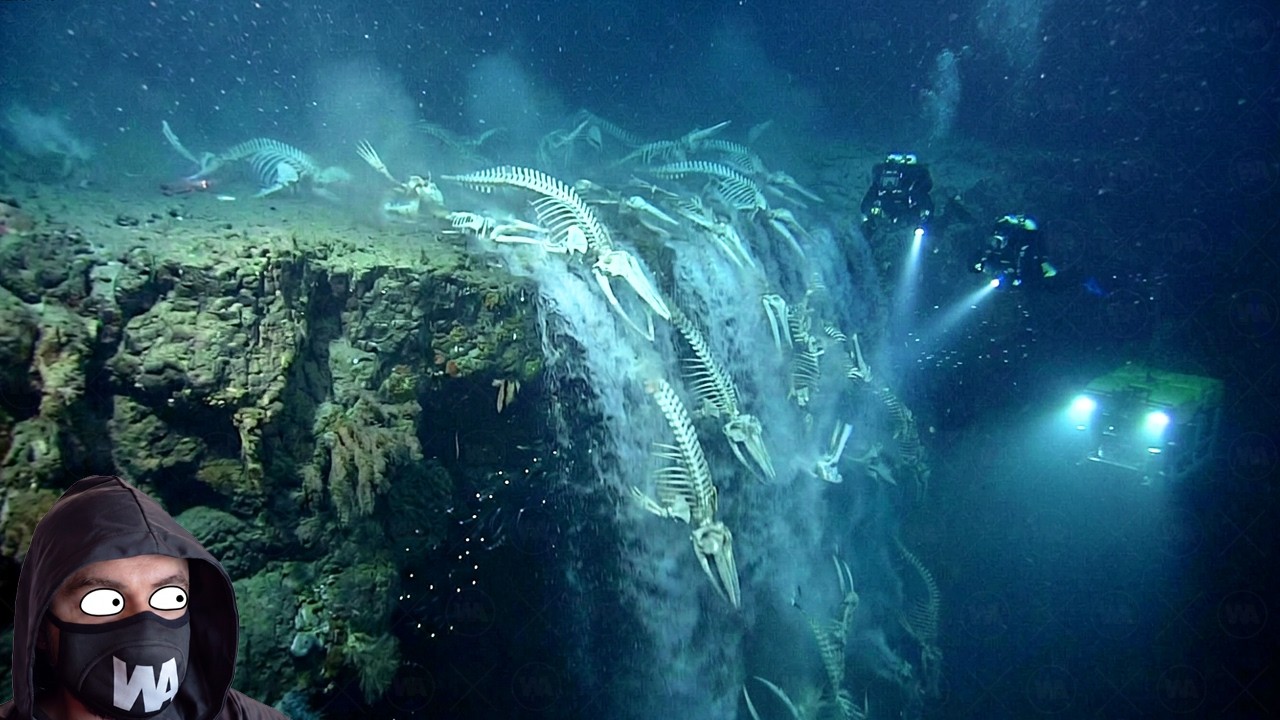
THIS Appeared in U.S. Waters and Started Killing Fish of Every Size, But Here's What It Really Is
Title history
- THIS Appeared in U.S. Waters and Started Killing Fish of Every Size, But Here's What It Really Is — observed on 20261112-1654 UTC (YouTube)
Keywords
Summary
159 words
Critical Evaluation
Value of the Information & Strength of the Argument
The video provides substantial value by clearly explaining the physics behind brine density and the chemical composition that makes these pools deadly. It uses concrete examples from real expeditions, such as the 2015 Nautilus exploration and the 2018 Deep Discoverer ROV mission, and includes specific measurements like temperature and salinity levels. The argumentation is logically structured: it starts with a mystery, reveals the cause, then elaborates on the geological history and biological implications. The presentation of the fish behavior in the pool is compelling and supports the idea that death is not instantaneous but a struggle. Overall, the argument is coherent and well-supported by the facts presented.
Scientific Rigor, Source Quality, Title Accuracy
The video demonstrates scientific rigor by referencing actual underwater exploration missions and geological research. It accurately describes the role of salt diapirs and brine upwelling, and the age of Orca Basin is given with radiocarbon dating. However, it does not cite specific scientific papers or provide links in the description, relying instead on narrative storytelling. The title is somewhat misleading, as the phenomenon is not new but a known feature of brine pools; the sensational phrasing is typical of clickbait. Despite this, the core content is reliable and matches established oceanographic knowledge. No external sources are cited, but the internal consistency of the facts suggests a solid grounding.
230 words
Title / Content Match
The title is sensationalized and somewhat clickbait, but the content does discuss brine pools that can kill fish, so there is a moderate fit.
Quality & Reliability
7/10
The video presents scientifically accurate information about brine pools, citing specific expeditions and data, but lacks direct citations and has some sensationalism in presentation.
Key Moments
Markers derived by PSI from the transcript: the creator did not define chapters.
- Introduction to the mysterious underwater waterfall and the danger it poses to marine life.
- First discovery of a brine pool by ROV and the observation of dead animals surrounding it.
- Explanation of how density prevents mixing and the concept of underwater lakes and rivers.
- Geological origin of salt deposits in the Jurassic and the formation of brine through dissolution.
Contribution & Novelties
The video provides a comprehensive overview of brine pools, linking geological history with biological consequences, and illustrates how extreme environments can foster specialized ecosystems. It goes beyond mere description by explaining the mechanisms of density, salinity, and toxic gases. The original contribution lies in its accessible synthesis of multiple research findings into a single narrative.
Pour aller plus loin :
- Brine pool on Wikipedia — Overview of brine pools, their formation, and examples.
- Orca Basin on Wikipedia — Details about the specific basin mentioned in the video.
- Deep Discoverer ROV — The remotely operated vehicle used for underwater exploration.
99 words
Radar Profile
The radar profile shows strong scores in information quantity and quality, indicating a well-filled and accurate content. Technical depth is somewhat lower, as it is aimed at a general audience, and global reliability is moderate due to the lack of explicit sources.