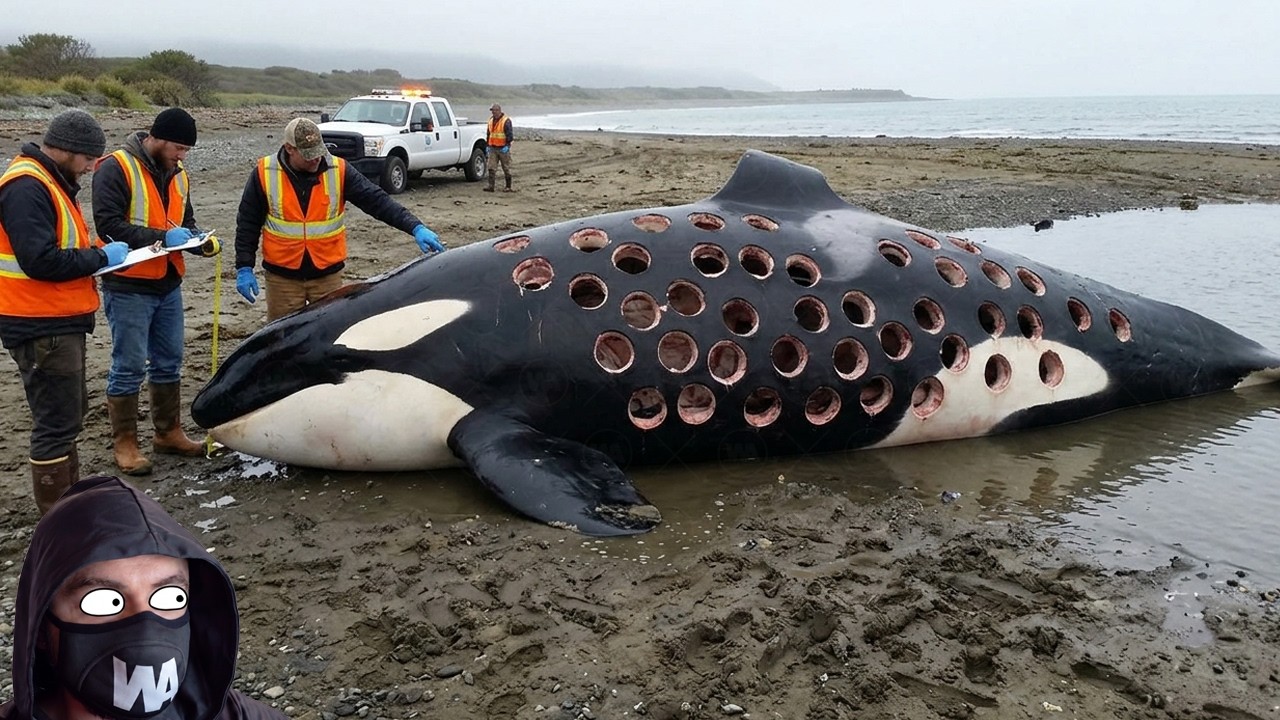
SOMETHING Started Killing Orcas Without Even Biting Them, But These Holes Were the Main Evidence
Title history
- SOMETHING Started Killing Orcas Without Even Biting Them, But These Holes Were the Main Evidence — observed on 20261117-1624 UTC (YouTube)
Keywords
Summary
192 words
Critical Evaluation
Value of the Information & Strength of the Argument
The video provides a compelling synthesis of scientific studies and indigenous knowledge, carefully separating verified observations from anecdotal claims. It argues effectively that while narwhals possess the physical capability to injure orcas, documented instances are rare and largely unverified. The use of multiple sources, including a 2025 study on tusk use, strengthens the argument that narwhals can wield their tusks as weapons, but the absence of confirmed predation events leaves the central claim speculative. The argumentation is structured logically, moving from the mystery to potential explanations, and weighing evidence fairly.
Scientific Rigor, Source Quality, Title Accuracy
The video references several legitimate scientific studies: the 2005 and 2009 observations in Admiralty Inlet, the 2012 Inuit interviews, the 2020 cookie-cutter shark study, and the 2025 narwhal tusk study. However, it does not provide direct citations or URLs, and the reliance on Inuit oral histories without physical evidence limits scientific rigor. The title is somewhat sensationalist but accurate in pointing to a mysterious cause of orca deaths. The ‘holes’ mentioned in the title refer to cookie-cutter shark wounds, which are a secondary and distinct phenomenon from the narwhal tusk impalements. The content matches the title overall, though the primary focus is on tusk injuries rather than holes.
213 words
Title / Content Match
The title is evocative and accurately reflects the video's focus on mysterious orca injuries and the narwhal tusk as a possible cause, though the 'holes' refer to cookie-cutter shark bites rather than the main narwhal theory.
Quality & Reliability
7/10
The video presents a blend of peer-reviewed studies and anecdotal Inuit testimonies, clearly distinguishing between confirmed scientific observations and unverified historical accounts. The scientific content is accurate, but the central mystery relies heavily on oral traditions that lack forensic confirmation.
Key Moments
Markers derived by PSI from the transcript: the creator did not define chapters.
- Introduction to mysterious orca injuries with a 1924 Greenland incident.
- Description of orca hunting behavior and the 2005 Admiralty Inlet observation.
- Introduction of Inuit interviews and the 2012 study on traditional knowledge.
- Discussion of cookie-cutter shark bites as an alternative explanation for holes.
- Focus on narwhals, their tusks, and the 2022 drone study showing tusk use.
- Recounting specific Inuit stories of narwhal-committed orca impalements and the conclusion.
Cited Sources
- Observation of orca hunting in Admiralty Inlet, 2005 — Cited as a scientific observation of orca predation behavior and prey response.
- Satellite tracking study of orcas and prey in Admiralty Inlet, 2009 — Mentioned to show the wide-ranging effect of orca presence on prey behavior.
- Inuit interviews on orca encounters, 2012 — Source of anecdotal accounts of narwhals impaling orcas.
- Study on cookie-cutter shark bites on orcas, 2020 — Explains round holes found on orca bodies.
- Drone study of narwhal tusk use, 2025 — First observed evidence of narwhals striking fish with their tusks.
Concurring Sources
- Drone study of narwhal tusk use (2025) — Supports the idea that narwhals can use their tusks as weapons, as described in Inuit stories.
Dissenting Sources
- Lack of forensic evidence — No autopsy or direct observation confirms narwhals killing orcas; all accounts are anecdotal.
Contribution & Novelties
The video adds historical context to the emerging scientific understanding of narwhal tusk functionality, connecting recent drone observations with long-standing Inuit oral traditions. It synthesizes disparate pieces of evidence to hypothesize that narwhals can injure orcas in self-defense, a notion not yet confirmed by direct observation. The documentary’s contribution lies in bringing together these sources and highlighting the gap between scientific knowledge and indigenous knowledge, suggesting a need for further research.
Pour aller plus loin :
- Narwhal — Overview of narwhal biology, including tusk anatomy and behavior.
- Orca — Detailed information on killer whale ecology and hunting strategies.
- Cookiecutter shark — Explanation of the shark species responsible for circular bite marks on marine mammals.
- Inuit knowledge — Context on the traditional ecological knowledge used in the video’s accounts.
128 words
Radar Profile
The radar profile shows high scores in information quantity and quality, reflecting the video's comprehensive review of scientific and traditional sources. The moderate level of technical detail and reliability score indicate that while the content is informative, it relies on unverified accounts, balancing accessible science with speculative elements.