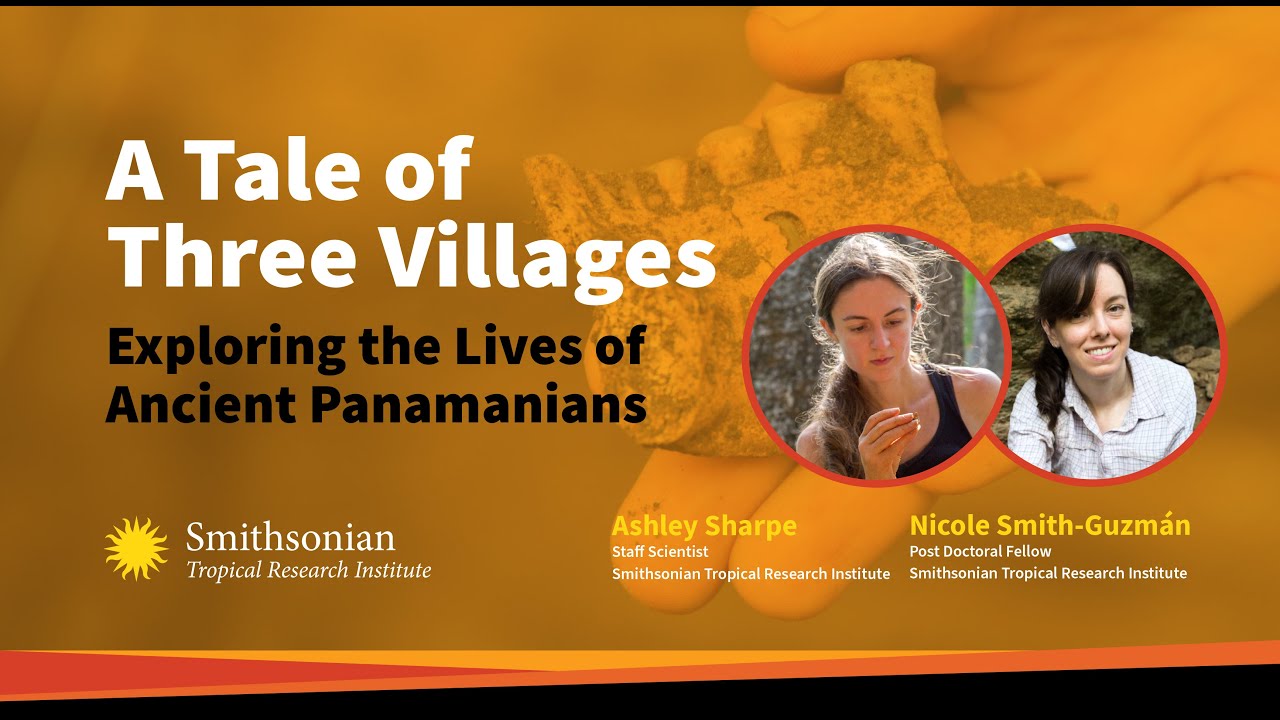
A tale of three villages / Historia de tres pueblos
Title history
- A tale of three villages / Historia de tres pueblos — observed on 20261028-0452 UTC (YouTube)
Keywords
Summary
141 words
Critical Evaluation
Value of the Information & Strength of the Argument
The value lies in the integration of bioarchaeological and isotopic approaches to generate nuanced individual-level insights into ancient populations, rather than relying solely on material culture. The argumentation is solid, based on systematic analysis of skeletal collections and clear interpretation of isotope data. The presenters carefully explain methods, acknowledge limitations (e.g., lack of a strontium baseline map for Panama), and draw cautious conclusions about trends such as increasing disease and activity differences between sexes. The evidence for a multi-tasking individual (axe maker/diver) and dietary shifts over time is compelling and well-supported.
Scientific Rigor, Source Quality, Title Accuracy
The scientific rigor is high, with adherence to international bioarchaeological standards and careful excavation recording. The sources are primarily the excavated remains and prior site reports (e.g., Richard Cook’s excavations). The talk references specific data and methods but does not provide external citations; however, the institutional backing of STRI lends credibility. The title aligns well with content, focusing on three villages as promised. The presentation is well-structured, moving from general methodology to specific findings and interpretations.
182 words
Title / Content Match
The title accurately reflects the content as the talk focuses on the lives of inhabitants of three distinct pre-Hispanic villages in Panama.
Quality & Reliability
8/10
The presentation is given by expert archaeologists from a respected research institution, with detailed methodology and clear data presentation. The content is well-structured and appears scientifically sound.
Key Moments
Markers derived by PSI from the transcript: the creator did not define chapters.
- Introduction of the webinar and guest speakers.
- Overview of bioarchaeology and its role in studying ancient human remains.
- Presentation of the three archaeological sites and the questions being addressed.
- Detailed findings from Sitio Sierra's early cemetery, including demographic and pathological data.
- Explanation of carbon and nitrogen isotope analysis for dietary reconstruction.
- Strontium isotope analysis reveals individual mobility and potential origins.
- Comparison of results across villages and concluding remarks on social inequality and adaptation.
Contribution & Novelties
The presentation contributes original bioarchaeological and isotope data for three previously understudied village populations in Panama, offering direct evidence of individual diets, activities, and mobility that challenge earlier interpretations based solely on material culture. Notably, it reveals sex-based differences in disease and activity over time, and identifies unexpected movements across the landscape.
Pour aller plus loin :
- Isotope analysis — Provides background on the principles of isotope analysis used in ecology and archaeology.
- Bioarchaeology — Overview of the field that studies human remains in archaeological context.
- Treponema pallidum — The bacterium that causes yaws and syphilis, relevant to the infectious disease lesions discussed.
103 words
Radar Profile
The profile shows consistently high scores across information quantity, quality, technical level, and global reliability, indicating a well-rounded and authoritative presentation. The slight dip in technical level relative to the others suggests it remains accessible while maintaining rigor.