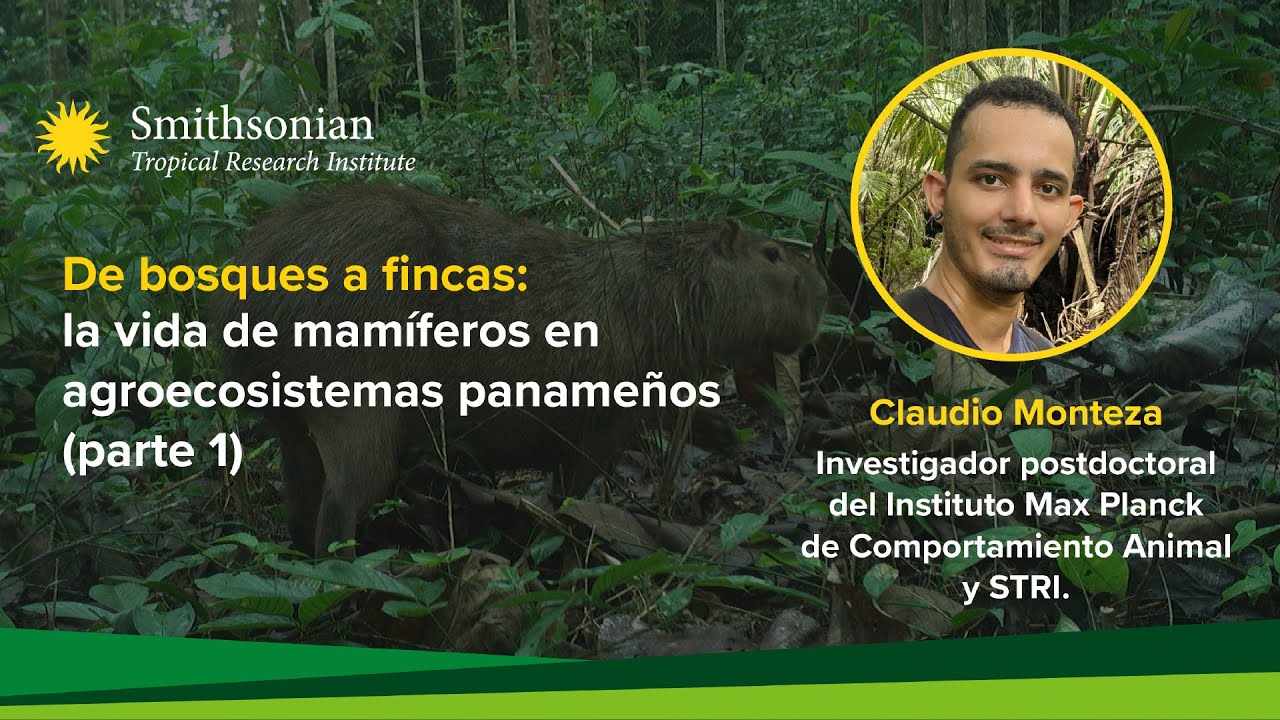
De bosques a fincas: la vida de mamíferos en agroecosistemas panameños
Title history
- De bosques a fincas: la vida de mamíferos en agroecosistemas panameños — observed on 20261026-0351 UTC (YouTube)
Keywords
Summary
185 words
Critical Evaluation
Value of the Information & Strength of the Argument
The value of the information is high: it provides original data on mammal communities in a poorly studied agroecosystem, using a standardized and relatively long-term sampling method. The argumentation is well structured: from methodology to results, with clear interpretation of relative abundances and habitat differences. The speaker openly discusses limitations (e.g., low detectability for rare and large species, single camera per site) and avoids overstating conclusions. The comparison across habitats is meaningful and brings new insights into how agricultural mosaics can sustain a subset of native mammals.
Scientific Rigor, Source Quality, Title Accuracy
The scientific rigor is solid: the study follows methodological standards for camera-trap surveys, with explicit details on field design and analysis. The speaker cites previous work (e.g., Ninon Meyer) but does not provide formal references or URLs; nevertheless, the institutional context (STRI, Max Planck) and peer-reviewed background are implied. The title accurately matches the content: it addresses the life of mammals in Panamanian agroecosystems. No discrepancy found.
169 words
Title / Content Match
The title accurately reflects the content: the talk explicitly addresses the life and occurrence of mammals in Panamanian agroecosystems, comparing forests and agricultural landscapes. Slight mismatch: the subtitle 'part 1' is not in the video title but expected.
Quality & Reliability
8/10
The talk is delivered by a postdoctoral researcher at the Max Planck Institute and STRI, based on a dedicated camera-trap study with rigorous field methodology (year-long deployment, multiple habitat types). The presentation includes clear quantitative results and acknowledges methodological limitations. Institutional support and previous peer-reviewed work referenced.
Key Moments
Markers derived by PSI from the transcript: the creator did not define chapters.
- Introduction and overview of the presentation by the host.
- Start of Claudio Monteza's talk: thanks and presentation of the study context.
- Explanation of camera trap methodology and species richness in intact forests.
- Presentation of the study area: agroecosystem mosaic in Panama Oeste, with different land uses.
- Field implementation: how camera traps were placed on farms and the resulting data.
- Species richness comparison among four habitat types (protected forest, teak, patch, gallery).
- Analysis of relative abundance of common and rare species, e.g., agouti vs. armadillo.
- Observations of predators (ocelot, yaguarundi, coyote) and rare events like white-tailed deer.
- Discussion of species seen with young, and how it varies across habitats.
- Closing remarks on coexistence and future research directions, followed by Q&A session.
Cited Sources
- Publication antérieure de Ninon Meyer sur les mammifères de la région du canal — Mentionnée comme référence pour les données préliminaires contrastant l'est et l'ouest du canal.
- Revue El Faro (STRI) — Cité comme partenaire médiatique pour la diffusion du travail.
Concurring Sources
- Smithsonian Tropical Research Institute — Organisme hôte et centre de recherche de l'auteur.
Contribution & Novelties
This study provides original empirical data on mammal communities in a tropical agroecosystem, shedding light on biodiversity conservation in human-modified landscapes. Its contribution lies in the direct comparison among four distinct habitat types, revealing that not all agricultural areas are equivalent in supporting wildlife. The noted shift in dominant species across habitats has implications for seed dispersal and ecological functioning.
Pour aller plus loin :
- Camera trap — Overview of the primary data collection method.
- Agroecosystem — Conceptual framework for agricultural landscapes as ecological systems.
- Wildlife corridor — Relevant to the movement of mammals across fragmented habitats.
- Introduction to camera trap studies — STRI institutional home for related research.
109 words
Radar Profile
The radar profile shows a balanced pattern with slightly higher scores in information quantity and reliability, and a slightly lower technical level, indicating a presentation that is informative and credible yet not overly technical, suitable for a broad scientific audience.