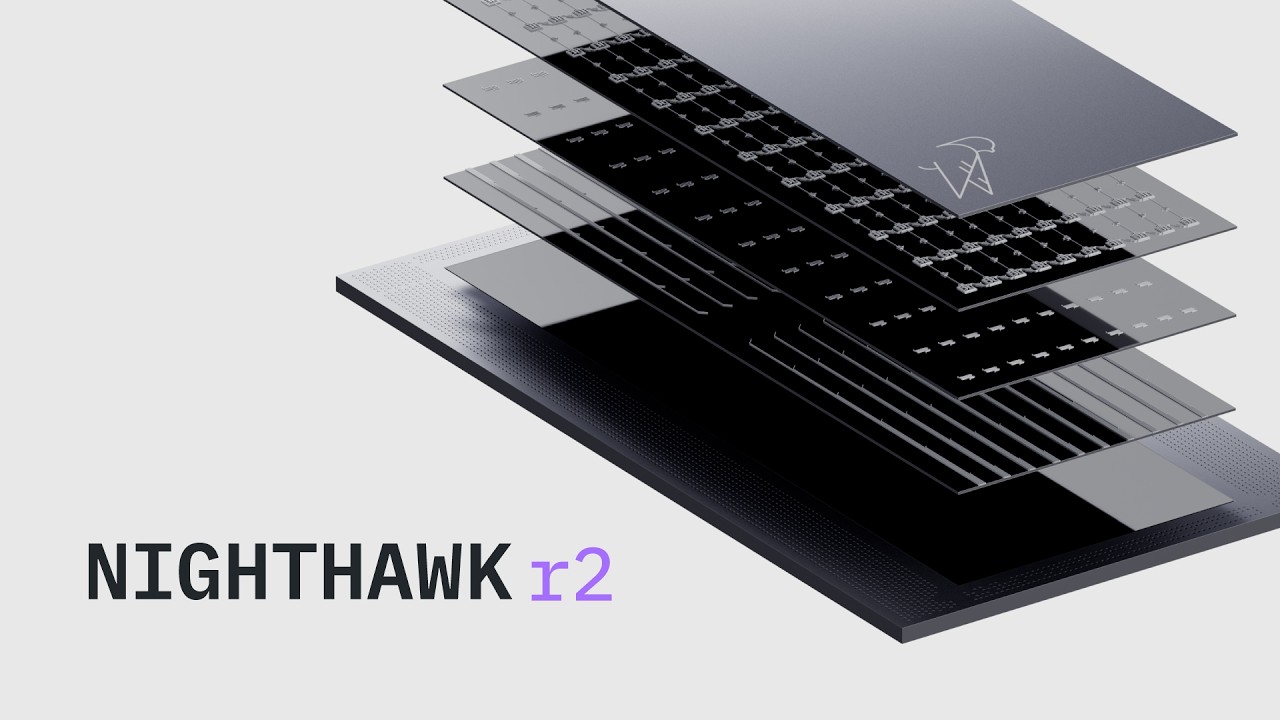
Inside IBM’s Nighthawk R2 Quantum Processor
Title history
- Inside IBM’s Nighthawk R2 Quantum Processor — observed on 20261027-1521 UTC (YouTube)
Keywords
Summary
141 words
Critical Evaluation
Value of the Information & Strength of the Argument
The video provides valuable insights into specific hardware innovations and benchmarking methodologies, presenting a clear argument for prioritizing speed in quantum computing. The engineers explain technical concepts with practical examples, such as the reset gadget and its impact on throughput. However, the content is essentially promotional, and the argumentation relies on IBM’s own data without external validation. The discussion is well-structured and addresses both technical and economic implications.
Scientific Rigor, Source Quality, Title Accuracy
The interview is conducted within IBM Quantum, with participants being IBM employees, so the information is authoritative from the company’s perspective. The only source cited is an IBM blog post on hardware metrics, providing some external reference. The title accurately reflects the content. The video lacks critical perspective and independent sources, but it is consistent with publicly available IBM announcements. The adéquation between title and content is excellent.
151 words
Title / Content Match
The title accurately describes the content, which focuses on the Nighthawk R2 processor and its performance enhancements.
Quality & Reliability
8/10
The content is presented by IBM Quantum engineers and researchers, providing first-hand details on the Nighthawk R2 processor. The discussion is technical and aligns with IBM's official communications, though it is promotional in nature and lacks independent verification.
Key Moments
Markers derived by PSI from the transcript: the creator did not define chapters.
- Introduction of Andrew Wack and Holger Haas.
- Discussion on why speed is often overlooked and its importance.
- Introduction of MCPS benchmark and 25x speedup from Heron to Nighthawk.
- Explanation of the reset gadget and its impact on reset speed.
- Difference between physical and programmable qubits.
- Impact on clients: error mitigation cost reduction and fault tolerance.
- Concluding remarks and outlook on future benchmarks.
Cited Sources
- How to measure the performance of a quantum computer — Referenced as a resource for understanding performance metrics and benchmarks.
Concurring Sources
- IBM Quantum blog: Hardware metrics — The source cited in the video for performance measurement details.
Contribution & Novelties
The video provides first-hand explanation of the Nighthawk R2’s new reset gadget and its impact on throughput, clarifying the distinction between physical and programmable qubits. It introduces a hierarchy of benchmarks from qubit to application level, emphasizing the importance of device-wide metrics like MCPS and layer fidelity. The discussion of reduced error mitigation costs (12x) highlights economic advantages for clients.
Pour aller plus loin :
- Maximum circuits per second (MCPS) — Explains quantum benchmarking concepts, though MCPS is not yet widely documented elsewhere.
- Quantum error mitigation — Relevant to the error mitigation techniques mentioned.
- IBM Quantum — Provides context on IBM’s quantum computing efforts.
104 words
Radar Profile
The radar profile shows high scores in technical level and information quality, reflecting the in-depth technical discussion. Fiabilité is slightly lower due to promotional nature, while quantity is adequate. The balance indicates a technically strong but not independently verified source.