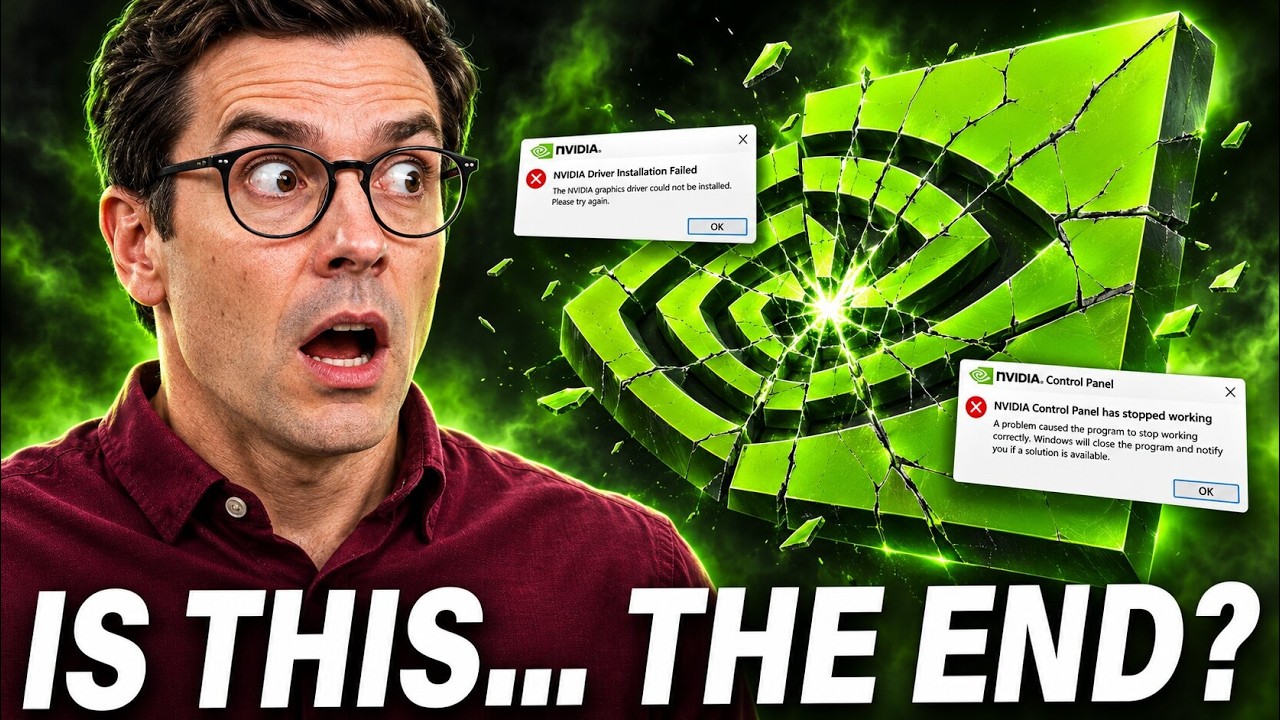
Nvidia is DYING (AMD Knows It)
Title history
- Nvidia is DYING (AMD Knows It) — observed on 20261120-2043 UTC (YouTube)
Keywords
Summary
233 words
Critical Evaluation
Value of the Information & Strength of the Argument
The video provides a compelling narrative supported by numerous specific figures, dates, and named entities. It clearly distinguishes between confirmed facts, unproven allegations, and speculative projections, which enhances its credibility. The argumentation is logical: it establishes the context, presents the challenger’s moves, explains the technical advantages and disadvantages, and concludes with a nuanced view that Nvidia’s dominance is eroding without implying its decline. The use of analogies (watermelon vs grapefruit) and concrete deal details (OpenAI’s warrant, Anthropic’s investment) illustrates the points effectively. While the presenter admits the gaps in performance, the focus on customer behavior and the ‘second source’ rationale is a fresh perspective that solidifies the argument.
Scientific Rigor, Source Quality, Title Accuracy
Scientific rigor is moderate; the video relies on publicly reported news and analyst statements, but does not provide primary data or independent verification. It correctly labels unproven allegations (e.g., the foreign intelligence effort) and notes when figures are company claims. The sources cited are reputable (New York Times, CNBC, Bloomberg, Oppenheimer, SemiAnalysis), but no direct links are given in the description. The title is somewhat misleading, as the content argues that Nvidia is not dying but losing its monopoly; this exaggeration could mislead casual viewers, though the video itself clarifies this paradox. The content is well-structured and grounded in verifiable events, but the lack of direct source references reduces the ability to cross-check.
236 words
Title / Content Match
The title is deliberately provocative, suggesting Nvidia's imminent death, while the content clarifies that the company's business is thriving but its monopoly is eroding. The mismatch is explained and serves the narrative.
Quality & Reliability
8/10
The video provides a detailed, well-structured analysis with specific financial figures and named sources. It distinguishes between facts, allegations, and speculation, though it relies on news reports without independent verification.
Key Moments
Markers derived by PSI from the transcript: the creator did not define chapters.
- Nvidia loses $190B in a day; AMD rallies on Oppenheimer upgrade.
- Lisa Su's background and turnaround of AMD from near bankruptcy.
- OpenAI signs gigawatt deal with AMD, taking a warrant in the company.
- Helios rack specs: 72 MI455X chips, 50% more memory than Vera Rubin.
- AMD reports record revenue of $13.4B and guides 80% growth for 2027.
- Conclusion: Nvidia's monopoly ends, not the company itself.
Cited Sources
- New York Times reporting — Citing American intelligence officials' conclusions about Alice Huang.
- CNBC interview with Malcolm Ethridge — He discusses selling some Nvidia shares.
- Oppenheimer upgrade — Upgraded AMD to outperform with $600 target.
- Bloomberg interview — Jensen Huang discussed Megafeed dealings.
- SemiAnalysis research — Rated AMD's chance of closing gap at 0%.
Contribution & Novelties
The video’s original contribution is framing Nvidia’s challenge as a gradual erosion of its monopoly status due to customers’ strategic need for a second source, rather than a direct technological defeat. It details how AMD’s approach—focusing on inference, open standards, and software porting—positions it as a viable alternative. The narrative is enriched with concrete contract data and the familial connection between the two CEOs, adding a human dimension.
Pour aller plus loin :
- CUDA — Nvidia’s software ecosystem that created its moat; essential to understanding the inertia.
- ROCm — AMD’s software stack; the video mentions its new AI-assisted porting tools.
- Open Compute Project — The open rack standard co-developed by AMD and Meta, key to Helios’s compatibility.
117 words
Radar Profile
The profile shows a well-rounded analysis with high information quantity and technical depth, but moderate reliability due to reliance on news reports and some speculative elements. The argumentation is strong, but the lack of primary sources prevents a maximum score.