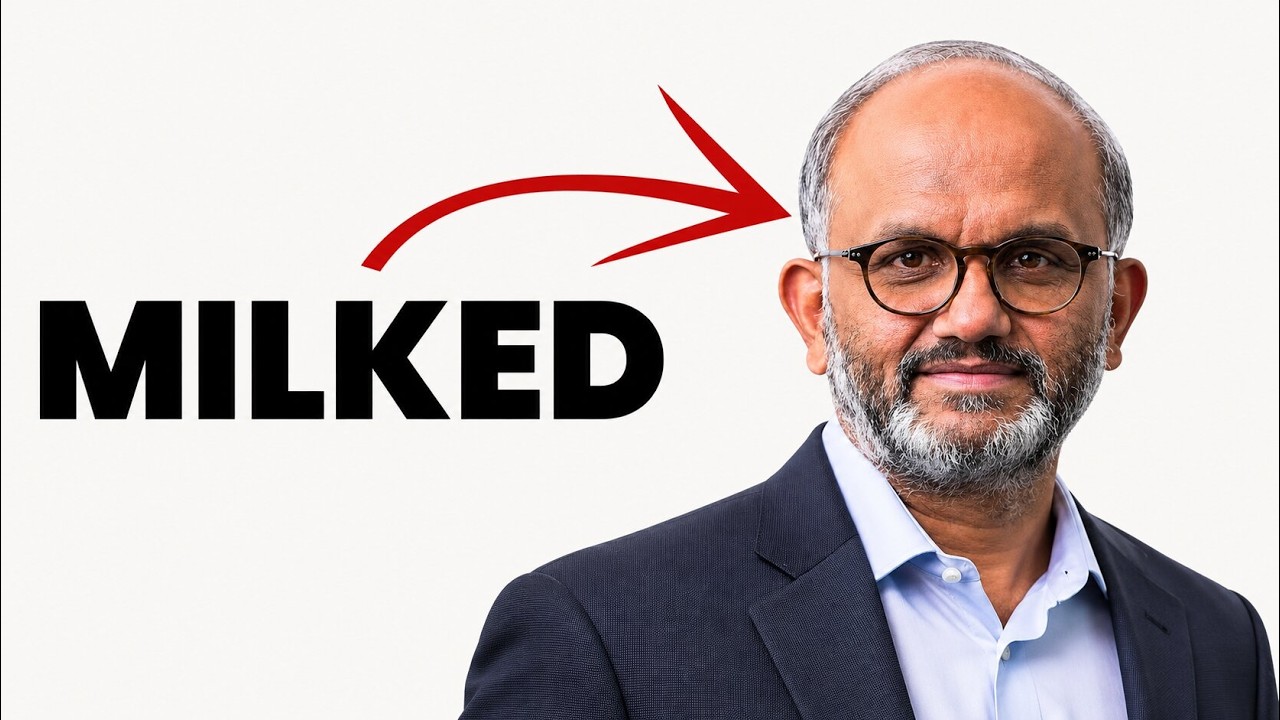
What Happened to Adobe
Title history
- What Happened to Adobe — observed on 20261112-2154 UTC (YouTube)
Keywords
Summary
184 words
Critical Evaluation
Value of the Information & Strength of the Argument
The video provides a well-structured and accessible analysis of a complex business situation. It draws on specific financial figures (revenue, stock prices, subscription numbers) and quotes from analysts to support its claims. The argumentation is logical, sequentially presenting five reasons that build a coherent narrative. However, the creator openly admits to some speculation (e.g., interpretations of buybacks) and the perspective is clearly one of a commentator rather than a neutral analyst. The strength lies in synthesizing multiple public events into a clear thesis about the shift from monopoly to competition. The video also acknowledges counterpoints, noting record earnings and potential positive signals, which adds nuance.
Scientific Rigor, Source Quality, Title Accuracy
The video relies on publicly available information such as earnings reports, analyst notes (e.g., from Jefferies, Wells Fargo), and news coverage (Bloomberg, government lawsuits). While these are not explicitly linked in the description, the creator references them by name and date, lending some credibility. The title accurately reflects the content, which is an investigative review of Adobe’s decline. The company’s own announcements and market data are used appropriately. However, no external sources are provided in the description, so verification would require searching for the mentioned reports. The analysis is rigorous in its use of concrete data but remains an opinion piece with a single narrator’s perspective.
226 words
Title / Content Match
The title directly matches the content, which explores the reasons behind Adobe's stock decline and business challenges.
Quality & Reliability
7/10
The video presents a coherent analysis based on publicly reported financial data and events, but the interpretation is largely subjective. It cites specific numbers and quotes analysts, which adds credibility, yet relies on the creator's own narrative framing.
Key Moments
Markers derived by PSI from the transcript: the creator did not define chapters.
- Introduction: Adobe's stock collapse despite record revenue, setting the stage.
- Explanation of Adobe's size and the paradox of strong earnings with falling stock.
- The subscription trap: 2013 Creative Cloud switch, subscription growth, and customer resentment.
- The failed Figma acquisition: $20 billion deal, regulatory concerns, breakup fee.
- Trust issues: terms of use controversy, FTC lawsuit, settlement.
- Free AI competition: Canva, Figma, AI tools threatening Adobe's core value.
- Leadership vacuum: CEO and CFO departures, new CEO appointment.
- Conclusion: The root cause as the end of a monopoly, not a collapse.
Contribution & Novelties
The video synthesizes multiple recent events into a coherent narrative, offering a clear framework of five reasons behind Adobe’s decline. Its original contribution is the connection between the subscription model, customer lock-in, and the vulnerability to AI disruption. It provides a balanced view by presenting both record financials and market fears.
Pour aller plus loin :
- Adobe Creative Cloud — Background on Adobe’s subscription model and its history.
- Figma — The design tool that was the subject of the failed acquisition.
- Canva — A major competitor offering free design tools.
- Generative artificial intelligence — The technology driving the disruption of creative workflows.
102 words
Radar Profile
The radar profile shows high scores in information quantity and reliability, with moderate technical depth. The video is strong on factual reporting and analysis, but less technical, focusing on business and strategy. The qualitative and quantitative aspects are balanced, resulting in a solid but not exceptional assessment.