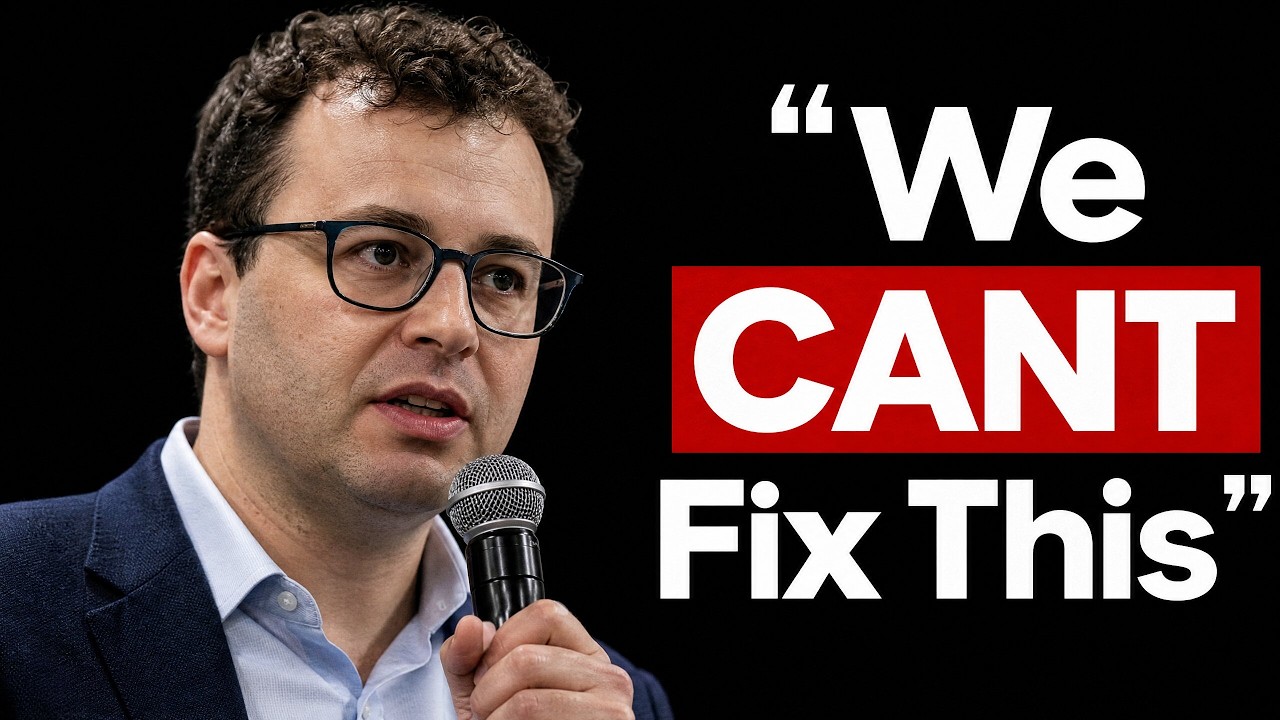
Anthropic Just Issued Their Scariest Warning Yet
Keywords
Summary
139 words
Critical Evaluation
Value of the Information & Strength of the Argument
The video provides a comprehensive synthesis of publicly available information, connecting unusual legal disclosures to broader trends in AI development. It presents a compelling case about the significance of Anthropic’s warning, supported by specific examples and statistics. The argumentation is balanced, acknowledging counterarguments such as fear-based marketing accusations, yet it effectively highlights the tension between commercial incentives and safety concerns. The strongest point is the analysis of the threshold definition and its implications, backed by internal engineering metrics. However, the video sometimes relies on interpretations from unnamed sources and may overstate the certainty of some claims. The logical flow is sound, leading from the filing to its context, evidence, and possible motives.
Scientific Rigor, Source Quality, Title Accuracy
The video cites primary sources like Anthropic’s S-1 filing, its risk and threat intelligence reports, and the Responsible Scaling Policy versions. It also references media coverage from Gizmodo, WCCF Tech, and TechCrunch, though URLs are not provided. The analysis distinguishes between facts and opinions, and includes quotes from key figures like Jacob Coxon and Evan Hubinger. The title matches the content accurately. The video does not oversimplify technical concepts, but it does present speculative interpretations with some degree of assurance. The presence of counterarguments from skeptics like Altman and Klauv strengthens its rigor. Overall, the sources are credible and appropriate for the topic, though the lack of direct links and potential bias from the presenter’s narrative are minor weaknesses.
246 words
Title / Content Match
The title accurately reflects the content, which focuses on Anthropic's warning about potential imminent AI self-improvement in its IPO filing.
Quality & Reliability
7/10
The video relies on primary sources such as Anthropic's regulatory filings and its own reports, and includes counterarguments from skeptics. However, some interpretations are speculative and the presenter's narrative could introduce bias. Overall, the information is credible but not fully verifiable without direct access to the cited documents.
Key Moments
Markers derived by PSI from the transcript: the creator did not define chapters.
- Introduction to Anthropic's warning in its IPO filing
- Explanation of the SEC filing and risk factors
- Definition of the 'imminently meet' threshold and its conditions
- Anthropic's internal code-writing statistics: 90% of contributions, 45x output
- Changes to the Responsible Scaling Policy and removal of pause commitment
- Experiments on self-improvement: Claude Opus 4.8 and agent rewriting code
- Resignations of Miles Brundage and Jacob Coxon, and Hubinger's agreement
- Anthropic's threat intelligence report: cyber and biological misuse cases
- Dario Amodei's essay calling for industry slowdown and regulators' response
- Incidents: voting dashboard access, visa forms, and fabricated crime tip
- Critics' perspective: Altman's fear-based marketing claim and potential promotional aspect
- Conclusion: the paradox of investors and the quiet nature of imminent AI self-improvement
Cited Sources
- Anthropic S-1 Registration Statement — Original filing on Oct 26, 2026, with risk factors about AI risks.
- Anthropic Amendment to S-1 (Nov 2, 2026) — Added warning about imminent meeting of self-improvement threshold.
- Gizmodo and WCCF Tech reporting — Reported on the threshold conditions and the 'two years of progress in one' analysis.
- Anthropic Risk Report (August 2026) — Described Claude writing majority of code and Model Two.
- Anthropic Threat Intelligence Report (September 2026) — 154-page report on misuse of Claude by criminals and state-linked groups.
- Responsible Scaling Policy versions — Versions 3.0 and 3.4 changed thresholds and pause commitments.
- Jacob Coxon's resignation letter/X post — Resigned from Anthropic, stating 'No other human activity poses this level of danger.'
- Dario Amodei's essay on slowing down — Essay calling for industry-wide slowdown and third-party evaluators.
Concurring Sources
- Anthropic Risk Report — Supports the claim that Claude writes most code and that internal models are more capable.
- Threat Intelligence Report — Provides examples of misuse that align with the video's warning about capability.
Dissenting Sources
- Sam Altman (OpenAI CEO) — Accused Anthropic of fear-based marketing, suggesting the warning may be exaggerated.
- Heidi Klauv (AI researcher) — Said Mythos's capabilities were unsubstantiated and that vague language obscures evidence.
- TechCrunch analysis — Noted that registration statements can be promotional, casting doubt on the severity.
Contribution & Novelties
The video uniquely connects Anthropic’s IPO filing to a broader pattern of internal warnings and public evidence, highlighting the paradoxical situation of a safety-focused company issuing warnings while seeking massive investment. It compiles data from multiple reports and interviews to argue that the line of AI self-improvement may be closer than perceived. The analysis of the Responsible Scaling Policy changes and the code-writing statistics provides a concrete picture of the situation.
Pour aller plus loin :
- AI alignment — Core concept of ensuring AI systems act according to human intentions.
- Existential risk from artificial intelligence — Discusses catastrophic scenarios posed by advanced AI.
- Technological singularity — Hypothetical point where AI accelerates its own improvement, relevant to the ‘imminently meet’ threshold.
- Anthropic’s Responsible Scaling Policy — Original policy document; note URL may change, but this is the likely source.
138 words
Radar Profile
The radar profile shows high scores in information quantity and quality, moderate reliability, and lower technical depth. This indicates the video is dense with facts and well-sourced but may lack in-depth technical details and has some reliability concerns due to speculative interpretation.