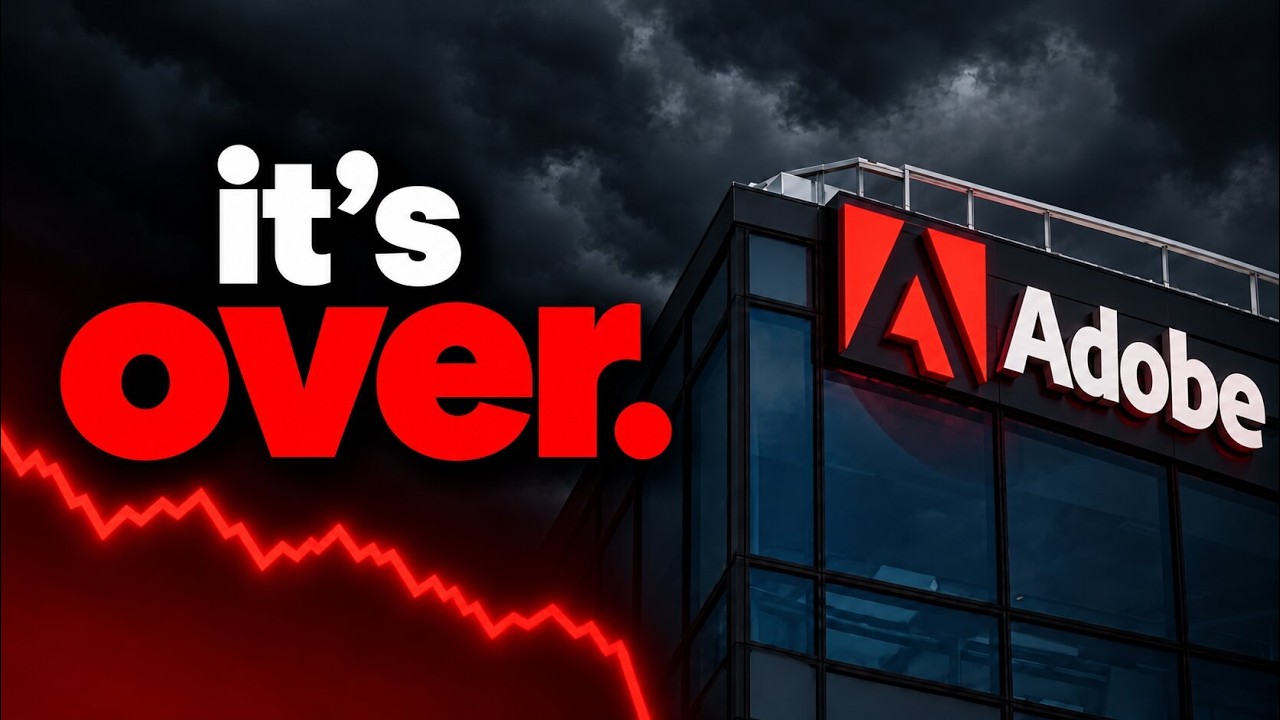
Adobe Is Completely F*cked.
Title history
- Adobe Is Completely F*cked. — observed on 20261113-0014 UTC (YouTube)
Keywords
Summary
187 words
Critical Evaluation
Value of the Information & Strength of the Argument
The video provides a coherent and compelling narrative backed by specific financial figures (e.g., revenue, stock prices, settlement amounts) and a clear cause-and-effect argument. It effectively contrasts headline success with underlying problems, using examples like the $150 million settlement being less than three days of revenue, and the slowing organic growth after stripping out Semrush. The argumentation is persuasive but one-sided, emphasizing negative aspects while acknowledging some positive points (JPMorgan bull case, After Effects’ quality). The analysis of the subscription trap and the impact of AI is insightful, but it lacks counterarguments and relies on asserted interpretations (e.g., ‘deferred price rises’ as negative). Overall, the value is in synthesizing widely-known news into a thesis, but it is not a deeply balanced or evidence-exhaustive review.
Scientific Rigor, Source Quality, Title Accuracy
The video does not cite specific external sources within its narration beyond mentioning a few analyst names and reports (Wells Fargo, HSBC, eMarketer’s Grace Harmon). The description only contains the title and the video’s own summary, with no links to primary documents. The title is sensationalist but accurately matches the video’s thesis. There are no comments provided, so public reception is not analyzed. The rigour is moderate: figures appear plausible and dates match known events, but the lack of direct citations and the heavily opinionated tone reduce its scientific credibility.
229 words
Title / Content Match
Title accurately reflects the critical, negative stance on Adobe's situation.
Quality & Reliability
6/10
The video presents a well-structured narrative with specific figures and dates, but relies on a single channel's commentary without citations of primary sources beyond the video's own description. Analysis is opinionated and presents a one-sided bearish view.
Key Moments
Markers derived by PSI from the transcript: the creator did not define chapters.
- Introduction of Adobe's paradox: record revenue vs. stock plunge.
- Detailed stock price history and market reaction.
- CEO Narayen departure and CFO exit.
- History of Adobe from PostScript to Photoshop.
- Transition to Creative Cloud subscription model and revenue impact.
- FTC lawsuit and settlement details, cancellation fees.
- Controversy over accessing customers' content and AI training.
- Price increases and customer backlash.
- Failed Figma acquisition and billion-dollar termination fee.
- Competition from Canva, Apple, and open-source Artcraft.
- Analysis of slowing organic growth and buybacks.
- AI as both threat and opportunity; Firefly's small revenue share.
Cited Sources
- Adobe settles FTC lawsuit for $150 million — Mentioned the FTC suit and settlement, but no direct URL given.
- Wells Fargo downgrade analysis — Analyst Michael Turin downgraded Adobe to underweight.
- HSBC downgrade — HSBC also cut its price target.
Concurring Sources
- Adobe's stock performance on Yahoo Finance — Stock data used to illustrate the decline.
Dissenting Sources
Contribution & Novelties
The video’s original contribution is framing Adobe’s problems as a direct consequence of its subscription model becoming a trap, and linking the AI revolution to the erosion of Adobe’s skill-based moat. It synthesizes known events into a coherent bearish thesis.
Pour aller plus loin :
- Adobe’s History and Products — Background on Adobe’s evolution.
- Creative Cloud Subscription Model — Details on the shift to subscription.
- Subscription Business Model — Context on recurring revenue economics.
- Figma Acquisition Attempt — Details of the failed merger.
- Effect of Artificial Intelligence on Creative Industries — Discussion of AI’s impact.
95 words
Radar Profile
The radar profile shows high quantity of information (8) but moderate quality (6) and technicality (5), resulting in a moderately reliable score (5). This indicates a well-researched but opinionated narrative with limited deep technical analysis.