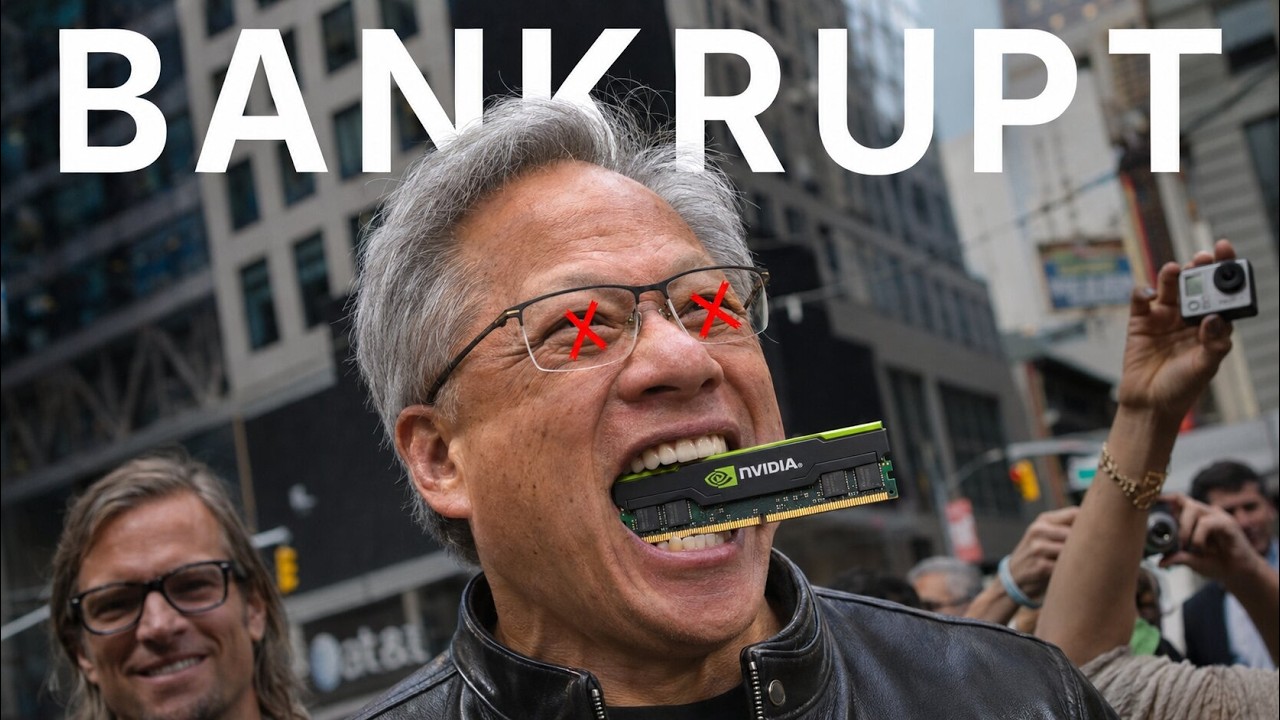
The Spectacular Collapse of Nvidia
Title history
- The Spectacular Collapse of Nvidia — observed on 20261120-1642 UTC (YouTube)
Keywords
Summary
124 words
Critical Evaluation
Value of the Information & Strength of the Argument
The video provides substantial value by synthesizing a complex series of events into a coherent and engaging narrative. It uses a strong argumentative structure, presenting both the causes of the collapse (over-reliance on a single leader) and the broader implications for the AI industry. The argument is well-supported by references to specific reports from major news outlets, financial data, and expert opinions. However, the video is a journalistic analysis rather than a scientific study, and some conclusions are speculative, particularly regarding future scenarios and the long-term impact on Nvidia’s business.
Scientific Rigor, Source Quality, Title Accuracy
The video demonstrates rigor by citing multiple credible sources (New York Times, Wall Street Journal, Reuters, Axios, NBC News, Fortune, Financial Times) and distinguishing between confirmed facts and unverified allegations. It also presents counterpoints, such as denials from China and Singapore, to maintain balance. The title is directly relevant and not sensationalized, accurately reflecting the content. The main limitation is the absence of primary sources and the reliance on secondary reporting, which the video acknowledges implicitly.
181 words
Title / Content Match
The title accurately reflects the content: the video describes the dramatic collapse of Nvidia's stock and leadership in November 2026, focusing on the resignation of CEO Jensen Huang and the ensuing turmoil.
Quality & Reliability
7/10
The video relies on multiple reputable mainstream news outlets (NYT, WSJ, Reuters, etc.) and provides a detailed, well-structured narrative. However, it is a YouTube analysis rather than a peer-reviewed source, and some claims are presented without independent verification.
Key Moments
Markers derived by PSI from the transcript: the creator did not define chapters.
- Opening: Nvidia's stock closes at $162.85 after worst week in years, losing $573 billion in value.
- Nvidia's record quarterly results and market surge to $5.49 trillion, highlighting the company's dominance in AI.
- First scandal: New York Times reports on Alice Hong, a businesswoman close to Huang, and foreign intelligence concerns.
- Second affair with Kimberly Powell leads to Huang's resignation as CEO and president on November 12, 2026.
- Investigation into Mega Speed reveals Nvidia's suspicious Singapore revenue, raising regulatory and national security questions.
- Political reactions: Treasury Secretary Bessant demands answers, and Congress summons Huang for testimony.
- Succession debate: investors call for a measured process, while some employees and figures push for Huang's return.
- Earnings call looms; options market expects high volatility, and the video outlines three possible future scenarios.
Cited Sources
- The New York Times — First reported on Alice Hong's ties to Chinese intelligence and later the affair with Kimberly Powell.
- The Wall Street Journal — Reported on the board preparing to push Huang out and other details of the scandals.
- Reuters — Reported on a third affair and anal cysts' reactions.
- Axios — Reported on White House and intelligence agency pressure to act against Mega Speed.
- NBC News — Noted the potential for tighter regulations on the chip industry.
- Fortune — Comments from governance expert Jeffrey Sonnenfeld on board idolatry.
- Financial Times — Reported on Huang's possible comeback talks and board approach to Renee Haas.
Concurring Sources
- The New York Times — Corroborates the timeline of the affair and the resignation.
- The Wall Street Journal — Concurred on the board's decisions and market reactions.
- Reuters — Agrees on the resignation and additional affair reports.
Dissenting Sources
- China's Foreign Ministry — Denied allegations as unsubstantiated smears, contradicting the US intelligence claims.
- Singapore's Ministry of Home Affairs — Stated Alice Hong gave inaccurate information but only issued a stern warning, downplaying the severity.
- Malaysia's Trade Minister — Denied any investigation into Speed Matrix, conflicting with US regulatory concerns.
Contribution & Novelties
This video adds value by weaving together a multitude of reports into a single, accessible timeline of Nvidia’s unprecedented collapse. It highlights the concentration risk of founder-led companies and the importance of succession planning, offering a cautionary tale for investors and boards. The analysis also connects the scandal to broader geopolitical issues of export controls and foreign influence in the tech sector.
Pour aller plus loin :
- Corporate governance — Overview of the principles and mechanisms that failed at Nvidia.
- Succession planning — Why corporations need robust plans for leadership transitions.
- United States–China trade war — Context for export controls on AI chips and the role of Singapore.
- Nvidia — Background on the company’s history and market position.
- Jensen Huang — Profile of the founder and his leadership style.
129 words
Radar Profile
The radar shows a video that is strong in quantity of information and balanced in quality, with a moderate technical level and a solid but not impeccable reliability score. This suggests a well-researched news piece that prioritizes breadth and accessibility over deep technical analysis.