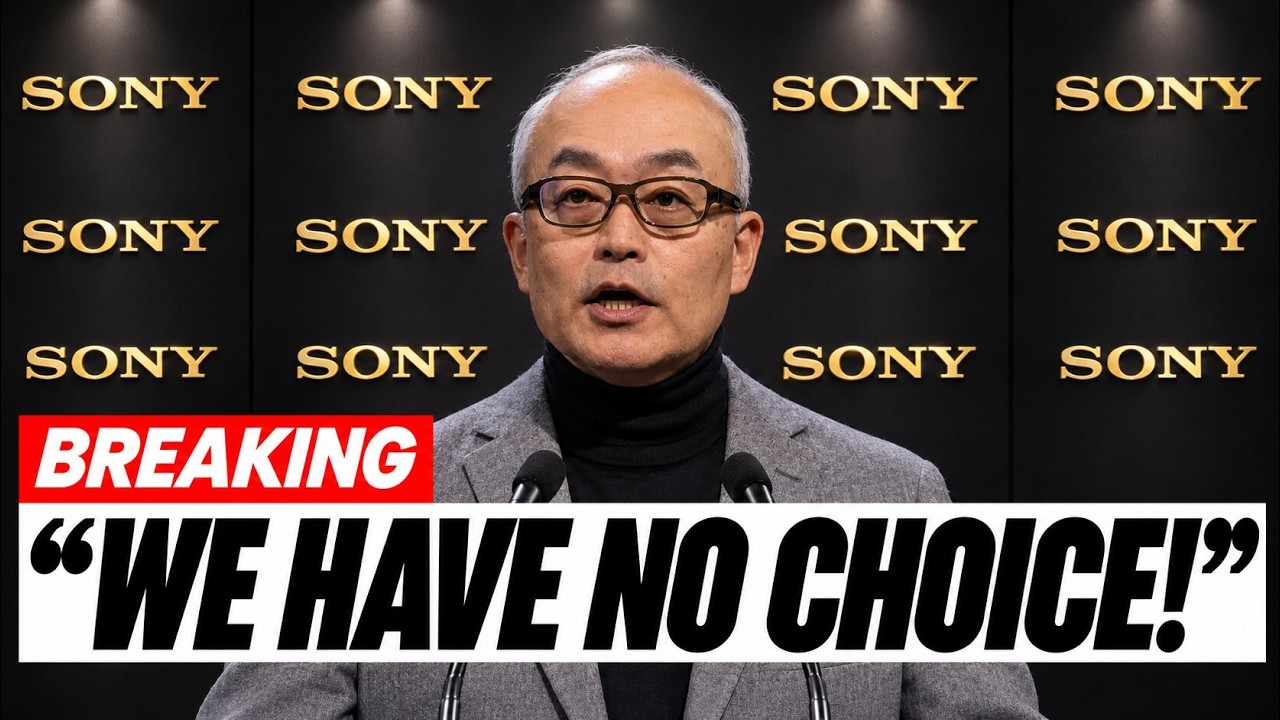
Sony CEO: "We're Now Selling Direct To Consumer!"
Title history
- Sony CEO: "We're Now Selling Direct To Consumer!" — observed on 20261109-1600 UTC (YouTube)
Keywords
Summary
188 words
Critical Evaluation
Value of the Information & Strength of the Argument
The value of the information is high, as it synthesizes scattered press releases and financial disclosures into a coherent strategic analysis. The argumentation is logically structured, using a cause-and-effect framework (memory crisis -> price hike -> shift focus to installed base -> direct sales) supported by concrete figures from the transcript (e.g., 1.6 million vs 2.5 million units shipped, 485 billion yen digital revenue). The video relies on named, credible sources (WSJ, Gartner, Circana, Kantan Games, Bernstein), which strengthens its persuasive power. However, the argumentation presents a cohesive narrative without thoroughly exploring the alternative possibility that physical media decline is purely a consumer preference shift, rather than a forced corporate strategy. The framing of Totoki’s “luck” comment is used to justify the pivot, but the nuance of the quote is slightly stretched to fit the thesis.
Scientific Rigor, Source Quality, Title Accuracy
The editorial rigour is above average, systematically referencing industry analysts and research firms. Specific statistics (e.g., 7 games sold >100k physical copies in H1 2026) are attributed to Circana, and quotes are attributed to Totoki, Nishino, and Toto. The video clearly distinguishes between factual events (price increases, disc manufacturing stop) and interpretative analysis (the strategic plan behind them). The title perfectly encapsulates the video’s main argument, although it is an editorialized version of the CEO’s words rather than a literal quote. The absence of links in the video description limits direct source verification, but the reliance on public financial reports and prominent analysts gives the content a solid grounding pending external verification.
263 words
Title / Content Match
The title is a bold paraphrase of CEO Hiroki Totoki's broader comments, accurately capturing the video's central thesis (direct-to-consumer pivot) while not being a direct quote. The content fully supports this interpretation.
Quality & Reliability
7/10
The video aggregates corporate announcements, financial disclosures, and analyst quotes to build a coherent narrative. It cites specific figures (shipments, revenue splits) and named analysts (Serkan Toto, Matt Piscatella, Robin Zhu), which lends credibility. However, it does not provide primary source links or balance the narrative with broader counter-arguments beyond the retail lobby's protest.
Key Moments
Markers derived by PSI from the transcript: the creator did not define chapters.
- Introduction to the WSJ interview with Hiroki Totoki and the central claim of a direct-to-consumer pivot.
- Timeline of 2026 decisions: Bravia/TCL, Afeela cancellation, PS5 price hike, end of physical discs, German store integration.
- Key financial figures: 1.6M PS5 shipped, operating profit +37%, digital vs physical revenue split.
- Quote from Hideaki Nishino about AI-driven recommendations and the shift from hardware to platform/client.
- Analysis of the traditional retail chain and the estimated 30% distribution/retail cost per physical game.
- History of PlayStation Direct (2019, 2021) and Yoshida's goal of connecting 1 billion people directly.
- Impact of the global memory chip shortage on console production and the resulting price increases.
- Official announcement on July 1, 2026 to stop producing discs in January 2028, followed by GTA VI backlash.
- Reactions from the Entertainment Retailers Association, collectors, and the petition with 300k signatures.
- Sony's other direct-to-consumer efforts: Crunchyroll subscriptions, stablecoin research, and the Bravia joint venture.
- Conclusion on who wins (Sony's margins/data) and the risks for consumers and excluded regions.
Cited Sources
- The Wall Street Journal — Interview with Hiroki Totoki in August 2026 about Sony's strategy and the memory crisis.
- Gartner — Warnings about PC and smartphone shipment declines due to the memory shortage.
- Circana (Matt Piscatella) — Analysis of US physical game sales showing only 7 games sold over 100k units in H1 2026.
- Kantan Games (Serkan Toto) — Estimates of ~30% distribution/retail costs and comments on Sony's digital profitability.
- Entertainment Retailers Association — Criticism of Sony's disc decision, citing 45% of UK physical game sales on PS4/PS5.
- Bernstein (Robin Zhu) — Counter-argument that physical game buyers' low volume justifies Sony's decision.
Dissenting Sources
- Entertainment Retailers Association statement — Argues that the move eliminates consumer choice and harms retailers who rely on physical sales.
- Petition to save physical games — Garnered ~300,000 signatures, demonstrating significant public opposition to the all-digital shift.
Contribution & Novelties
The video adds value by integrating a fragmented year of corporate news into a single strategic narrative, quantifying the financial incentives and quoting expert analysts. It goes beyond the simple press coverage to explain the likely underlying business model shift.
Pour aller plus loin :
- PlayStation 5 - Context on the console’s lifecycle and current market position.
- Hiroki Totoki - Background on the CEO’s financial background and career.
- Direct-to-consumer - General concept of eliminating intermediaries.
- Sony Honda Mobility - Details on the abandoned Afeela EV project.
86 words
Radar Profile
The radar shows strong scores in information quantity and quality, reflecting the video's dense use of data and expert commentary. The technical level is moderate, making it accessible while retaining business analysis depth. Global reliability is high but tempered by the lack of direct source links in the description, leaning on the credibility of named firms.