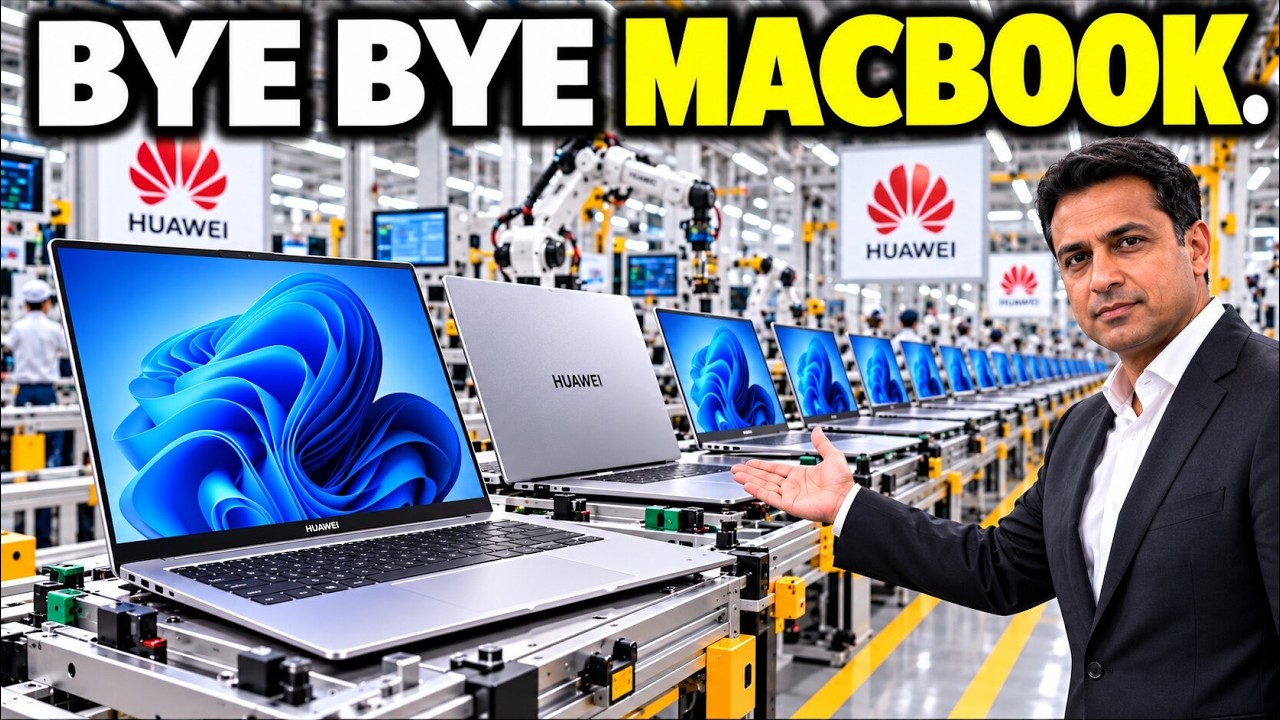
HUAWEI JUST DROPPED A BOMBSHELL: NEW LAPTOPS WILL DESTROY THE ENTIRE TECH INDUSTRY!
Title history
- HUAWEI JUST DROPPED A BOMBSHELL: NEW LAPTOPS WILL DESTROY THE ENTIRE TECH INDUSTRY! — observed on 20261105-1422 UTC (YouTube)
Keywords
Summary
169 words
Critical Evaluation
Value of the Information & Strength of the Argument
The video provides substantial value by synthesizing data from multiple market research firms (Omdia, IDC, Canalys, TrendForce) and includes specific analyst quotes, giving a comprehensive picture of Huawei’s strategy and market position. The argumentation is generally solid: it acknowledges both strengths (rapid growth, ecosystem development) and weaknesses (chip gap, missing software, limited global reach). However, the presentation is balanced and avoids hyperbole, explicitly debunking the headline. The reasoning is logical, moving from the entity list to the product launches, to market data, to challenges, and finally to ecosystem implications. Some speculative elements, such as potential future global expansion, are clearly labeled as speculation.
Scientific Rigor, Source Quality, Title Accuracy
The video demonstrates strong scientific rigor by citing well-known market research firms and quoting named analysts (e.g., Dan Hutcherson, Emma Shu, Kieran Jessup, Paul Triolo). It also mentions a Financial Times article without providing a direct link but suggests sources are in the description (though none are visible in the provided description). The data is consistent with the narrative, and the video does not overstate findings. The title is clickbait and does not match the nuanced content; the video itself argues against the title’s claim. This mismatch is a minor flaw but does not undermine the substance of the analysis.
218 words
Title / Content Match
The title is sensationalist, claiming Huawei laptops will 'destroy the entire tech industry', but the video explicitly argues against that. The content is accurate and nuanced, so the title is misleading.
Quality & Reliability
8/10
The video relies on data from reputable market research firms like Omdia, IDC, Canalys, and TrendForce, and includes quotes from analysts. It presents a balanced view, acknowledging challenges. However, it includes some speculative elements about future developments.
Key Moments
Markers derived by PSI from the transcript: the creator did not define chapters.
- Introduction: Huawei's growth despite losing Windows, Intel, and Qualcomm
- The 2019 entity list and its impact on Huawei's phone business
- May 2025 launch of first HarmonyOS laptops: MateBook Pro and MateBook Fold
- Details on the Kirin X90 chip and performance gap vs Apple/Qualcomm
- 2026 product lineup: MateBook 14, Pro S, Fold 2, and HM650 desktop
- Market data: Huawei's growth in China vs global market decline
- Challenges and ecosystem growth: missing apps, global availability, and the flywheel effect
Cited Sources
- Tech Insights — Chip teardown analysis and process node evaluation
- Omdia — Market shipment data and forecasts
- International Data Corporation (IDC) — Global PC shipment statistics
- Canalys — Analysis of software availability in HarmonyOS computers
- TrendForce — Memory price trends and shortage outlook
- Financial Times — Quote from technology policy analyst Paul Triolo on China's need for its own OS
Concurring Sources
- Omdia — Supports the market share and shipment figures cited in the video
- IDC — Confirms the global PC market decline and memory shortage context
Contribution & Novelties
The video offers a comprehensive and balanced overview of Huawei’s transition to HarmonyOS computers, synthesizing data from multiple sources to explain the strategic and technological implications. It goes beyond simple news reporting by providing context on the ecosystem flywheel and the geopolitical dimensions. The analysis of the chip process gap and the challenges of ecosystem maturation adds depth.
Pour aller plus loin :
- HarmonyOS — Overview of Huawei’s operating system and its evolution.
- Kirin (processor) — Details on Huawei’s chip series, including the Kirin X90.
- Extreme ultraviolet lithography — Explains the technology China lacks and its impact on chip manufacturing.
- Entity List (United States) — Background on the US export control list that triggered Huawei’s self-reliance push.
117 words
Radar Profile
The radar shows high scores in information quantity and quality (9 and 8), indicating a data-rich and reliable presentation. Technical level is moderate (7), making it accessible to a general audience while still covering technical aspects. Global reliability is strong (8), reflecting a well-sourced analysis with balanced arguments.