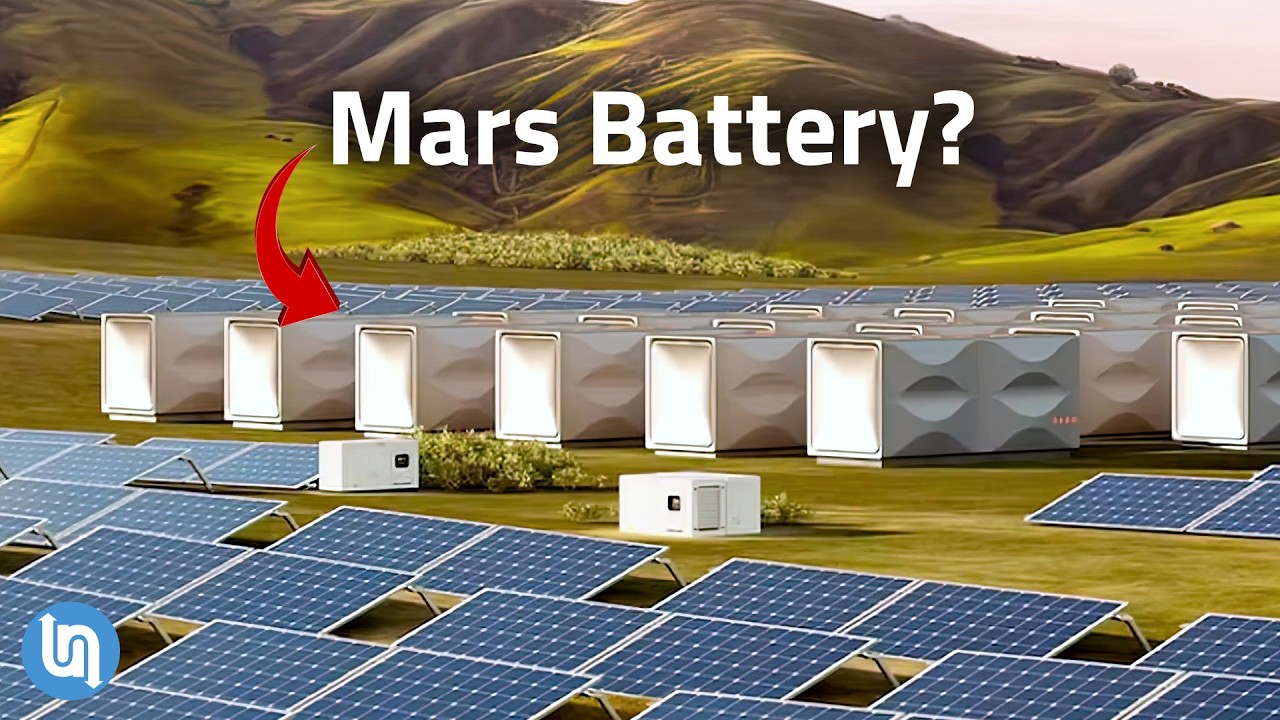
Why This Mars Battery Could Beat Lithium-Ion
Title history
- Why This Mars Battery Could Beat Lithium-Ion — observed on 20261101-0122 UTC (YouTube)
Keywords
Summary
131 words
Critical Evaluation
Value of the Information & Strength of the Argument
The video provides valuable insights into an emerging energy storage technology, demystifying its mechanism and potential benefits. It argues that Noon’s system could fill a crucial gap in grid storage by enabling multi-day discharge, which lithium-ion cannot economically do. The argumentation is logical and well-structured, presenting both pros and cons. However, some critical details such as power output and capacity per container are omitted, leading to confusion among viewers. The use of real-world examples and comparisons with established technologies strengthens the case, but the presenter’s optimism is tempered by acknowledged uncertainties.
Scientific Rigor, Source Quality, Title Accuracy
The video demonstrates good scientific rigor by referencing the Mars MOXIE experiment and providing a blog post with citations. It cites NASA, NSF, and California Energy Commission as partners, adding credibility. The title is accurate and engaging, though it may overpromise with ‘beat lithium-ion’ given that the technology is intended to complement rather than replace it. The video provides clarifications in the description, addressing common questions. Overall, sources are transparent and the presentation is balanced, though some claims lack precise data.
187 words
Title / Content Match
The title accurately reflects the content, which discusses a novel battery technology derived from Mars-based research and its potential to compete with lithium-ion for long-duration storage.
Quality & Reliability
7/10
The video is well-researched and presents a balanced view, but lacks precise technical specifications and relies on some unverified claims.
Chapters
Cited Sources
- Video script and citations — The video script and citations for this episode.
- Why America's Most Valuable Resource Is in Your Trash — Related video on valuable resources.
External References
Contribution & Novelties
The video’s original contribution lies in demystifying a nascent technology and connecting it to its space exploration origin, making it accessible to a general audience. It highlights the potential for ultra-long-duration storage as a complement to lithium-ion. To further explore:
- MOXIE — The NASA experiment that inspired this technology, explaining how oxygen is produced on Mars.
- Solid oxide fuel cell — The core chemistry behind Noon’s system, describing how carbon and oxygen react to generate electricity.
- Long-duration energy storage — The broader field of storage systems designed for multi-day discharge, addressing grid stability.
These concepts provide deeper insight into the mechanisms and challenges of the technology.
106 words
Radar Profile
The radar profile shows balanced scores across quantity, quality, technicality, and reliability, with a slight dip in information quality due to some vagueness. This indicates a well-rounded but not exceptional presentation.
💬 balanced — Comments show mixed reactions: many viewers express confusion about the specifications, while a few are cautiously optimistic about the technology's potential.