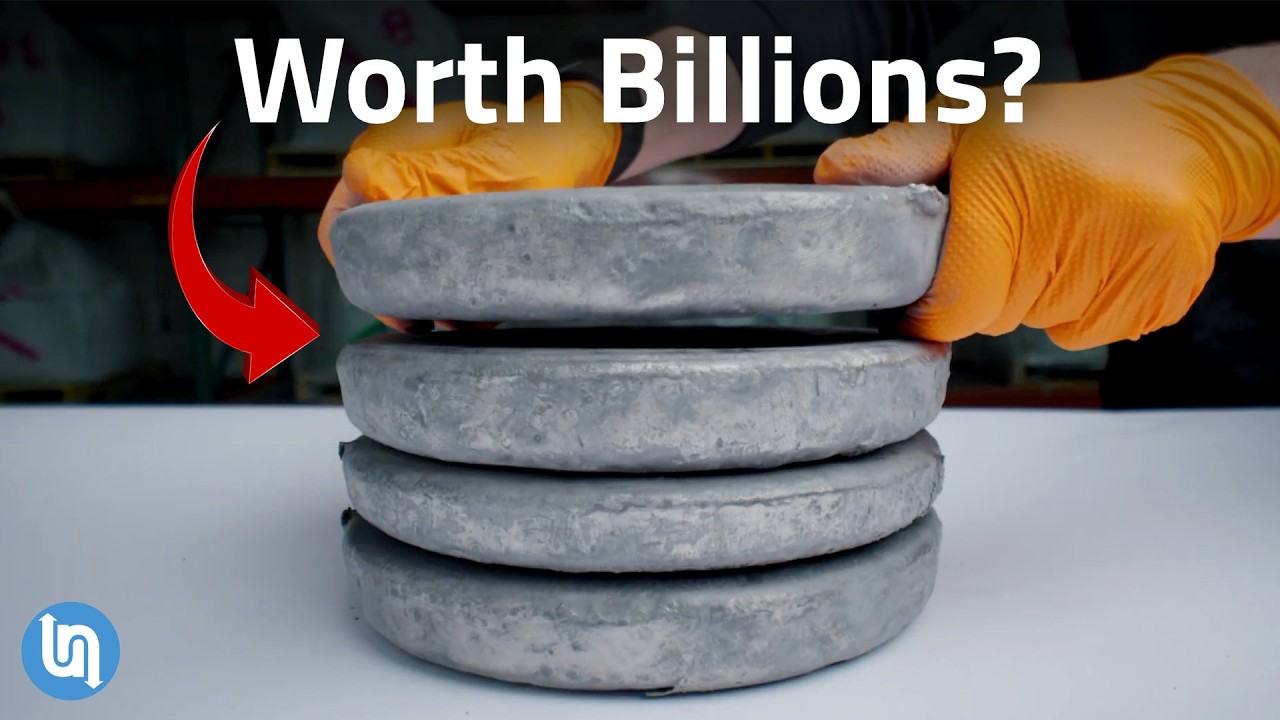
Have We Been Mining Wrong This Whole Time?
Title history
- Have We Been Mining Wrong This Whole Time? — observed on 20261101-0118 UTC (YouTube)
Keywords
Summary
207 words
Critical Evaluation
Value of the Information & Strength of the Argument
The video provides substantial value by consolidating multiple emerging approaches to critical mineral recovery into a coherent narrative. It presents quantitative data from credible studies (e.g., a 2025 study on mine waste recovery potential, the University of Oregon’s $2.2 trillion figure for desalination brine) and highlights a pioneering company (Phoenix Tailings) with tangible progress. The argumentation is logically structured: it introduces the problem, presents potential solutions, then critically evaluates their feasibility with clear caveats about environmental risks and economic realities. The use of analogies (raisin bread vs. salt extraction) helps make complex metallurgical processes accessible. The host also acknowledges his own uncertainty and invites discussion, which strengthens the sense of objectivity. However, the video relies heavily on the company’s own claims and on a limited number of studies, and it does not deeply investigate the technical details of the processes, leaving some claims unverified. Overall, the information is valuable and the argumentation is balanced and persuasive.
Scientific Rigor, Source Quality, Title Accuracy
The video demonstrates a high level of scientific rigor for a popular-science channel. It cites specific studies and provides a link to the full script and citations in the description, allowing viewers to verify claims. The presentation clearly distinguishes between factual data (statistics on e-waste generation, mining waste volumes) and expert opinions (quotes from Peter S. Fiske). It also transparently addresses limitations and counterarguments, such as radioactive tailings, dam risks, and the lack of economic viability without government support. The title ‘Have We Been Mining Wrong This Whole Time?’ is apt, as the video indeed argues that the industry has overlooked valuable resources in waste, but it avoids a sensationalist tone by concluding that remining is supplementary rather than a complete replacement. The balance between optimistic claims and critical scrutiny is well maintained, and the inclusion of a sponsor segment is clearly marked and does not compromise the content’s integrity.
321 words
Title / Content Match
The title poses a provocative question that the video thoroughly explores, contrasting traditional mining with remining and concluding that a combination approach is likely, with remining offering significant but not complete relief.
Quality & Reliability
8/10
The video presents a balanced and well-researched overview of remining as a potential solution to the critical minerals shortage, citing specific studies (e.g., a 2025 study on mine waste recovery, a $2.2 trillion figure for desalination brine) and featuring an in-depth look at Phoenix Tailings. It acknowledges technical, environmental, and economic challenges without overstating current capabilities, maintaining a cautious but evidence-based tone.
Chapters
Cited Sources
- The Billions We're Burying in Plain Sight (Video script and citations) — Link in the video description providing the full script and a list of citations used in the episode.
External References
Contribution & Novelties
The video contributes to the public understanding of remining by synthesizing multiple recent developments (Phoenix Tailings, L3 Process Development, Noveon, and academic research) into a single, accessible narrative. Its novel angle is the framing of waste as an ‘urban mine’ and the emphasis on the economic and geopolitical implications of reducing critical mineral imports from China. The inclusion of both tailings and acid mine drainage, alongside e-waste, offers a comprehensive view rarely seen in mainstream media.
Pour aller plus loin :
- Rare-earth element — Provides background on the properties, uses, and geopolitical significance of rare earth elements.
- Mine tailings — Explains what tailings are, their environmental risks, and the potential for reprocessing.
- Acid mine drainage — Details the formation and impacts of acidic water from mines, as well as remediation and resource recovery possibilities.
- Electronic waste — Covers the scale of e-waste, recycling challenges, and the recovery of valuable materials.
150 words
Radar Profile
The radar profile shows a balanced performance, with strong scores in information quality and reliability, reflecting the video's well-researched and balanced presentation. The quantitative and technical depth are moderate, indicating that while the content is informative, it remains at an accessible level without delving into advanced metallurgy or economics. The overall note (4/5) aligns with the consistently positive but cautious assessment of the topic.
💬 Positif. The 30 comments analyzed are overwhelmingly supportive and enthusiastic about the idea of remining, with many viewers sharing personal anecdotes about hoarding e-waste or expressing hope that such processes will become mainstream. Humor and appreciation for the clear explanation are common themes.