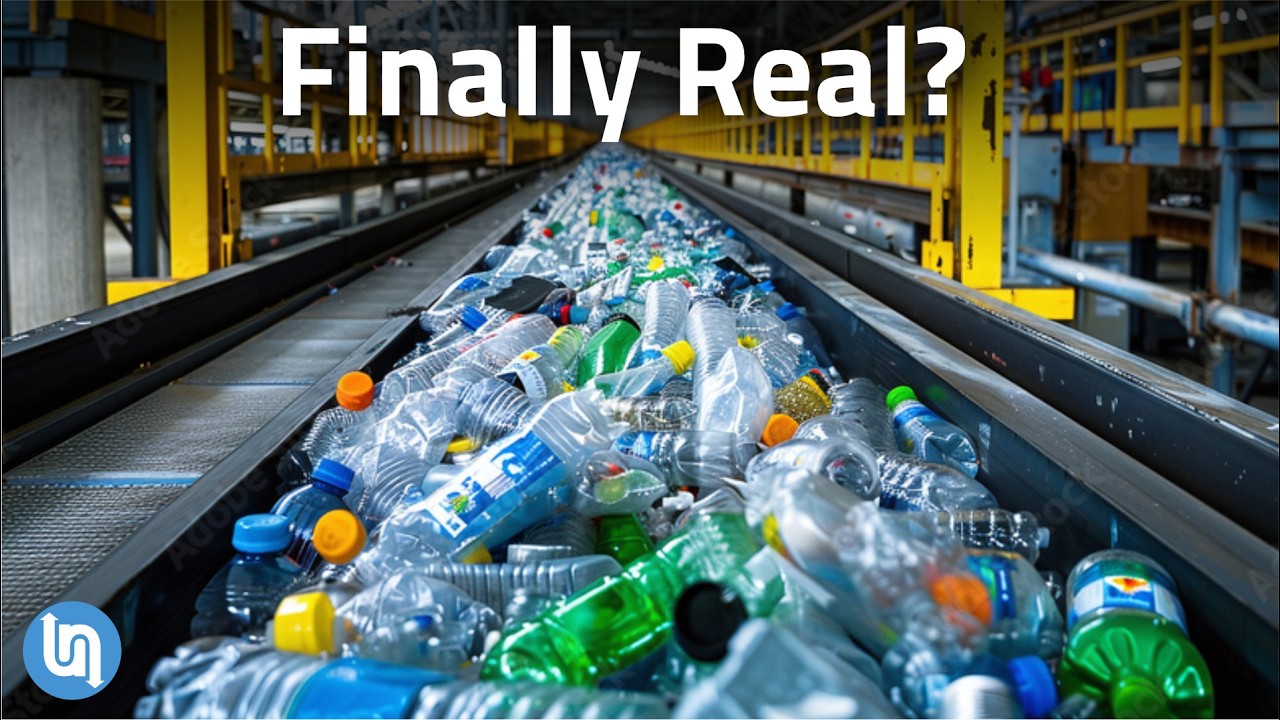
The Recycling Breakthrough That Doesn't Need Sorting
Title history
- The Recycling Breakthrough That Doesn't Need Sorting — observed on 20261101-0159 UTC (YouTube)
Keywords
Summary
133 words
Critical Evaluation
Value of the Information & Strength of the Argument
The video provides valuable information by bringing together multiple recent breakthroughs in one accessible overview, comparing their advantages and drawbacks. It argues convincingly that no single method will solve plastic recycling, but a toolbox approach is feasible. The argumentation is balanced, presenting both potential and challenges, and avoids overhyping the technologies. However, it sometimes glosses over technical details for clarity, but overall it is well-supported.
Scientific Rigor, Source Quality, Title Accuracy
The video cites specific research from Northwestern University, KIMM, and Carbios, and references a McKinsey report and a German study. The script link in the description includes full citations. The title is accurate and not misleading. The video maintains a high level of rigor by distinguishing between laboratory results and industrial scales, and by discussing economic feasibility. There is a brief sponsorship segment, but it is clearly separated and does not affect the scientific content.
155 words
Title / Content Match
The title accurately captures the video's focus on recycling technologies that circumvent the need for sorting mixed plastic waste.
Quality & Reliability
8/10
The video presents multiple recent research findings and company developments, with references to studies and reports, and transparently discusses limitations and economic challenges.
Chapters
Cited Sources
- Video script and citations — Description provides detailed references for the claims made in the video.
External References
Contribution & Novelties
The video synthesizes recent developments in chemical recycling, highlighting three distinct approaches: catalytic hydrogenolysis, plasma gasification, and enzymatic hydrolysis. It provides a comparative analysis and contextualizes them within the broader recycling landscape.
Pour aller plus loin :
- Chemical recycling — Overview of chemical recycling methods.
- Hydrogenolysis — Explanation of the chemical reaction used by the Northwestern catalyst.
- Enzymatic hydrolysis — Note: hydrolysis reaction relevant to Carbios’ process.
- Plasma gasification — The technology behind the plasma torch.
- Carbios — Company developing enzymatic recycling.
82 words
Radar Profile
The radar chart shows a balanced profile with high scores across all dimensions, indicating a well-rounded presentation of information. The video excels in quantity and quality of information, with slightly lower but still strong scores in technical depth and overall reliability.
💬 Of the 30 comments analyzed, sentiment is generally positive, with many commenters expressing excitement about the breakthroughs, while some raise concerns about economic viability and point out minor errors. Others suggest additional companies to investigate.