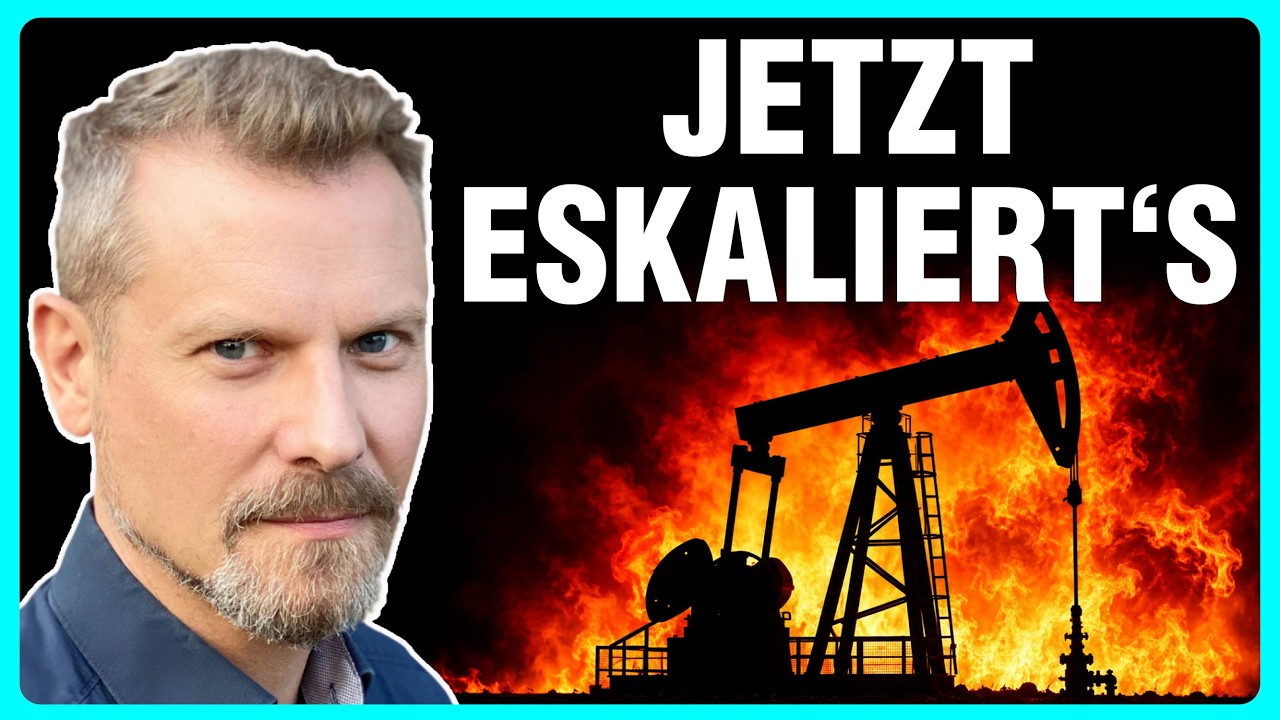
Christian Stöcker: "Todeskampf der Ölindustrie hat begonnen"
Christian Stöcker: "The Death Throes of the Oil Industry Have Begun"
Title history
- Christian Stöcker: "Todeskampf der Ölindustrie hat begonnen" — observed on 20261025-0918 UTC (YouTube)
Keywords
Summary
243 words
Critical Evaluation
Value of the Information & Strength of the Argument
The episode provides substantial analytical value through the concrete dissection of two interrelated cases (TU Munich study and the heating law campaign). Stöcker demonstrates how agenda-setting works in practice: scientific publications are selectively framed, amplified, and used to fulfill political and corporate interests. The argument that the fossil industry’s ‘final struggle’ makes it more aggressive is a compelling narrative thread that adds depth to the discussion. The host’s question about whether citizens can be expected to discern such complexity is well-placed, and Stöcker’s proposed heuristic is practical. The core value lies in synthesizing known lobbying tactics with specific German media examples, thereby making a strong case for systemic manipulation.
Scientific Rigor, Source Quality, Title Accuracy
The scientific rigor is moderate. While Stöcker references the TU Munich study and admits it is an unpreserved whitepaper (meta-analysis of older technology), he correctly points out that peer-reviewed studies show even higher benefits for EVs. The episode mentions a study by the German Institute for Sustainable Development (ISD Germany) cited in the description; this provides a verifiable source (URL provided). However, no empirical data is presented on the frequency of certain narratives, and the discussion of Springer and KKR relies on public knowledge and financial logic rather than new investigative findings. The title is adequately matched to the content: the ‘death throes’ thesis is argued with evidence of growing renewable deployment. The discussion of media manipulation is well-structured, but the lack of formal citations during the talk limits its scientific claim; it remains a highly informed expert opinion rather than a systematic review.
268 words
Title / Content Match
The title accurately reflects the provocative core thesis discussed: the fossil industry's defensive struggle signals its terminal decline, and the argument is central throughout the episode.
Quality & Reliability
7/10
The episode features a professor of digital communication with deep journalistic experience. It presents a coherent argument about fossil fuel lobbying, but relies heavily on anecdotal evidence and personal interpretation rather than quantitative data or peer-reviewed sources presented in the episode. The main cited study (TU Munich) is contextualized with caveats, but the broader claims rely on expert testimony.
Key Moments
Markers derived by PSI from the transcript: the creator did not define chapters.
- Introduction and central thesis: the death throes of the fossil industry have begun.
- Stöcker outlines the key actors: think tanks, the Atlas Network, and private interests like Charles Koch.
- Discussion of strategic shift: from denying climate change to discrediting solutions (EVs, heat pumps, renewables).
- Case study: the TU Munich study on EV lifecycle emissions and its framing as 'Auto-Lie of the EU' before its official release.
- Analysis of the 'Heizungshammer' campaign against the heating law; details on how the law was watered down.
- Stöcker explains the role of Springer and private equity firm KKR, linking financial interests to media narratives.
- Debunking false solutions like hydrogen heating; explaining technical infeasibility and cost.
- Stöcker gives a simple rule of thumb for citizens to recognize disinformation: the 'fossil solution' narrative is always suspect.
- Concluding remarks on the positive global trends in solar, battery, and EV deployment.
Cited Sources
- Study: Destructive Discourses – Digital Spread of Climate-related Mis- and Disinformation — Referenced in the episode as Stöcker's own study cited for the concept of destructive discourses in the German digital sphere.
- Wechselpilot (Sponsor link) — Referenced during the spoken advertising segment. It is a general service link and not a scientific source.
External References
Contribution & Novelties
The main contribution of this episode is its accessible yet nuanced narrative linking academic discourse, media mechanics, and financial interests in the German energy debate. It extrapolates patterns from two specific cases to articulate a broader theory of strategic communication by the fossil industry. The ‘death throes’ framing provides a counterpoint to the pervasive narrative of climate policy failure, offering a lens of accelerating progress.
Pour aller plus loin :
- Atlas Network — Stöcker mentions this network of libertarian think tanks as a key structural element of fossil lobby influence.
- Climate change denial — The episode argues that denial has evolved into a postmodern strategy of discrediting solutions.
- Heat pump — Stöcker discusses heat pumps as a central battleground for the energy transition in heating, debunking hydrogen myths.
- Electric vehicle battery — The background for the TU Munich study; discussing life-cycle emissions is crucial for the narrative.
147 words
Radar Profile
The radar profile shows high scores in quantity and quality of information, reflecting a dense and rich interview. The technical level is moderately high, requiring some background knowledge of German energy policy. The overall reliability is solid but not exceptional due to a reliance on expert testimony over peer-reviewed citations within the discussion.