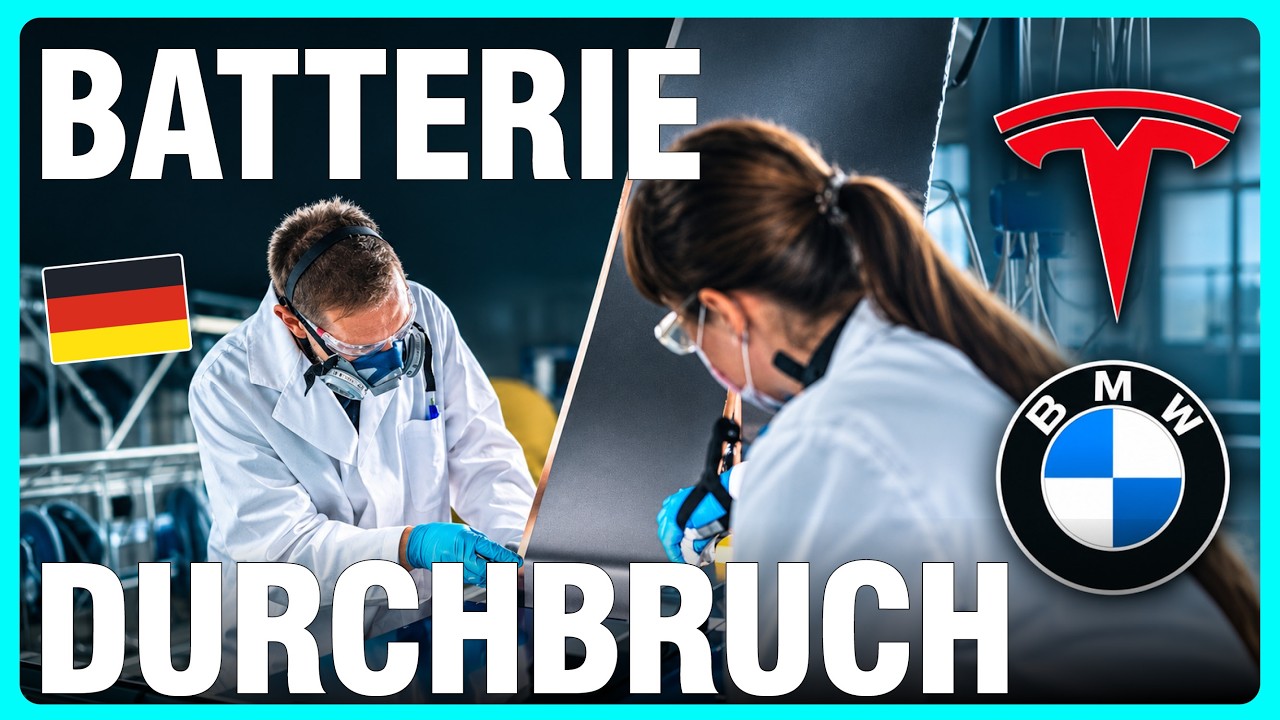
Warum Tesla und BMW jetzt nach Dresden schauen - Dr. Benjamin Schumm (Fraunhofer IWS)
Why Tesla and BMW are now looking to Dresden - Dr. Benjamin Schumm (Fraunhofer IWS)
Title history
- Warum Tesla und BMW jetzt nach Dresden schauen - Dr. Benjamin Schumm (Fraunhofer IWS) — observed on 20261108-1053 UTC (YouTube)
Keywords
Summary
174 words
Critical Evaluation
Value of the Information & Strength of the Argument
The video provides significant informational value by detailing a specific technological innovation in battery production, including its cost implications and industrial readiness. The argumentation is solid: Schumm explains the technical principles clearly (how dry coating works, why it saves energy and space), supports claims with reasonable estimates, and acknowledges limitations (e.g., the need for scale-up validation). He also addresses concerns about intellectual property and competition, offering a balanced perspective. However, as a proponent of the technology, he may overstate its immediate impact; the discussion focuses on potential rather than fully validated industrial results.
Scientific Rigor, Source Quality, Title Accuracy
The scientific rigor is good for a podcast format: the guest is a leading expert directly involved in the research, and his explanations are technically coherent. The main weakness is the absence of cited scientific publications or independent studies to verify the cost and performance figures. The title accurately reflects the content, as the episode indeed discusses why automakers like Tesla and BMW are interested in the Dresden-based technology. No comments section was provided for analysis.
184 words
Title / Content Match
Title accurately reflects the main discussion about dry battery electrode coating and its potential adoption by Tesla and BMW.
Quality & Reliability
8/10
Expert testimony from a Fraunhofer researcher directly involved in the technology, but cost estimates and industry claims are based on personal judgment rather than published peer-reviewed data.
Chapters
- Intro
- Kommt die nächste Batteriefabrik-Technik aus Deutschland?
- Vorsprung vor China
- Was bringt Trockenbeschichtung in Euro?
- So funktioniert’s
- Vom Nudelholz zu Dry-Track
- Patente, Lizenzen
- Die Dry Platform in Dresden
- Kann man die Nassbeschichtung einfach austauschen?
- Festkörper, Natrium-Ionen und mehr Energiedichte
- Tesla, BMW und PowerCo
- Was Deutschland jetzt braucht
Cited Sources
- Geladen Podcast LinkedIn page — Official LinkedIn page of the podcast, mentioned in the video description.
External References
Contribution & Novelties
This podcast offers a unique insider perspective on a specific German innovation in battery electrode manufacturing, providing details on the DRYtraec process, its cost advantages, and the industrial ecosystem evolving around it. The discussion highlights a potential European technological lead in a sector currently dominated by China, and explains how patents and licensing may protect this advantage.
Pour aller plus loin :
- Trockenbeschichtung (German for ‘dry coating’) — a general concept of applying dry materials without solvent; the episode provides a specific implementation.
- DRYtraec — the specific process developed at Fraunhofer IWS; more information is available on the Fraunhofer IWS website (not linked here).
- Tesla Battery Day — Tesla’s 2020 announcement of dry electrode coating, which accelerated interest in the technology.
- Lithium-ion battery — background on battery cell composition and manufacturing, though not specific to dry coating.
137 words
Radar Profile
The profile shows strong scores in information quantity and quality, with a moderate technical level appropriate for a general audience, and a high reliability score reflecting the expertise of the speaker. The overall balance suggests a content that is both informative and credible.