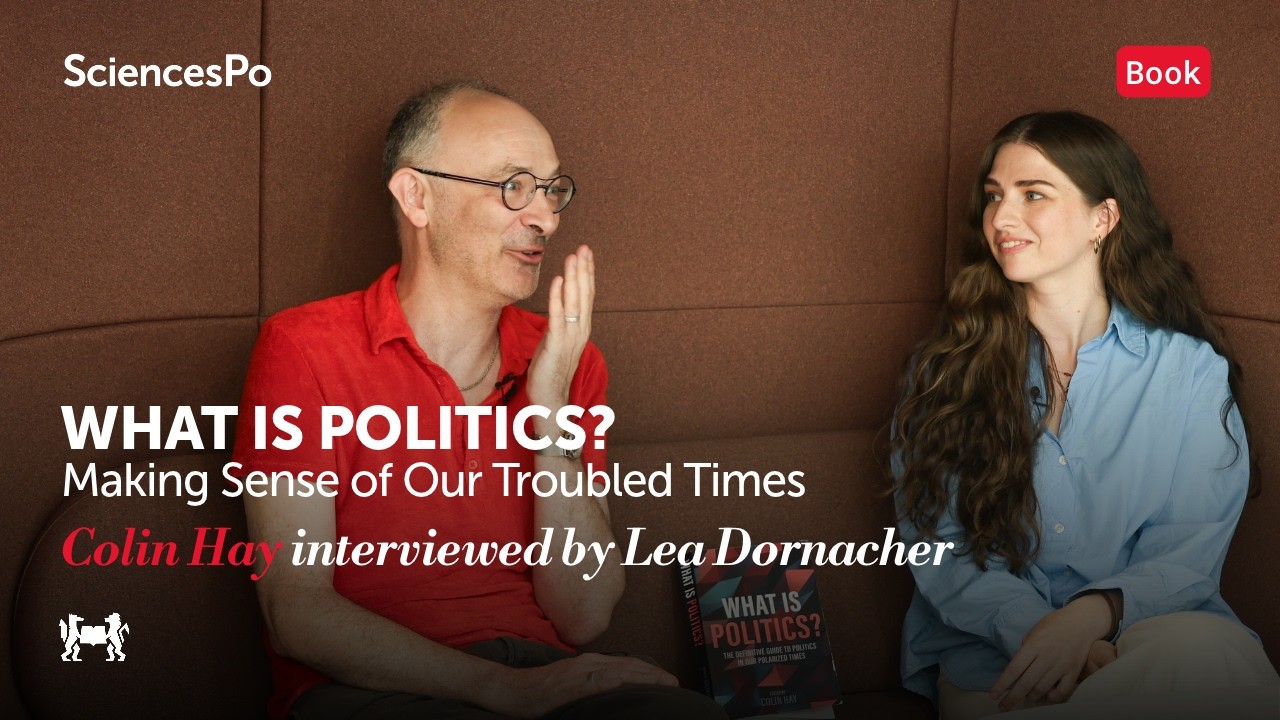
What is Politics? Making sens of our troubled times
Keywords
Summary
193 words
Critical Evaluation
Value of the Information & Strength of the Argument
The interview provides valuable insights into the pluralistic nature of political analysis. Hay’s argument is solidly constructed around the three Cs (choice, contingency, consequence), which serves as a unifying framework for the diverse chapters. He effectively argues that political analysis should be humble and open-ended, acknowledging that every perspective illuminates certain aspects while obscuring others. The discussion on politicization and depoliticization is particularly illuminating, as it highlights how framing choices as necessary removes them from the political realm. The reasoning is consistent and well-supported by references to the book’s structure and the intellectual lineage from Leftwich’s earlier editions.
Scientific Rigor, Source Quality, Title Accuracy
The video is produced by Sciences Po, a prestigious academic institution, and features Colin Hay, a professor at Sciences Po’s Centre for European Studies and Comparative Politics. The book is published by Polity Press, a reputable academic publisher. The title of the video is consistent with the content, which directly addresses the question ‘What is politics?’ through a discussion of the edited volume. The sources cited in the description are reliable, including the book’s official page and the research center’s website. However, the video does not provide external verification of the claims made, and the discussion is based solely on the author’s perspective. The commentary in the video is coherent and accurate, with no apparent biases or errors.
231 words
Title / Content Match
The title accurately reflects the discussion, which centers on defining politics and understanding contemporary political challenges through a new edited volume.
Quality & Reliability
8/10
The interview features a leading political scientist discussing a peer-edited volume from a reputable academic press. The content is coherent and clearly argued, though limited by the conversational format and lack of external verification.
Key Moments
Markers derived by PSI from the transcript: the creator did not define chapters.
- Introduction of Colin Hay and the topic of the book
- Definition of politics: choice, contingency, consequence
- Discussion on politicization and depoliticization
- Comparison with previous editions by Adrian Leftwich
- Importance of debating what politics is for political analysis
- How the chapters were selected and their diversity
- Different forms of chapters, e.g., rhetoric, cognition, crisis management
- Target audience and goals of the book
- Differences from other introductory textbooks and final message
Cited Sources
- What is Politics?: The Definitive Guide to Politics in Our Polarized Times — The book discussed in the interview, edited by Colin Hay, published by Polity Press.
- Centre for European Studies and Comparative Politics — The research center at Sciences Po where Colin Hay is a professor.
- CEE LinkedIn Showcase — LinkedIn page for the research center mentioned in the description.
- CEE Bluesky — Bluesky social media profile for the research center.
Concurring Sources
- What is Politics?: The Definitive Guide to Politics in Our Polarized Times — The book itself serves as a concordant source, aligning with the views expressed in the interview.
External References
Contribution & Novelties
The interview contributes by presenting a synthetic definition of politics (choice, contingency, consequence) that unifies diverse analytical perspectives. It argues for methodological pluralism and humility in political science, a stance that encourages students to choose their own lenses. The book updates classic themes with contemporary chapters on crisis management, cognition, and rhetoric, reflecting the challenges of the current political climate.
Pour aller plus loin :
- Contingency (philosophy) — The concept of contingency is central to the definition of politics as presented, explaining how outcomes depend on choices.
- Rhetoric — Alan Finlayson’s chapter on politics as rhetoric draws on classical and modern theories; this link provides background.
- Depoliticization — The process by which choices are presented as non-negotiable, removing them from political debate; discussed in the interview.
126 words
Radar Profile
The radar profile indicates high reliability and information quality, with a slightly lower technical level. This reflects the interview's accessible yet scholarly nature, where fiabilité and content richness are strong, while the technical depth is moderate, suitable for a broad audience.