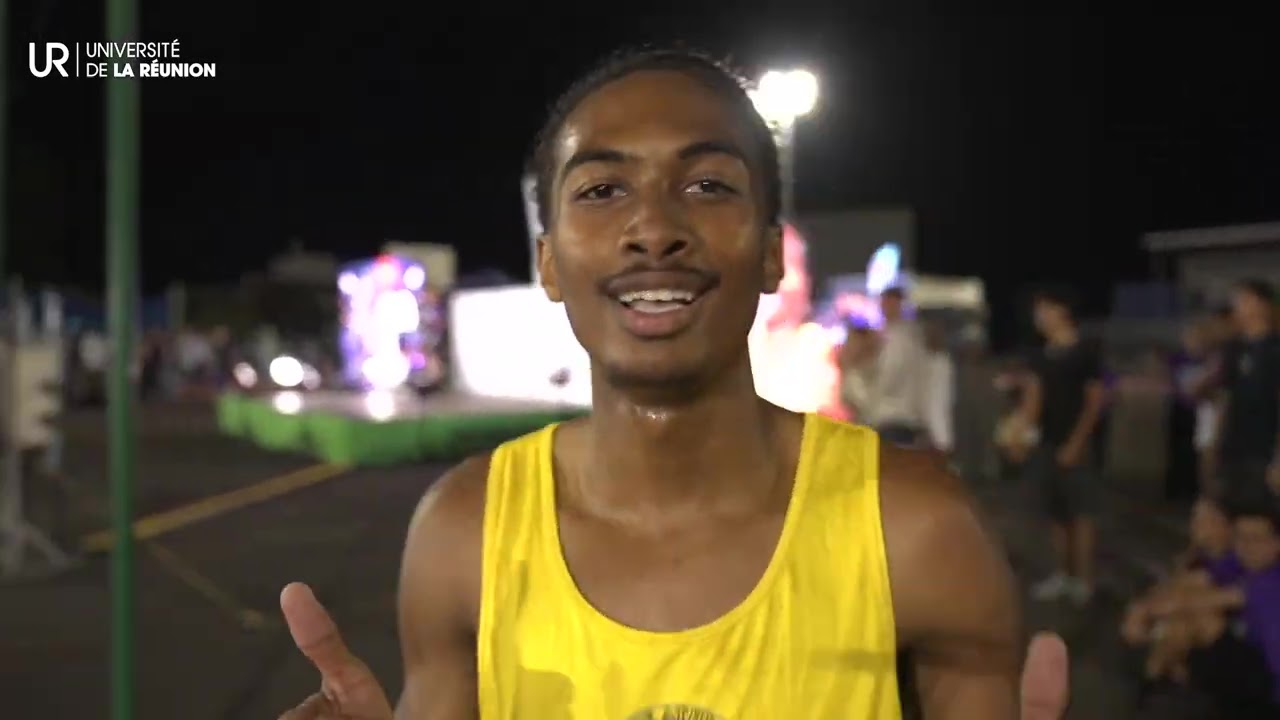
Nignt athlé show 2026 : the last man standing
Night Athlé Show 2026: Last Man Standing
Keywords
Summary
261 words
Critical Evaluation
Value of the Information & Strength of the Argument
The informational value lies almost entirely in documenting an unusual race format rather than in explaining anything. The commentator does give a clear, usable description of the rules — number of starters, the pass in front of the stands plus a lap, elimination of the last runner at each passage, and the recovery interval between rounds — and he formulates the central tactical tension in one sentence: the need to run conservatively, to keep something in reserve and to recover, while never being the last across the line. That is a genuine, if elementary, piece of race-strategy reasoning, and the interview with the winner extends it with a concrete observation about taking the inside rail on the closing lap. Beyond this, the argumentation is thin: no times, no splits, no distances, no heart-rate or pacing data, and no structured comparison with similar formats held elsewhere. The claim that this is a first on the island is asserted by the commentator and the organisers but not documented, and the reference to a cycling-derived ‘American-style’ elimination race is left at the level of analogy. Everything else is event narration, athlete presentation and post-race reaction, which has real interest for spectators and for the institutional record of the meeting, but constitutes illustrative anecdote rather than analysis. The retrospective comments on fatigue and recovery are subjective self-reports, and the extended statements about palmarès are drawn from the announcer’s notes rather than from any checkable record. The programme is therefore valuable as an archive of a local sporting initiative and as a demonstration of the format for anyone wishing to stage something similar, but it offers almost no transferable or verifiable knowledge beyond that.
Scientific Rigor, Source Quality, Title Accuracy
No source, reference, document or link accompanies the broadcast: the description only credits the university’s own audiovisual unit for the filming. All factual assertions — the record of the athletes, the national and world masters titles, the sub-thirty-minute ten-kilometre performance, the claim that the format had never been held on the island before — rest solely on the announcer’s word and cannot be checked from the recording. The ‘first’ claim in particular would require a calendar or federation record, which is absent. Figures quoted on the fly are imprecise and occasionally garbled, and the audio transcription mangles several names and distances, so even the raw factual content must be treated with caution. One athlete also carries a camera lent by a commercial partner, and short sponsor mentions are woven into the live commentary (a few seconds in total); this is presented as a technical device for filming the race from inside and does not affect the assessment. On the title-content relationship, the recording does deliver exactly the elimination race announced, with the tagline used consistently throughout, so the framing is honest apart from a typographical error in the title and a publication date that sits oddly far in the future. No viewer comments were supplied, so no reading of audience reaction is attempted here.
508 words
Title / Content Match
The title matches the content: it is a night athletics meeting whose headline event is an elimination ('last man standing') race. Only a typographical slip ('Nignt') and the unusual future publication date slightly blur the framing.
Quality & Reliability
5/10
Institutional channel broadcasting a live sporting event: factual content (race format, athlete identities, results) is internally consistent and directly observable on screen, but no data, timing, ranking sheet or external reference is provided, and the audio transcript is heavily garbled on names and figures. Reliability rests on the event being shown rather than argued, which limits verifiability of the biographical claims made about the athletes.
Key Moments
Markers derived by PSI from the transcript: the creator did not define chapters.
- The commentator lays out the rules of the elimination race: eleven starters, a first pass in front of the stands, then one lap, with the last runner eliminated at each passage.
- Individual presentation of the field, including regional specialists, national-level juniors and a decorated masters athlete whose record is read out to the crowd.
- Presentation of the filmed runner, equipped with a camera lent by a partner, then the start of the race.
- The organisers explain on air that the recovery interval was extended from sixty to seventy-five seconds, with a countdown displayed on screen.
- Tactical phase: lead changes, jostling for the inside lane, a fall and remount, and the first close elimination judged on the line.
- The crowd is asked to shout the final ten-second countdown, after which further athletes are eliminated.
- Post-race interview with the winner, who explains that taking the inside rail on the final lap decided the race, and praises the organisation and the crowd.
- Announcement of the next event of the evening, a long 'laser run', closing this segment of the broadcast.
Contribution & Novelties
The originality is essentially local and format-based: the recording documents the staging on La Réunion of an elimination race presented as new to the island, adapted from a cycling-style ‘American’ format, with a visible and audible production apparatus (on-screen countdown, crowd-driven timing, a camera worn by one competitor). For a spectator or an organiser, it is a practical demonstration of how such an event is run — number of entrants, recovery timing between rounds, the role of the announcer in sustaining tension — rather than a contribution to sports science. Nothing here advances knowledge of physiology, training or performance analysis, and no data are produced that could be reused.
Further reading:
- Sport of athletics — General context for the track disciplines represented in the meeting.
- Middle-distance running — Background on the 800 m and 1500 m events cited in the athletes’ records, and on the tactical considerations discussed by the commentator.
- Running — Entry point for the physiological and biomechanical literature that the broadcast does not address.
- Elimination-format racing (‘devil’s pursuit’ or miss-and-out, as run in track cycling), cited by name only — the direct ancestor of the format adapted here, useful for comparing rules and pacing demands.
- University of La Réunion, organising institution, cited by name only — owner of the channel and producer of the recording, relevant for tracing any published results of the meeting.
227 words
Radar Profile
The profile is dominated by a low technical level and modest informational density, typical of an event broadcast rather than an explanatory programme. Reliability scores mid-range: what is shown is directly observable, but nothing is documented or sourced. Information quantity and quality sit close together, reflecting a uniformly descriptive register.