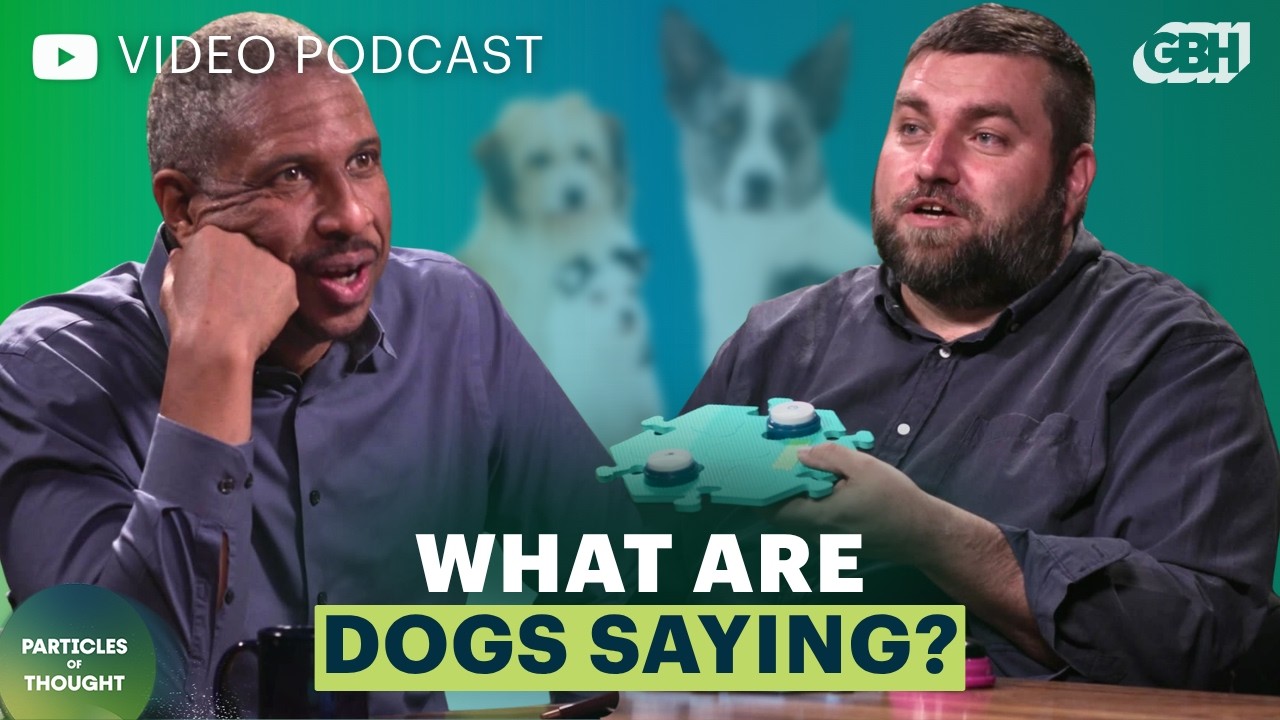
Interview: What Are Dogs Saying? Cracking Animal Language w/ Federico Rossano | Particles of Thought
Keywords
Summary
170 words
Critical Evaluation
Value of the Information & Strength of the Argument
The video offers valuable insights into a cutting-edge area of animal cognition research. Rossano presents a balanced view, acknowledging both the potential and the limitations of button training. His argumentation is solid, grounded in large datasets (e.g., 5 million button presses) and controlled tests. He transparently addresses methodological concerns such as the Clever Hans effect and owner bias, explaining how his team detects and mitigates them. The interview also provides nuanced discussion of individual differences and motivational factors, which adds depth to the scientific narrative. The evidence is anecdotal in part but supported by systematic data collection, making the argument compelling overall.
Scientific Rigor, Source Quality, Title Accuracy
The scientific rigor is high given the context of a podcast interview. Rossano cites specific studies and metrics, though the exact references are not provided in the transcript. The sources mentioned include his own lab website and a NOVA documentary, which are credible. The title is well-matched to the content, as the discussion centers on decoding canine communication. While the interview does not include a formal literature review, the researcher’s expertise and the preliminary data presented suggest a rigorous underlying methodology. The lack of peer-reviewed citations in the video is typical for a general audience format, but the depth of the discussion indicates a strong empirical foundation.
224 words
Title / Content Match
The title accurately reflects the content, focusing on dog communication and the scientific study of animal language.
Quality & Reliability
8/10
The interview features a leading cognitive scientist discussing ongoing research with a large citizen science dataset. Although the content is not peer-reviewed in this format, the researcher's expertise and the scale of data lend credibility.
Key Moments
Markers derived by PSI from the transcript: the creator did not define chapters.
- Rossano explains his initial skepticism about button-training dogs and why he later decided to study it
- Description of the citizen science methodology, including 24/7 cameras and automated logging
- Discussion of how dogs use buttons to express pain or discomfort, with examples like 'belly ouch'
- Findings on which buttons dogs press most frequently versus those owners train most
- Exploration of individual differences in learning ability and the role of play motivation
- Comparison with previous animal language studies, including Kanzi the bonobo, and implications for future research
Cited Sources
- Comparative Cognition Lab at UC San Diego — Lab website where Federico Rossano directs research and where participation in the button study is available
- Particles of Thought on Apple Podcasts — Podcast platform for the interview series
- NOVA newsletter — Sign-up for updates on NOVA science content
Concurring Sources
- Comparative Cognition Lab — The lab's ongoing research aligns with the findings described in the interview.
Dissenting Sources
- No discordant sources provided — The interview did not present contradicting research, so no discordant sources are listed.
External References
Contribution & Novelties
This interview provides a fresh perspective on animal communication by showcasing a large-scale citizen science approach to studying button-trained dogs. The main novelty is the scale of data collection (over 10,000 participants) and the emphasis on rigorous validation methods. It challenges assumptions about canine cognitive abilities and opens up new questions about the potential for interspecies communication. The discussion also highlights the ethical dimension of giving animals a voice, which is rarely addressed in mainstream science communication.
Pour aller plus loin :
- Augmentative and alternative communication — The devices used for dogs are adapted from human AAC, providing a functional link to assistive technology.
- Clever Hans effect — A classic case of unintentional cueing that Rossano explicitly references as a concern in his methodology.
- Kanzi (bonobo) — A bonobo that learned symbolic communication; Rossano draws parallels to the study of observational learning in dogs.
144 words
Radar Profile
The radar profile indicates high scores in quantity and quality of information, with moderate technical level and high reliability. The shape suggests a well-balanced presentation that is accessible yet scientifically sound, appealing to a broad audience while maintaining depth.