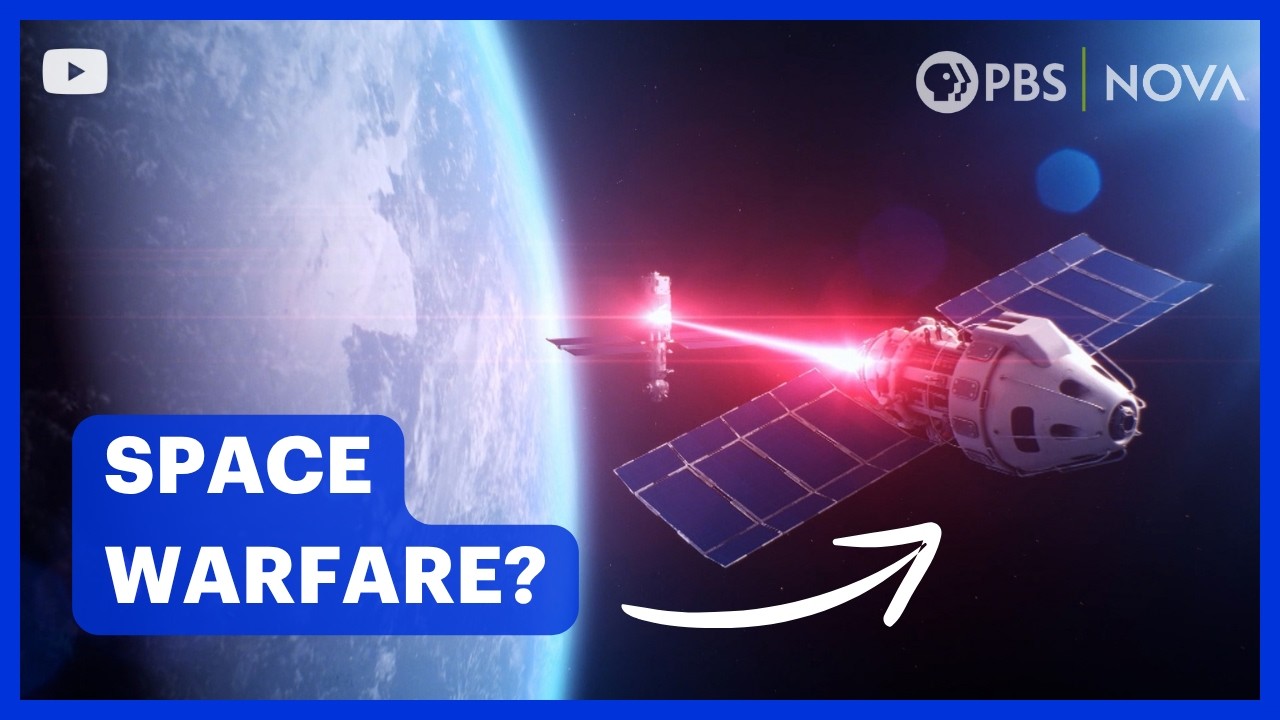
Space Lasers Are Not Science Fiction | NOVA | PBS
Keywords
Summary
144 words
Critical Evaluation
Value of the Information & Strength of the Argument
The video provides substantial value by demystifying space warfare technologies with concrete demonstrations and expert narrative. The argumentation is solid, using credible sources such as retired military personnel, engineers at General Atomics, and visual evidence from laboratory tests. It explains physical principles like laser amplification and kinetic energy, making the content accessible without oversimplification. The logical flow from dazzling to destructive lasers and then to kinetic interception is coherent and informative.
Scientific Rigor, Source Quality, Title Accuracy
The scientific rigor is typical of PBS NOVA: well-researched, with experts identified by name and affiliation (e.g., Robert Peterkin from General Atomics) and references to real events (US, China, India, Russia tests). The quality of sources is high, drawing on institutional knowledge from US Space Command and unclassified public information. The title ‘Space Lasers Are Not Science Fiction’ is apt, as the video proves that such weapons are real and in development. No major discrepancies between title and content; if anything, the title might underplay the broader scope including kinetic ASATs.
177 words
Title / Content Match
The title accurately reflects the content: it introduces real space laser technologies and anti-satellite weapons, emphasizing their concrete existence despite seeming like science fiction.
Quality & Reliability
8/10
High-quality production from PBS NOVA, a respected science documentary series. Features expert interviews (e.g., from General Atomics and US Space Command) and laboratory demonstrations, with accurate scientific explanations. Some military details remain classified, but the presented facts are consistent with public knowledge.
Key Moments
Markers derived by PSI from the transcript: the creator did not define chapters.
- Demonstration of laser dazzling on a camera sensor, showing temporary blinding without damage.
- Discussion of truck-mounted laser dazzling systems fielded by Russia and China.
- Higher-power lasers capable of destroying targets; lab test burns through steel.
- Challenges of placing lasers in space due to power and heat dissipation.
- ASAT missiles can destroy satellites, citing the 1985 US test as first example.
- 2007 Chinese test created thousands of debris pieces, highlighting long-term risks.
- 2021 Russian test forced ISS to maneuver; debris still tracked.
Cited Sources
- Space Wars (full documentary) — The video is an excerpt from this full PBS NOVA documentary.
- NOVA Newsletter — Sign-up for updates on science discoveries and episodes.
Contribution & Novelties
The video offers a concise, current overview of space warfare technologies, with unique laboratory demonstrations of laser dazzling and direct accounts from military personnel. It synthesizes public information on ASAT tests into a compelling narrative. Its novelty lies in showing real-world implications of space weapons, supported by expert testimony.
Pour aller plus loin :
- Anti-satellite weapon — Essential background on types and history of ASAT systems.
- Space debris — Explains the risks and persistence of orbital debris, a central theme.
- Laser dazzler — Details the technology of non-lethal optical interference, including ground-based applications.
93 words
Radar Profile
The radar profile shows high scores in information quantity and quality, with slightly lower but positive ratings for technical depth and reliability. This indicates a well-rounded, credible documentary that balances technical content with approachable storytelling.