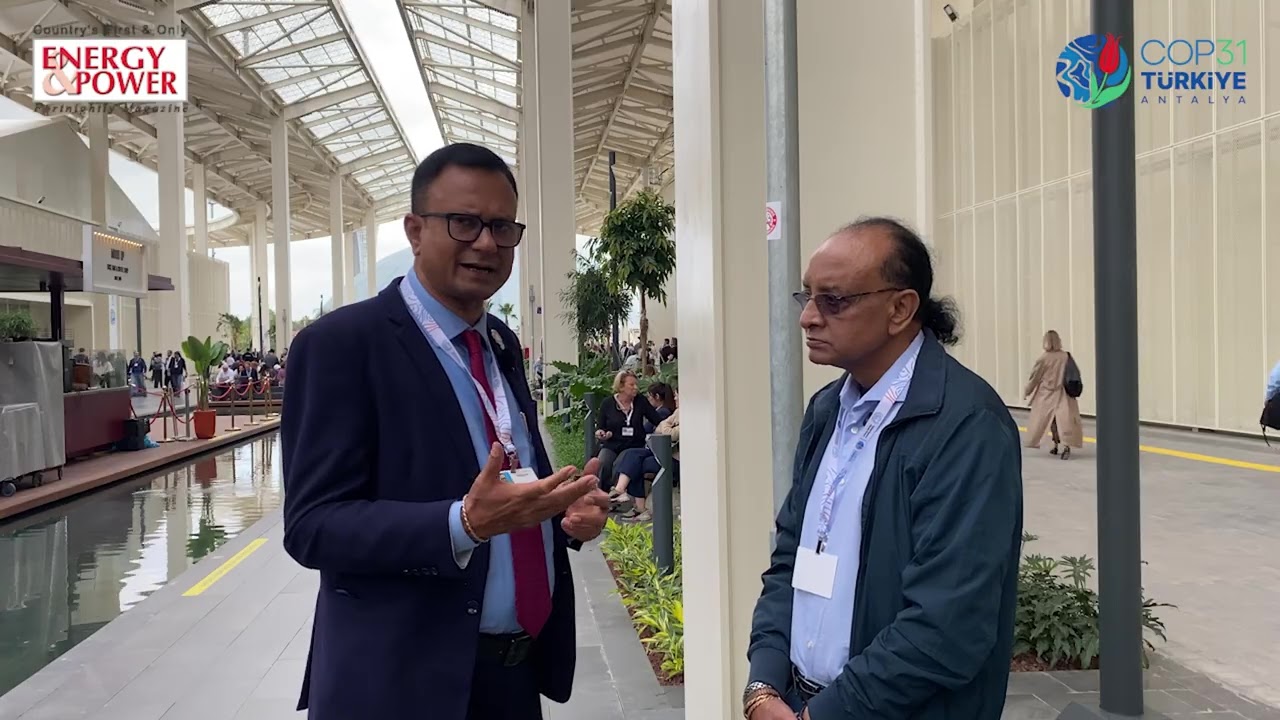
Bangladesh must strengthen project preparation to access climate grants and loans | Akm Sohel |COP31
Title history
- Bangladesh must strengthen project preparation to access climate grants and loans | Akm Sohel |COP31 — observed on 20261119-1723 UTC (YouTube)
Keywords
Summary
198 words
Critical Evaluation
Value of the Information & Strength of the Argument
The video provides valuable insights into the practical challenges developing countries face in accessing climate finance. The interviewee offers concrete examples, such as the need to make adaptation projects ‘win-win’ for private investors and the importance of developing detailed costings for interventions. His argumentation is coherent and grounded in firsthand experience, notably his involvement in securing funds from Global Shield. However, the discussion remains at a general level, without deep technical analysis or quantitative evidence. The value lies in the strategic perspective shared, though it could benefit from more specific examples of successful project preparation and measurable outcomes.
Scientific Rigor, Source Quality, Title Accuracy
The interview boasts high empirical authority due to the speaker’s official position and direct participation in climate finance negotiations. No external sources are cited, and the claims rely on the speaker’s professional experience. The title is perfectly aligned with the content, focusing on the need for better project preparation. While the interview is credible as an expert opinion, it lacks the rigor of a scientific review or data-backed analysis. The absence of references or data points limits its use for academic or policy-making purposes without further verification.
200 words
Title / Content Match
The title accurately reflects the core message of the interview, which emphasizes the need for Bangladesh to improve project preparation to attract climate grants and loans.
Quality & Reliability
6/10
The speaker is a senior government official with direct involvement in climate finance, offering authoritative firsthand experience. However, the interview is brief, anecdotal, and lacks verifiable data or external sources, limiting its overall reliability.
Key Moments
Markers derived by PSI from the transcript: the creator did not define chapters.
- Introduction of Akm Sohel and discussion on COP31 agenda items.
- Statistics on global climate finance distribution: mitigation 60%, adaptation 30%.
- Discussion on Bangladesh's National Adaptation Plan requiring $230 billion and lack of detailed costings.
- Need for bankable and investment-ready projects; anecdote about meeting LSE team with 73 investable projects.
- Securing funds: $30M from Global Climate Initiative and €30M from Global Shield, with potential for more.
- Advocacy for innovative financing mechanisms including risk financing, guarantees, and equity.
Contribution & Novelties
The interview offers an insider’s perspective on how a climate-vulnerable country like Bangladesh approaches the challenge of making adaptation projects attractive to international finance. It highlights the practical gap between high-level climate pledges and the need for concrete, bankable proposals. The emphasis on ‘win-win’ projects and innovative financing (risk, equity) is a notable contribution to the discourse.
Pour aller plus loin :
- National Adaptation Plan (Bangladesh) — Provides context on the plan discussed.
- Global Shield against Climate Risks — Official site of the Global Shield initiative mentioned.
- Adaptation Finance — General overview of climate finance mechanisms and adaptation funding.
99 words
Radar Profile
The radar profile shows moderate scores across quality and reliability, with a lower score on technical depth and information quantity. This reflects a short expert interview that is credible but not exhaustive. The high reliability score is attributed to the speaker's official role, while the lower technical level indicates the discussion stays at an accessible, policy-oriented level.