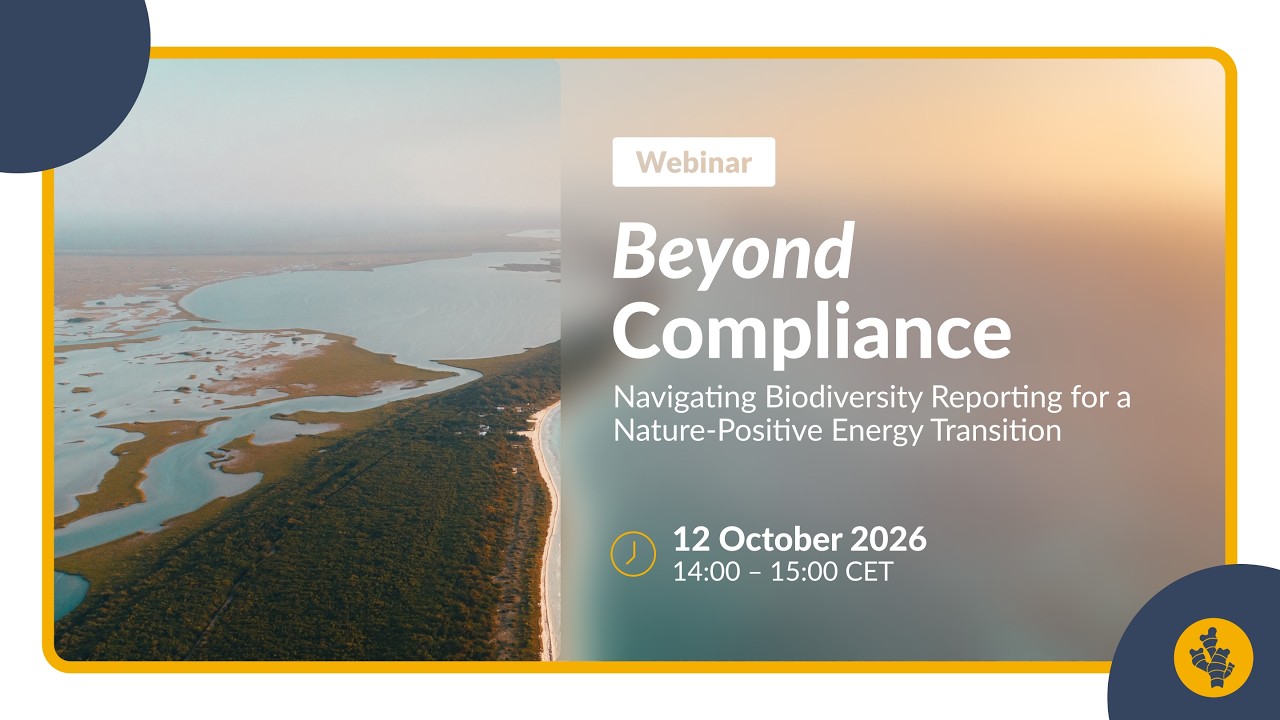
Beyond Compliance: Navigating Biodiversity Reporting for a Nature-Positive Energy Transition
Keywords
Summary
163 words
Critical Evaluation
Value of the Information & Strength of the Argument
The value of the information lies in providing a structured, practical framework to bridge the gap between high-level sustainability commitments and on-the-ground implementation. The argumentation is solid, building on identified needs from developers, financial institutions, and NGOs. The presentation clearly differentiates the Navigator from existing reporting frameworks, emphasizes its flexibility and evidence-based principles, and uses a maturity model to facilitate gradual improvement. The reasoning is coherent and supported by the collaborative development with the Biodiversity Consultancy, enhancing credibility.
Scientific Rigor, Source Quality, Title Accuracy
The scientific rigor is moderate: the approach is based on stakeholder input and professional experience rather than peer-reviewed research. Sources referenced include the GINGR initiative’s own publications and links to the Navigator guidance, but no external scientific literature is cited. The title accurately describes the content, focusing on biodiversity reporting for a nature-positive energy transition. The webinar is promotional and explanatory, with clear structure but lacks critical analysis of potential limitations or alternative approaches.
167 words
Title / Content Match
The title accurately reflects the webinar's focus on biodiversity reporting within the energy transition, and the content delivers on this scope.
Quality & Reliability
7/10
The video presents a structured framework (Nature-Positive Reporting Navigator) developed by recognized organizations (IUCN, Renewables Grid Initiative) and a consultancy. The content is coherent, evidence-based in approach, and transparent about limitations, though it is primarily an introductory presentation rather than a rigorous scientific study.
Key Moments
Markers derived by PSI from the transcript: the creator did not define chapters.
- Housekeeping rules and introduction to GINGR initiative
- Gus Shelikens discusses challenges of reporting and introduces the Navigator focus
- Claire Weller explains the development rationale and key benefits of the Navigator
- Presentation of the six focus areas and maturity tiers (explorer, practitioner, innovator)
- Explanation of the user journey based on plan-do-check-act cycle
- Example of applying the Navigator on a renewable energy project
- Q&A session and discussion
- Wrap-up and call for engagement
Cited Sources
- Nature-Positive Reporting Navigator Guidance (bit.ly link) — Referenced in the video description as the guidance document
- Download Nature-Positive Navigator Guidance — Direct download link provided in the video description
Concurring Sources
- IUCN - Nature Positive — IUCN co-organizes GINGR and promotes nature-positive approaches
- Renewables Grid Initiative — Co-organizer of GINGR and host of the webinar
Contribution & Novelties
The primary novelty is the creation of a flexible, tiered maturity framework specifically tailored for renewable energy and grid companies to navigate biodiversity reporting and implement nature-positive actions. It consolidates existing reporting requirements into a single practical tool, emphasizes continuous improvement, and bridges corporate and project levels. This addresses a common gap between commitments and implementation.
Pour aller plus loin :
- IUCN Nature Positive — Relevant to global nature-positive definitions and goals.
- Taskforce on Nature-related Financial Disclosures (TNFD) — A key framework for nature-related reporting and risk management.
- Science Based Targets Network (SBTN) — Provides methods for setting science-based targets for nature.
102 words
Radar Profile
The radar profile shows balanced scores across information quantity, quality, technical level, and reliability, with slightly higher scores for quantity and reliability. This indicates a well-rounded, informative presentation, though the technical depth is moderate, suiting a webinar aimed at a broad professional audience.