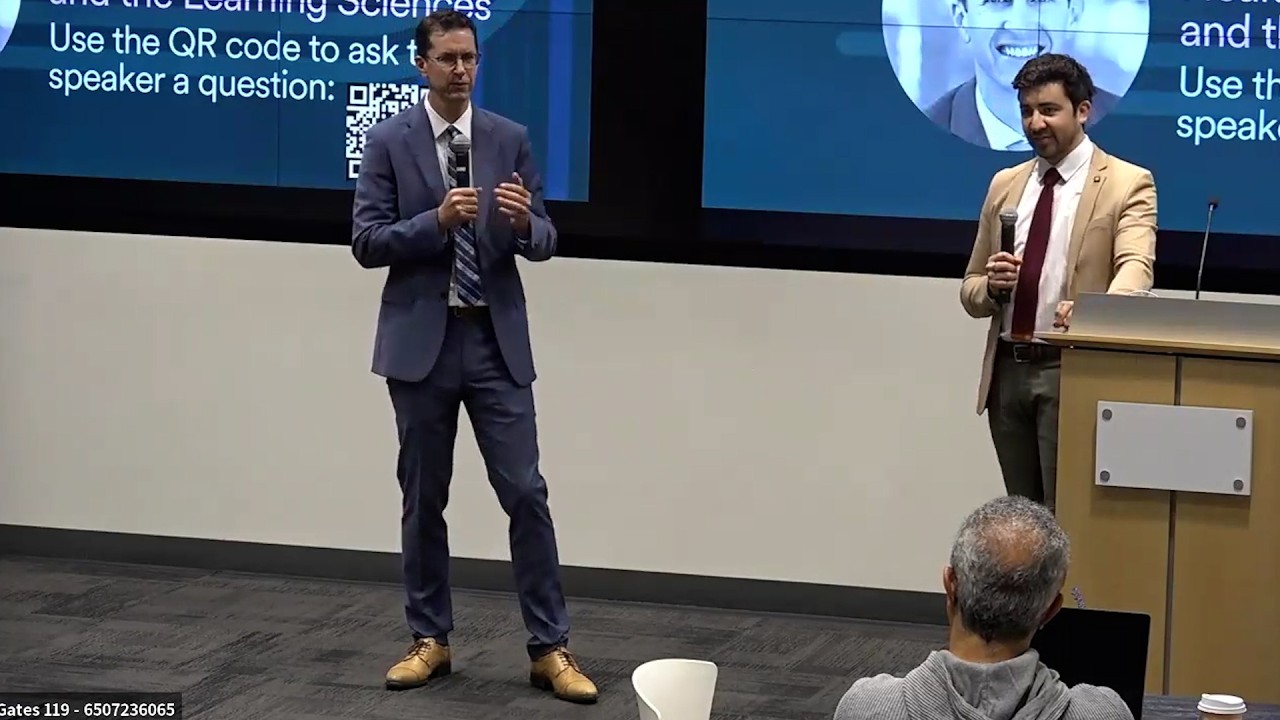
Building an International AI Platform for Health Professions Education and the Learning Sciences
Title history
- Building an International AI Platform for Health Professions Education and the Learning Sciences — observed on 20261117-2211 UTC (YouTube)
Keywords
Summary
153 words
Critical Evaluation
Value of the Information & Strength of the Argument
The value of the information is high: the talk provides a detailed account of a real-world AI platform for education, addressing practical considerations like language, curriculum alignment, and research needs. The argumentation is solid: they justify the need for such a platform by highlighting limitations of current methods (cost, scalability, faculty dependence) and explain how their design choices address these issues. They also demonstrate a thoughtful iterative design process, from interviews with instructors to incorporating advanced features like voice, video, and collaborative learning. However, the presentation does not include empirical evidence of the platform’s effectiveness; it focuses on design and implementation. The argument for research-driven development is compelling, but the lack of preliminary results weakens the persuasiveness for claiming impact.
Scientific Rigor, Source Quality, Title Accuracy
The talk is rigorous in its approach: the speakers are from Stanford, and they emphasize academic integrity. They rely on their own experiences and mention courses and collaborations. No external citations are provided in the video or description, which limits the verifiability of specific claims. The title is accurate and matches the content precisely. The structure includes an introduction, a detailed presentation, and a Q&A, though the Q&A is not shown in the transcript. Overall, the rigor is moderate due to the absence of peer-reviewed sources and the promotional nature of a seminar.
228 words
Title / Content Match
The title accurately reflects the content: the speakers detail the motivation, design, and international deployment of an AI platform for health professions education and learning sciences.
Quality & Reliability
8/10
Presented by Stanford HAI, the speakers are academics from Stanford. The talk is well-structured, presents a clear design rationale and mentions research plans. However, it is a seminar presentation, not a peer-reviewed publication, and the platform's efficacy is not yet demonstrated.
Chapters
Contribution & Novelties
The original contribution is the development of an open, research-oriented AI platform for clinical education, which is designed to be instructor-centric and language-agnostic, and aims to generate evidence about learning processes. The platform’s emphasis on instructor agency and global accessibility is innovative. To further explore the themes, consider the following resources:
- Artificial intelligence in healthcare — Overview of AI applications in healthcare, including education.
- Learning sciences — Interdisciplinary field studying learning and educational technology.
- Clinical reasoning — Cognitive processes underlying clinical decision-making.
82 words
Radar Profile
The radar profile indicates high scores in information quantity and quality, with moderate technical depth. The platform's relevance and credibility are high, but the lack of empirical evidence and few views may slightly lower the overall assessment.