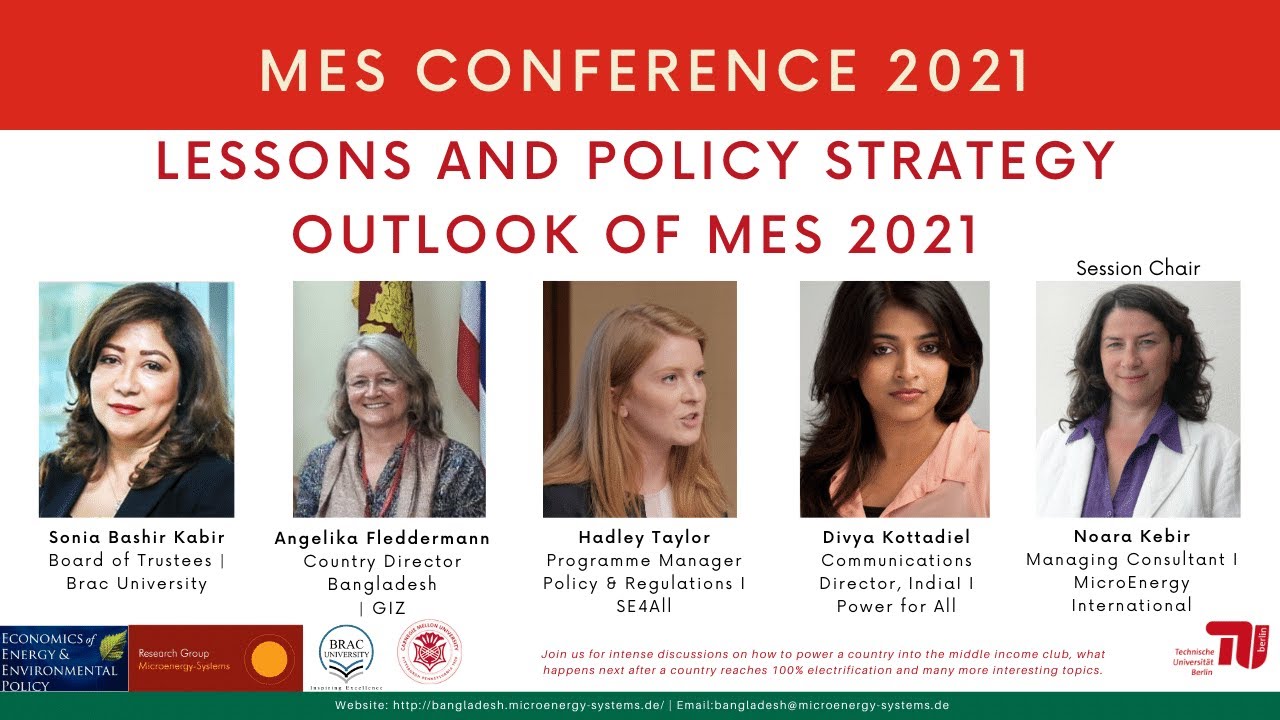
Lessons and Policy Strategy Outlook of MES 2021 | 2021 MES Conference
Keywords
Summary
164 words
Critical Evaluation
Value of the Information & Strength of the Argument
The panel provides valuable insights from experienced professionals who have directly contributed to or studied energy access in Bangladesh and other regions. The arguments are well-structured, with concrete examples such as Bangladesh’s electrification statistics, India’s challenges after achieving 100% access, and the interdependence of energy and financial inclusion. The discussion acknowledges different perspectives on the role of technology (e.g., IoT, blockchain) and emphasizes the need for integrated solutions. However, the value is based primarily on expert narrative rather than quantitative analysis, and some assertions remain unsubstantiated. The argumentation is coherent and balanced, with a clear thread of moving beyond simple access to quality and well-being, which is a solid conceptual advancement.
Scientific Rigor, Source Quality, Title Accuracy
The session draws on expertise from organizations like SE4ALL and GIZ, lending credibility, but specific sources are not cited during the discussion. The description links to the MicroEnergy website, which provides a general reference. The title accurately matches the content: the session indeed offers lessons and a policy strategy outlook. Comments are not provided, but the discussion is structured around moderator questions that facilitate logical progression from past achievements to future outlooks. Overall, the scientific rigor is moderate, appropriate for a policy-oriented panel, but not a formal academic review.
215 words
Title / Content Match
The title accurately reflects the panel's focus on lessons learned and forward-looking policy strategies from the 2021 MES Conference.
Quality & Reliability
7/10
Panel of experts from reputable organizations provides insights on Bangladesh's electrification progress and policy outlook, but the discussion is based on expert opinion rather than peer-reviewed evidence.
Key Moments
Markers derived by PSI from the transcript: the creator did not define chapters.
- Welcome and introduction by moderator Noara Kebir, congratulating Bangladesh on its 50th birthday and middle-income status.
- Divya Kottadiel gives key statement on Bangladesh's progress in energy and financial inclusion, noting rise from 40% to 97% electrification.
- Sonia Bashir Kabir discusses four key technologies (IoT, storage, AI, blockchain) for a democratized energy system.
- Hadley Taylor emphasizes that energy and financial inclusion are intertwined and discusses affordability as key to universal access.
- Panelists share visions for 2040, discussing integrated energy systems and the concept of energy well-being over simple access.
- Angelika Fleddermann highlights the link between energy access and broader development, and the first gender and energy workshop with the government.
- Sonia discusses the role of BRAC University and its inclusive culture in solving problems for the masses.
- Discussions on the last decade of SDG7, with Divya noting India's experience and the need to focus on transformational impact beyond grid connection.
Cited Sources
- MicroEnergy Systems Research Group — Official website of the organizing research group, referenced in the video description for more information about the MES team.
Concurring Sources
- World Bank Data on Bangladesh Electrification — Panelists referenced World Bank statistics on electricity access (12% in 1992 to 97% today), consistent with the data source.
- SE4ALL (Sustainable Energy for All) — Hadley Taylor represents SE4ALL, which aligns with the global goal of universal energy access.
Dissenting Sources
- Possible divergence in electrification statistics — Some panelists quote slightly different figures (e.g., 40% at start of decade vs. 12% in 1992), which may reflect different base years or data sources, but no direct contradiction was noted.
External References
Contribution & Novelties
The panel provides a multi-stakeholder perspective on the evolution of energy access in Bangladesh, highlighting the shift from a focus on access to a more holistic view of energy well-being. It underscores the critical link between financial inclusion and energy access, and introduces forward-looking insights on the integration of traditional and decentralized systems. The discussion on women in energy leadership adds a valuable social dimension often overlooked in technical panels.
Pour aller plus loin :
- Sustainable Development Goal 7 — The UN goal for affordable and clean energy, central to the discussion’s policy context.
- Energy access — Conceptual background on the dimensions of access beyond mere connection.
- Pay-as-you-go model — While not a full article, this model is often cited in energy inclusion discussions; relevant to the financial innovation aspects mentioned.
- Decentralized energy — A key theme in the panel’s future outlook on integrated hybrid systems.
146 words
Radar Profile
The scores are relatively balanced, with high quantity and moderate quality and reliability, reflecting an expert panel discussion rich in anecdotal evidence but lacking in rigorous source citations. The technical level is moderate, suitable for a general audience, while the overall assessment highlights the value of practical policy insights over formal scientific methodology.