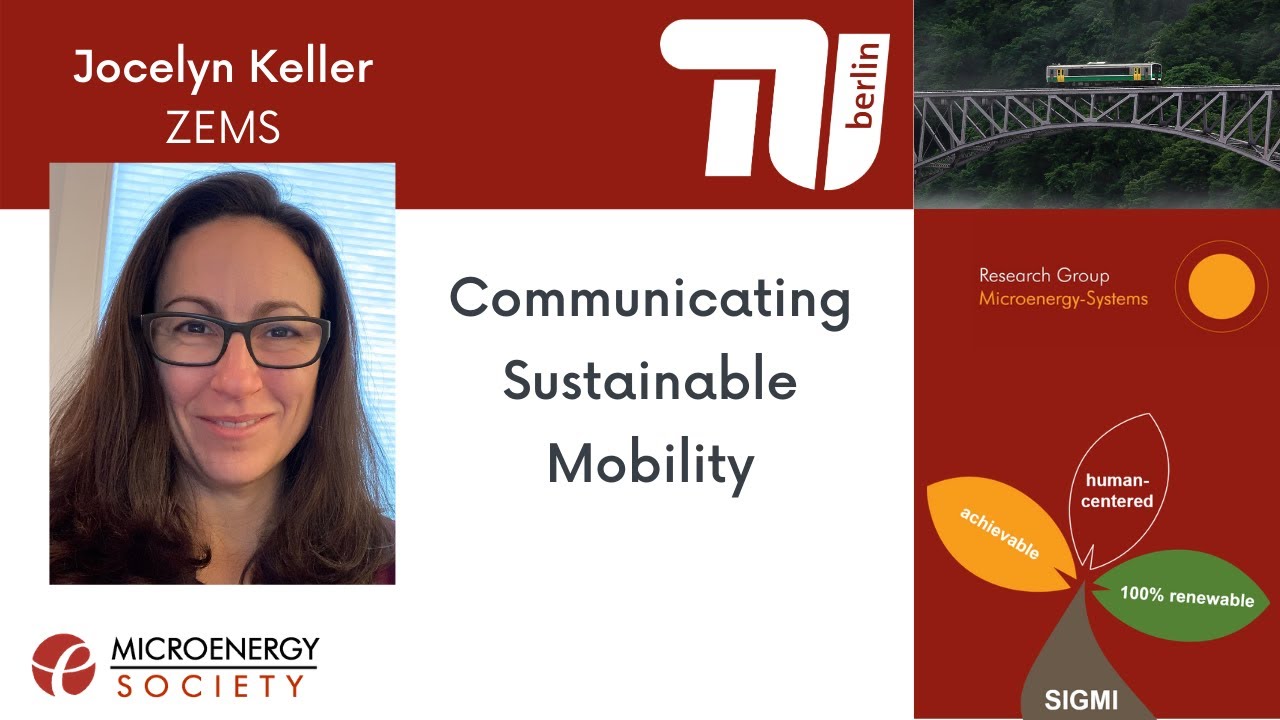
SIGMI Conference on Sustainable & Inclusive Mobility - Sustainable Communication by Jocelyn Keller
Keywords
Summary
125 words
Critical Evaluation
Value of the Information & Strength of the Argument
The value of the information lies in its practicality: Keller offers actionable strategies for science communicators, such as using prompts for association, understanding audience prototypes, and employing storytelling. She supports her arguments with references to established figures like Deborah Tannen and Scott Shigeoka, and provides concrete examples from the mobility sector (e.g., BVG’s ‘yellow at heart, green at heart’ campaign). However, the argumentation is primarily based on personal experience and general principles rather than empirical evidence; no studies or data are cited to measure effectiveness. The reasoning is coherent and persuasive, but the lack of verifiable outcomes weakens the overall scientific rigor.
Scientific Rigor, Source Quality, Title Accuracy
The speaker demonstrates good scientific rigor by clearly defining terms and referencing credible sources: E.O. Wilson’s quote on human nature, Deborah Tannen’s distinction between academic and public writing, Scott Shigeoka’s ‘Bridging Differences’ playbook, and UC Berkeley’s ‘Promoting Sustainable Behavior’ guide (likely from the university website). She also mentions AAAS guidelines for communication. However, she does not provide URLs or full citations, reducing traceability. The title ‘Sustainable Communication’ accurately reflects the content, which focuses on communication strategies for sustainability topics, particularly mobility. The structure follows a logical flow from audience research to specific examples and practical exercises, aligning well with the title.
218 words
Title / Content Match
The title accurately represents the content, which is dedicated to sustainable communication strategies for sustainability topics, particularly in the context of mobility.
Quality & Reliability
8/10
The presentation is well-structured and grounded in established communication theories, citing noted scholars like E.O. Wilson, Deborah Tannen, and Scott Shigeoka. The speaker's expertise as a linguist and communication specialist is evident, yet the advice is largely anecdotal and lacks empirical data or case studies with measurable outcomes.
Key Moments
Markers derived by PSI from the transcript: the creator did not define chapters.
- Introduction and overview of the workshop objectives, including the importance of understanding audiences.
- Discussion on researching and preparing for communication with a specific audience, including the example of the presenter's preparation.
- Definitions of 'communicate' and 'connect', introducing the concepts of sharing and common ground.
- Exploration of 'bridging differences' and the role of storytelling, illustrated with the bridge anecdote.
- Comparison between scientific communication and science communication, including structural differences.
- Examples from sustainable mobility: alliteration, acronyms, and the BVG campaign.
- Introduction to UC Berkeley guidelines and the Bridging Differences playbook, with upcoming workshop exercises.
Cited Sources
- LinkedIn - MicroEnergy Systems Research Group — Official social media page provided in the video description.
- E.O. Wilson on human condition — Quote about paleolithic emotions and modern technology.
- Deborah Tannen on writing for general audiences — Quote contrasting scientific and science communication.
- Scott Shigeoka's Bridging Differences Playbook — Referenced for techniques to bridge differences.
- UC Berkeley's Promoting Sustainable Behavior — Guidelines for promoting sustainable behavior.
- AAAS guidelines on science communication — Models for communicating to different audiences.
Contribution & Novelties
The presentation provides a synthesis of communication theories and practical examples specifically applied to sustainable mobility, emphasizing the need for audience-specific strategies. It offers a clear distinction between scientific and science communication, and introduces the concept of ‘building bridges’ as a core method for engaging non-experts. The original contribution lies in the integration of linguistic and communicational principles with sustainability topics, making it a useful resource for researchers transitioning to public engagement.
Pour aller plus loin :
- Science communication — Provides an overview of the field, including historical context and methods.
- Audience analysis — Relevant to understanding diverse publics, a key theme in the talk.
- Bridging differences — The concept of finding common ground is central to the speaker’s approach; this page offers related ideas.
125 words
Radar Profile
The radar profile shows moderate-to-high scores across all dimensions, with slightly lower technical level due to the non-quantitative nature of the content. The high quality and quantity of information, along with solid reliability, suggest a well-balanced, informative presentation for practitioners rather than researchers.