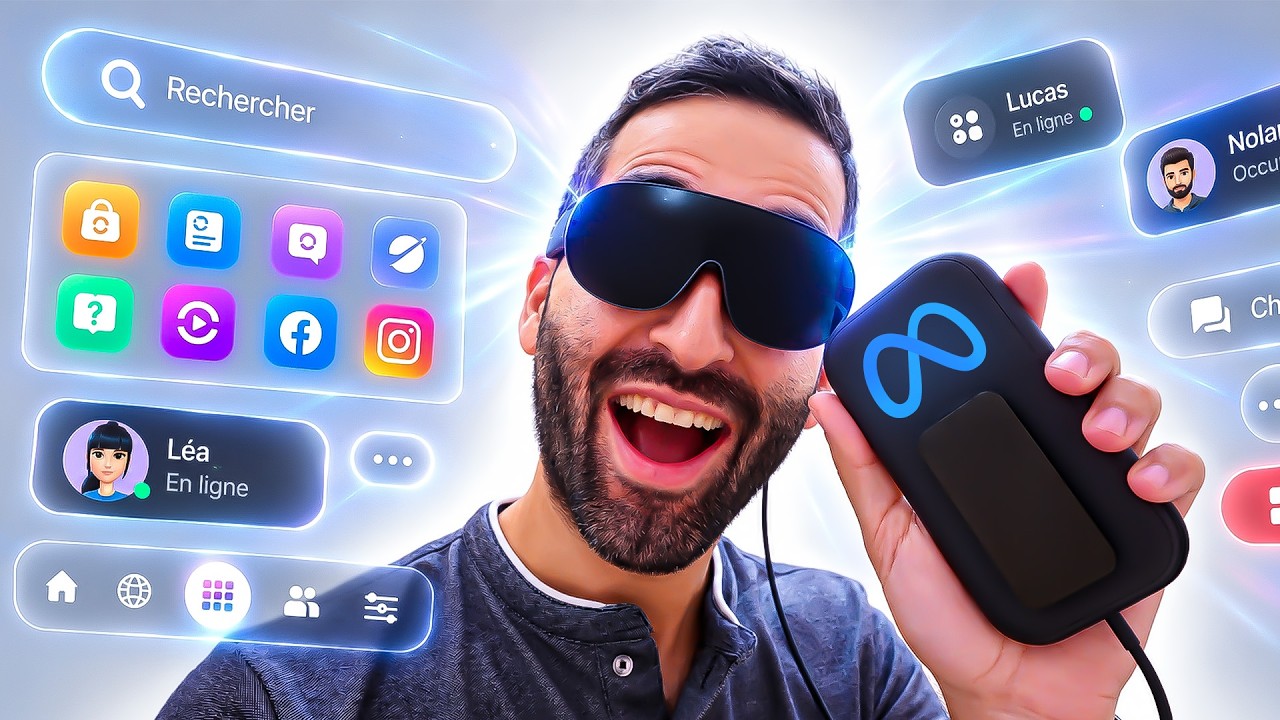
On a essayé les NOUVELLES LUNETTES Meta qui RINGARDISENT Apple
We tried the NEW Meta glasses that make Apple look outdated
Keywords
Summary
147 words
Critical Evaluation
Value of the Information & Strength of the Argument
The video offers genuine added value through first-hand testing and detailed technical descriptions. The hosts clearly explain the differences between VR, AR, and connected glasses, situating the Meta VR Glasses among competitors like Xreal and Apple Vision Pro. Their argumentation is structured: they start with the main product, then discuss other announcements, and finally share their personal reflections. They acknowledge the controlled nature of the demo and the fact that the product is not final, which tempers their enthusiasm and adds nuance. The comparison between the different Meta products helps viewers understand the market landscape. However, the absence of external verification or comparative test data weakens the argumentation’s robustness, and some subjective opinions are presented without critical depth.
Scientific Rigor, Source Quality, Title Accuracy
The video is a journalistic product test, not a scientific study. The hosts are transparent about the non-sponsored nature of the video, which enhances credibility. They mention the test article on Frandroid as a supplementary source, but do not cite any external research or third-party reviews. The title accurately reflects the content, as they repeatedly compare the Meta VR Glasses to Apple Vision Pro, though the comparison is brief and not a full benchmarking. The inclusion of a controlled demo caveat and the mention of potential price barriers show a degree of rigor. However, the lack of independent measurements or citations limits the overall scientific quality. The comments show a generally positive reception, with users appreciating the in-depth presentation and some raising concerns about privacy and price.
260 words
Title / Content Match
The title promises a comparison with Apple and the video indeed mentions Apple Vision Pro and market comparisons. Adequate.
Quality & Reliability
8/10
The video provides detailed first-hand impressions and technical specifications, with transparent disclosure of demo conditions and non-sponsorship. However, no external sources are cited, and the product is not yet final, limiting reliability.