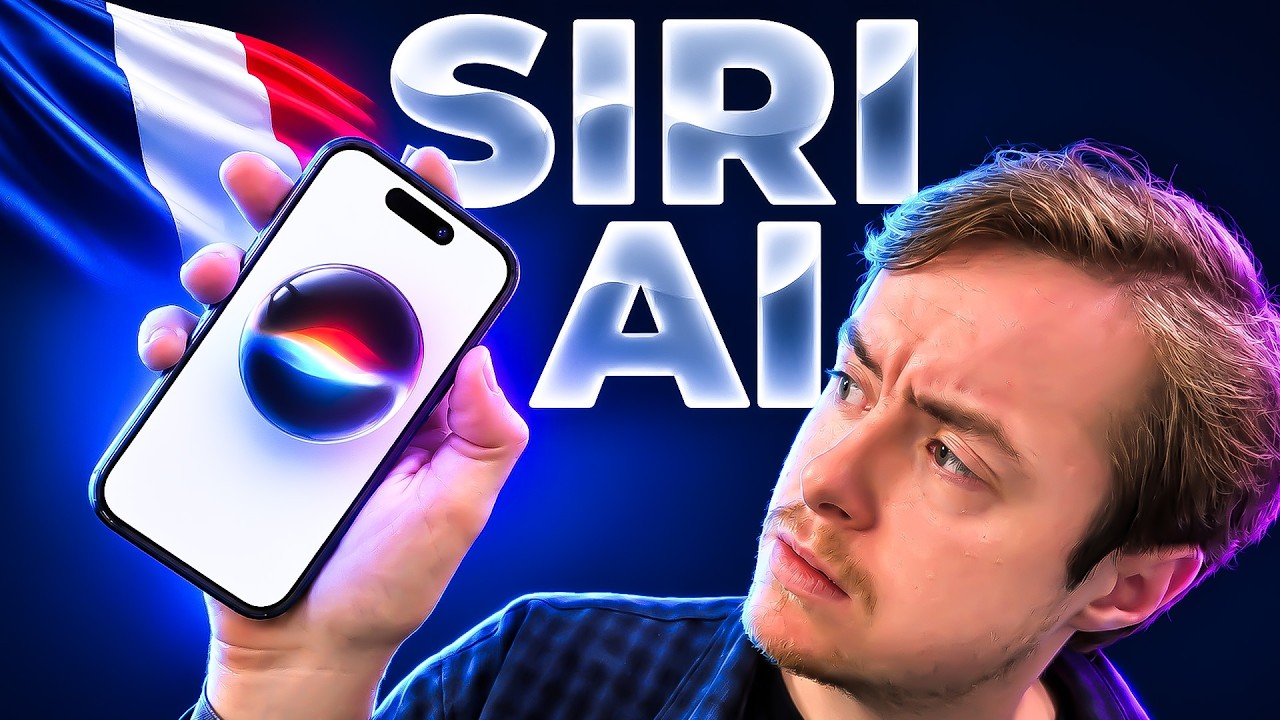
J’ai testé le nouveau Siri AI depuis la France, et on rate vraiment quelque chose
I tested the new Siri AI from France, and we are really missing out on something
Title history
- J’ai testé le nouveau Siri AI depuis la France, et on rate vraiment quelque chose — observed on 20261117-1940 UTC (YouTube)
Keywords
Summary
306 words
Critical Evaluation
Value of the Information & Strength of the Argument
The video provides valuable practical insights through a real-world test of Siri AI, demonstrating capabilities and limitations with concrete examples. The argumentation is solid: the presenter explains the technical underpinnings (semantic index, five-model architecture) and the regulatory conflict clearly, while acknowledging Apple’s security stance and the EU’s competition concerns. However, the evaluation is based on a single user’s experience without control group, and the presenter’s bias towards switching to Claude is stated rather than justified. The test only covers English-language queries (since US beta), which may not reflect performance in French.
Scientific Rigor, Source Quality, Title Accuracy
The video cites no academic sources but references a Bloomberg report by Mark Gurman and Frandroid’s own articles. The explanation of the DMA conflict is accurate and balanced, presenting both Apple’s and EU’s positions. The title is accurate. The transparency note confirms no sponsorship, and the video explicitly states it was not sponsored. However, the presenter’s personal opinions are clearly distinguished from factual claims, and the regulatory description aligns with known facts about the DMA and Apple’s position.
184 words
Title / Content Match
The title accurately reflects the content: the presenter tests Siri AI from France and concludes that European users are missing out on significant improvements.
Quality & Reliability
7/10
The video provides a hands-on test of the new Siri AI, with clear explanations of the technical architecture and the regulatory context. The presenter openly acknowledges limitations (e.g., online search failures) and distinguishes between personal experience and broader statements. However, the evaluation is inherently subjective and lacks controlled benchmarks or comparative data from other users.
Chapters
Cited Sources
- Siri AI arrive en français sur Mac, même dans l'Union européenne — Context: the presenter mentions that Siri AI is available on Mac in France.
- Pris en étau par OpenAI, Anthropic et les autres, Apple envisage de faire de Siri un vrai assistant agentique — Context: the video discusses Apple's plans for Siri as an agentic assistant.
- Apple HomeView : on a lu les premiers tests américains, faut-il regretter son… — Context: the video mentions HomeView being excluded from Europe.
Concurring Sources
- Apple press release on Apple Intelligence — Context: Official announcement of Apple Intelligence features, though not directly cited in the video, it aligns with the described capabilities.
External References
Contribution & Novelties
The video offers an original hands-on test of Siri AI from a European perspective, detailing the workaround (US Apple ID) and the technical architecture (Apple Foundation Models, semantic index). It highlights the real-world gap between native app support and European usage patterns. The explanation of the DMA conflict is clear and up-to-date.
Pour aller plus loin :
- Digital Markets Act — Official explanation of the EU regulation affecting Apple.
- Apple Intelligence — Overview of Apple’s AI features.
- Semantic Index (Apple) — However, the URL is a guessed developer documentation page; may not exist exactly. Use without URL if uncertain. I will not include a guessed URL.
- Bloomberg Mark Gurman — The video references his reporting on Siri AI delay; but as a general source, not directly cited.
127 words
Radar Profile
The radar profile shows relatively balanced scores, with moderate quantities of information and solid technical level. The quality and reliability are consistent, but the low score on 'quantite_information' reflects the limited scope of the test (single device, specific use cases). The overall shape is not strongly skewed, indicating a well-rounded video.